Smart Air Purifier for 3800 ft²: App & Alexa Control
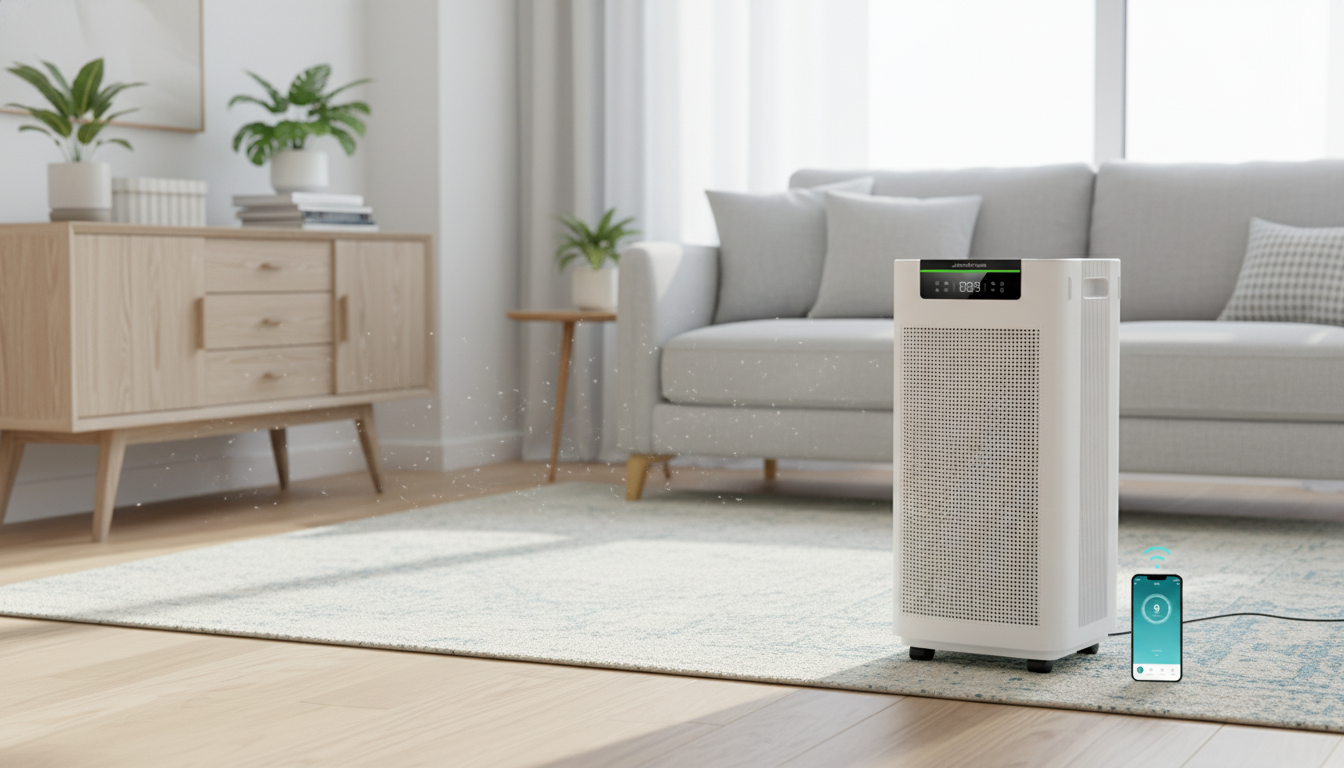
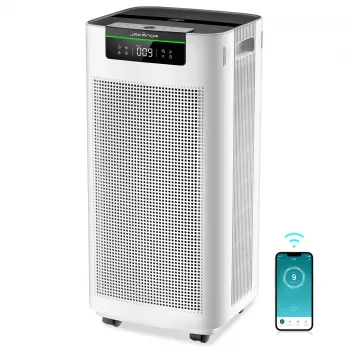
Smart Air Purifier Power for Extra-Large Rooms (Up to 3800 ft²)
Keeping air clean in a large, open space takes more than a small tabletop unit. A smart air purifier designed for up to 3800 ft² pairs high-capacity filtration with app scheduling, real-time air insights, and hands-free Alexa commands—useful for busy households, shared living areas, and open-plan homes. When a purifier can handle big square footage and still stay easy to manage day to day, it’s simpler to run it consistently (which is what usually makes the biggest difference).
What This Purifier Is Built For
Large-room purifiers are meant to move and filter a lot of air, not just “freshen” the area right next to the unit. That matters in homes where the living room blends into the kitchen, where basements collect dust, or where loft-style layouts make it hard to contain air in a single space.
- Large coverage for wide, connected spaces such as open living rooms, lofts, basements, and combined kitchen-living areas.
- Smart controls for adjusting settings without walking up to the unit—helpful when the purifier is placed for best airflow rather than convenience.
- Everyday pollutant management for dust, lint, pet dander, smoke particles, and seasonal airborne irritants (results depend on filter type and conditions).
For helpful background on what air cleaners can and can’t do in real homes, the U.S. EPA’s guide to air cleaners is a solid reference.
Smart Control Features That Matter Day to Day
Smart features are most valuable when they reduce friction. Instead of remembering to turn the unit up before cooking—or forgetting to turn it back down at night—you can set routines once and let the purifier do the repetitive work.
- App control for switching modes, setting schedules, and managing the purifier remotely (useful for pre-cleaning before arriving home).
- Alexa voice control for quick changes like turning on, toggling a mode, or setting a speed while cooking or cleaning.
- Status visibility that makes it easier to build habits when filter reminders and current settings are visible at a glance in the app.
If you’re comparing air cleaners, AHAM’s overview of CADR and sizing guidance can help you understand why room size claims and performance metrics don’t always match across brands: AHAM Room Air Cleaners.
Room Size and Placement for Best Performance
Even a powerful purifier can underperform if airflow is blocked. Treat placement like you would a speaker or a fan: it needs room to pull air in and push clean air back out.
- Keep airflow unobstructed: place the unit several inches away from walls, furniture, and curtains.
- Target particle “hot spots” in open plans: position nearer to the dominant source of particles (kitchen edge, pet zone, entryway) while keeping clear air intake and outlet paths.
- Expect strongest cleaning in the same room: for multi-room layouts, performance is best where the unit runs; doorways and hallways reduce effective cleaning compared with a single enclosed room.
- Use event-based speed changes: run higher speed during peak events (vacuuming, cooking, wildfire haze), then drop to a quieter maintenance setting.
Quick Setup Guide by Common Scenarios
| Scenario | Recommended placement | Best habit to use |
|---|---|---|
| Open living room + kitchen | Near the boundary between kitchen and seating area, away from stove heat | Boost speed while cooking; schedule a higher run time after meals |
| Pet-friendly large room | Closer to pet bedding/play area with clear intake space | Use a consistent daily schedule; increase speed during shedding |
| Basement or loft | Central location with minimal obstacles and away from damp corners | Run longer cycles to prevent stagnant air pockets |
| Smoke/odor events | Near the source area but not directly in heavy smoke stream | Use highest practical speed until air improves, then maintain on medium/auto |
Filtration and What It Can Help Reduce
Filtration performance depends on the filter media, fit, and how consistently the purifier runs. In general, large-room purifiers focus on pulling in particle-heavy air and repeatedly cycling it through the filter.
- Particle filtration is aimed at capturing fine airborne debris such as dust, pollen, and smoke particles (effectiveness depends on filter media and fit).
- Activated carbon (when included) is commonly used to reduce odors and some gaseous compounds; odor control typically improves with steady runtime and timely filter changes.
- Purifiers don’t replace source control: ventilation, cleaning, and humidity management still matter.
For practical ventilation strategies—especially helpful during gatherings, cooking, or seasonal illness waves—see the CDC’s guidance on improving ventilation in your home.
Noise, Energy Use, and Running It Comfortably
Comfort is the deciding factor in whether a purifier stays on. The best setting is the one you’ll actually use every day.
Care and Filter Replacement Basics
Product Option
- 10W Dual USB Fast Charger Adapter for Smartphones & Travel Use
- High-Brightness Rechargeable Waterproof Bike Headlight
FAQ
Can one air purifier cover multiple rooms?
Performance is strongest in the room where the purifier is placed. Open doorways help, but walls, hallways, and distance reduce circulation—one unit per main zone typically delivers more consistent results.
Does Alexa control work without using the app?
Usually, initial setup requires the app to connect the purifier to Wi‑Fi and link the Alexa skill. After pairing, routine controls like power, mode, and fan speed can typically be handled by voice.
How often should filters be replaced in a large room purifier?
A practical range is often every 3–12 months depending on conditions like pets, smoke, allergies, and wildfire seasons. Check the filter monthly and follow the manufacturer’s schedule or the unit’s indicator, adjusting sooner if it looks visibly loaded.









Leave a comment