1.5L Hot & Cold Hydrogen Water Pitcher: Daily Use Guide
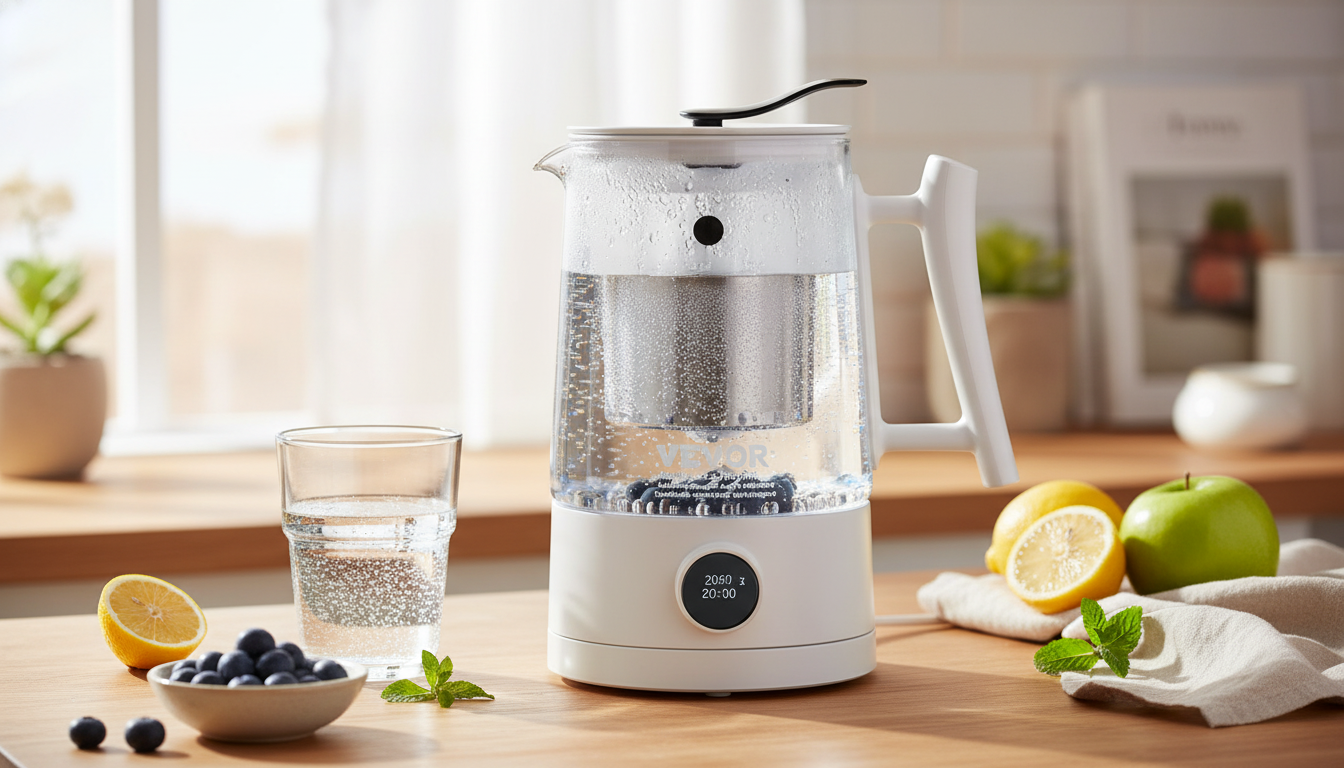
Hydrogen Water Pitcher 1.5L – Hot & Cold Hydrogen-Rich Water Ionizer
A hydrogen water pitcher with hot and cold options is designed to make hydrogen-infused water easier to prepare and enjoy throughout the day. This guide breaks down how it works, what to look for in daily use, and practical habits for getting consistent results with minimal fuss—especially when timing, temperature, and storage can affect how much dissolved hydrogen remains by the time you drink.
What this pitcher is designed to do
A countertop hydrogen pitcher aims to simplify hydrogen-rich water into a shareable, batch-style routine instead of a single-cup ritual. With a 1.5L capacity, it’s sized for a few servings at a time—useful for families, meal prep, or simply reducing how often you need to run a cycle.
- Produces hydrogen-rich water for everyday drinking using a countertop-friendly pitcher format.
- Supports both hot and cold preparation/dispensing, helping one device cover morning routines (warm water/tea) and post-workout hydration (cool water).
- A 1.5L capacity targets batch preparation for multiple servings rather than single-cup use.
- Pitcher format can be easier to share at home than a personal bottle generator.
If you’re comparing options, the Hydrogen Water Pitcher 1.5L – Hot & Cold Hydrogen-Rich Water Ionizer is positioned as a home-use unit where convenience and repeatable daily cycles matter as much as headline output claims.
How hydrogen water pitchers work (plain-language overview)
Hydrogen-rich water typically refers to water with extra dissolved molecular hydrogen (H2). Many pitchers generate hydrogen through electrolysis—using an electrode assembly to separate water into gases and encourage hydrogen to dissolve into the water you’ll drink.
- Molecular hydrogen is generated and then dissolves into the water, creating “hydrogen-rich” water.
- Electrode design, water conditions, and maintenance can all affect consistency from one cycle to the next.
- Hydrogen naturally dissipates over time, especially with agitation, higher heat, and repeated exposure to air.
- Hot preparation can be convenient, but higher temperatures can speed hydrogen loss, so timing matters.
For anyone evaluating wellness-oriented hydration tools, it also helps to keep health-claim standards in mind and review evidence carefully. Useful starting points include the National Center for Complementary and Integrative Health (NCCIH) for how to assess claims, and PubMed for browsing published research on molecular hydrogen.
Key features to evaluate for hot & cold hydrogen water
Hot-and-cold functionality adds flexibility, but it also adds a few practical questions: What temperature range is actually supported? How quickly can you run a cycle and pour? Is the pitcher easy enough to clean that you’ll stick with it?
Quick checklist: what to confirm before buying
| Feature | Why it matters | Practical tip |
|---|---|---|
| 1.5L capacity | Determines how many servings can be prepared at once | Choose larger capacity for multi-person households or frequent refills |
| Hot & cold use | Supports different routines and seasons | For best hydrogen levels, generate close to drinking time—especially for warm water |
| Ease of cleaning | Build-up can affect taste and performance over time | Look for straightforward disassembly and wipe-clean surfaces |
| Seal/lid quality | Helps slow hydrogen escape | Keep the pitcher closed between pours and minimize shaking |
| Control simplicity | Reduces user error and inconsistent results | A repeatable cycle is easier to stick with daily |
Everyday use: getting more consistent results
For countertop setups where outlets are limited, some shoppers also add a compact charging block nearby for phones or timers during kitchen routines. If that’s useful for your space, the 10W Dual USB Fast Charger Adapter for Smartphones & Travel Use can help keep a small station organized without needing a large power strip.
Cleaning, maintenance, and longevity habits
Safety notes and who it can fit best
- Hot water requires careful handling. Follow temperature guidance to reduce burn risk, and place the pitcher on a stable countertop away from edges.
- Health context matters. Anyone with medical conditions—or those on restricted water or electrolyte intake—should check with a clinician before making major hydration changes.
- Keep claims grounded. Hydrogen water isn’t a substitute for medical care. For general consumer guidance on evaluating health-related information, the FDA’s consumer-oriented approach to safety and guidance can be a helpful model: FDA consumer guidance.
- Best fit: households that want batch preparation, prefer a shareable pitcher format, and value hot/cold versatility in one device.
Product snapshot: Hydrogen Water Pitcher 1.5L (Hot & Cold)
| Item | Details |
|---|---|
| Product | Hydrogen Water Pitcher 1.5L – Hot & Cold Hydrogen-Rich Water Ionizer |
| Availability | In stock |
| Price | 100.47 USD |
| Product page | View product details |
FAQ
How long does hydrogen stay in the water after it’s generated?
Hydrogen can dissipate over time, and retention depends on temperature, agitation, headspace, and how well the container is sealed. Drinking soon after generation and keeping the pitcher closed and cool helps slow hydrogen loss.
Can hydrogen-rich water be heated or used for hot drinks?
Hot preparation is possible when a device supports it, but higher temperatures can increase hydrogen loss. For better retention, generate close to drinking time and avoid holding prepared water at high heat for long periods.
How often should a hydrogen water pitcher be cleaned?
A light rinse daily helps with freshness, while deeper cleaning is typically needed regularly based on water hardness and use frequency. Preventing mineral scale and following manufacturer-safe cleaning or descaling steps helps protect seals and internal components.









Leave a comment