Stress-Free Meal Planning for Busy Families (Weekly Reset)
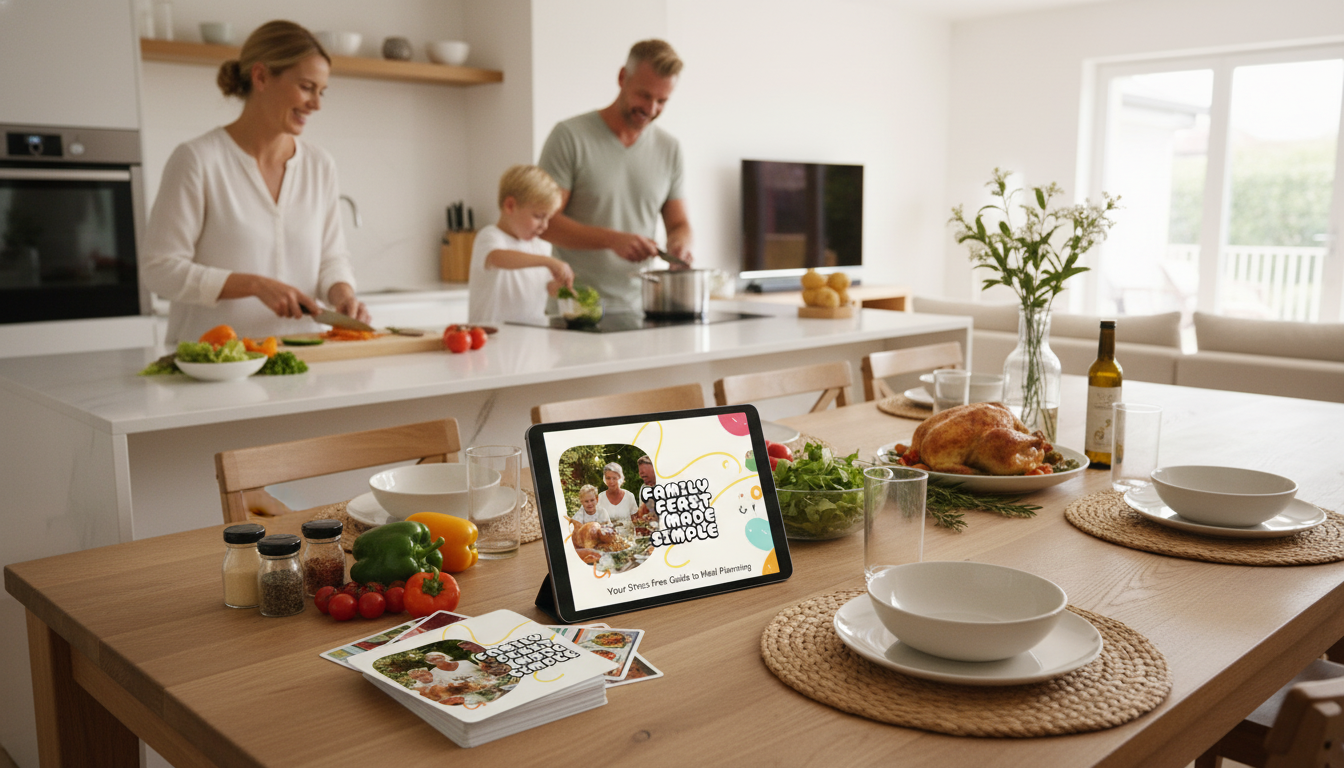
Family Feast Made Simple: A Stress-Free Meal Planning Guide for Busy Families
Dinner doesn’t have to feel like a nightly scramble. A simple, repeatable meal-planning rhythm can reduce decision fatigue, cut grocery costs, and make weeknights calmer—without sacrificing variety. The goal isn’t perfection; it’s creating a system that still works when practice runs late, homework explodes, or someone’s energy hits zero.
Below is a practical approach built around real schedules, plus an easy way to start quickly with reusable tools you can keep on your phone, tablet, or printed on the fridge.
What “stress-free meal planning” actually looks like
Stress-free meal planning isn’t a color-coded spreadsheet that collapses the first time life happens. It’s a light framework that makes dinner feel predictable without becoming rigid.
- A short weekly reset (15–25 minutes): glance at the calendar, map dinners, and build a grocery list.
- A flexible plan with built-in backups: late practices, sick days, and surprise meetings are expected—not emergencies.
- A small set of family-approved meals: rotate “wins” and add seasonal sides or sauces so nobody feels stuck.
- Less mental load through templates: theme nights, pantry dinners, and leftovers are scheduled on purpose.
If healthy eating is a priority, a simple visual guide like USDA MyPlate can help balance meals without extra math or macro tracking.
A realistic weekly meal-planning rhythm (calendar-first)
Planning works best when the calendar comes first. Instead of choosing meals in a vacuum, match dinner effort to the time and energy you actually have.
- Start with the week’s constraints: late workdays, sports, appointments, travel, and school events.
- Assign low-effort meals to busy nights: sheet-pan dinners, slow cooker meals, rotisserie chicken, or breakfast-for-dinner.
- Schedule 1–2 higher-effort meals on lighter days: it keeps variety and morale high without burning out.
- Plan at least one intentional leftovers night: reduce cooking and food waste.
- Keep a “panic plan” list of 5 fast dinners: 15 minutes, mostly pantry/freezer staples, no complicated prep.
Quick weekly plan template (example)
| Day | Schedule check | Dinner style | Notes / backup |
|---|---|---|---|
| Mon | Late meeting | Pantry pasta + salad | Backup: eggs + toast |
| Tue | Practice night | Taco bowls | Prep toppings ahead |
| Wed | Open evening | Roast chicken + veggies | Use leftovers for Thu |
| Thu | Homework heavy | Leftovers remix | Add frozen veg |
| Fri | Family night | Homemade pizza | Backup: store-bought crust |
| Sat | Errands | Slow cooker chili | Freeze extras |
| Sun | Reset day | Soup + sandwiches | Plan next week after dinner |
Build a family-friendly meal map (without cooking separate dinners)
The fastest way to make meal planning sustainable is to stop reinventing dinner. A “meal map” is a short list of dinners your household generally accepts—then you vary sides, sauces, and formats so it doesn’t feel repetitive.
- Choose 10–15 core dinners: rotate them, then swap seasonal produce or sides (corn in summer, roasted squash in fall).
- Go modular: one protein + two sides + one sauce/seasoning path (tacos, bowls, wraps, salads).
- Keep two “everyone eats” options on standby: quesadillas, rice bowls, pasta with a simple sauce, or breakfast-for-dinner.
- Use “add-ons” for picky eaters: fruit, yogurt, plain rice, raw veggies, or a roll—without making a second entrée.
If you’re aiming for balanced plates while keeping things easy, the CDC’s healthy eating guidance is a helpful reference for simple, realistic nutrition habits.
Shopping that supports the plan (and avoids midweek extra trips)
A plan only saves time if shopping supports it. The biggest cost (and stress) often comes from “just one more trip,” so set up your shopping to protect weeknights.
Planning leftovers isn’t just convenient—it can reduce waste. The EPA’s tips for reducing wasted food at home are especially useful for storage, leftovers, and smarter portions.
Time-saving tactics that compound over the month
Make it easy to start: Family Feast Made Simple (digital download)
If the hardest part is getting started (or staying consistent), a ready-to-use guide can remove the blank-page problem. Family Feast Made Simple: Your Stress-Free Guide to Meal Planning (digital download) is built for busy households that want structure without rigidity—ideal for calendar-first planning, theme nights, and intentional leftovers.
For families who plan on the go (carpool lines, practice fields, travel days), keeping devices powered makes a difference. A small, budget-friendly option like the 10W Dual USB Fast Charger Adapter for Smartphones & Travel Use can help keep your planning tools accessible when schedules get busy.
At-a-glance product details
| Item | Format | Price | Availability |
|---|---|---|---|
| Family Feast Made Simple: Your Stress-Free Guide to Meal Planning | Digital download eBook | 7.99 USD | In stock |
A simple 7-day reset plan to keep going
FAQ
How far ahead should a busy family plan meals?
One week at a time works best for most families because it matches real schedules and reduces wasted groceries. A light monthly rotation of “core dinners” can speed up planning, then adjust week to week based on the calendar.
What if the plan falls apart midweek?
Use backup meals, swap days, and lean on your intentional leftovers night. A meal plan is a guide, not a rule—flexibility is what makes it sustainable.
How can meal planning help reduce grocery spending?
Planning helps you shop pantry-first, reuse overlapping ingredients across meals, and schedule leftovers so food gets eaten instead of tossed. It also reduces impulse takeout by keeping a realistic “panic plan” ready when time disappears.











Leave a comment