Luxury Living Room Styling: Designer Steps + Checklist
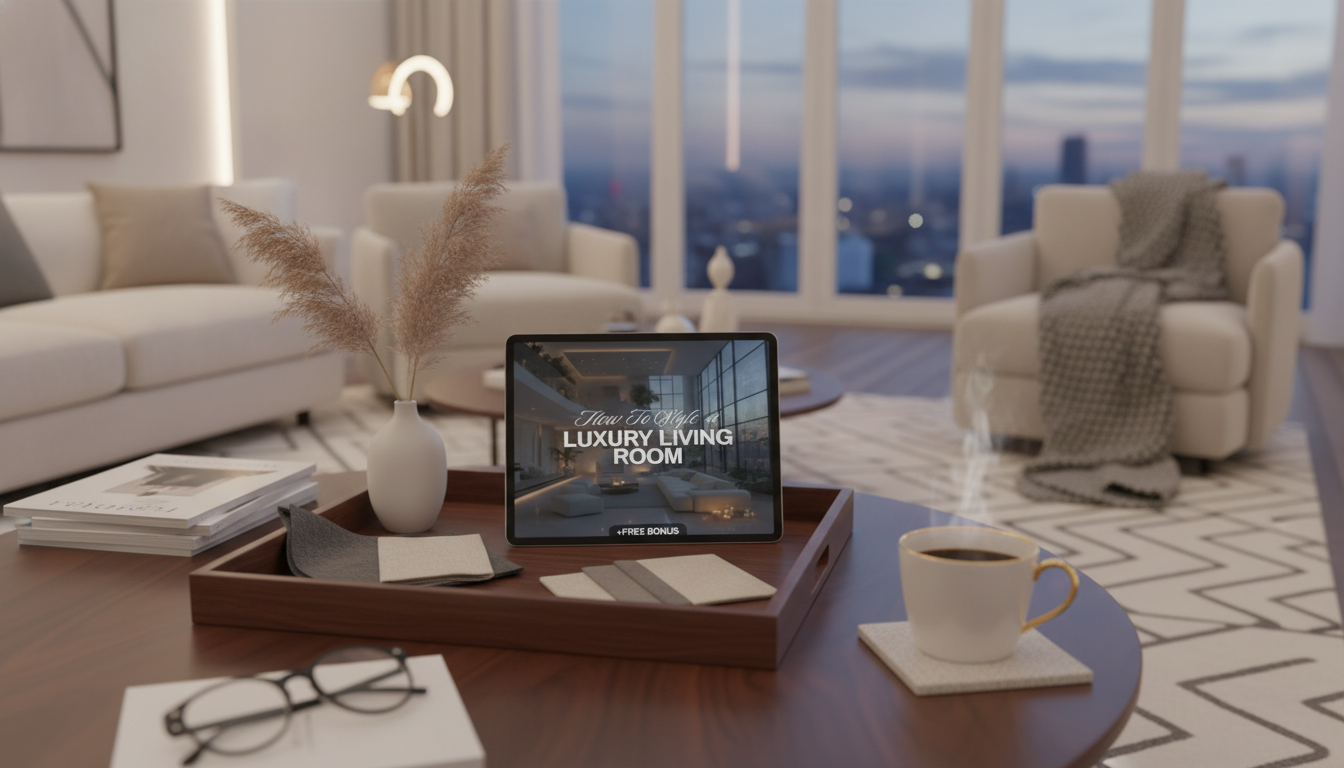
How to Style a Luxury Living Room: A Practical Guide to Elegant, High-End Interiors
A luxury living room feels intentional: balanced proportions, refined materials, layered lighting, and curated styling that looks effortless but never accidental. The most elevated spaces aren’t packed with “stuff”—they’re edited, cohesive, and comfortable enough to live in every day. Use the steps below to shape a polished room whether you’re starting fresh or upgrading a few key elements, then finish with a quick checklist-style scan.
What Makes a Living Room Feel Luxurious
- Proportion and restraint: fewer items, better chosen, with breathing room around them.
- A cohesive visual story: consistent undertones in wood, metal finishes, and textiles so nothing looks “off.”
- Investment in touchpoints: upholstery, rugs, lighting, and substantial accessories do the heavy lifting.
- Comfort + formality: plush seating and soft textiles paired with tailored lines and crisp edges.
- Contrast for depth: matte with gloss, soft with structured, warm with cool.
Start With a Strong Layout and Clear Focal Point
Luxury starts with architecture—real or implied. Before buying anything new, decide what the room is “about,” then make every major piece support that intention.
- Pick the focal point: a fireplace, a view, statement art, or a media wall, then orient seating toward it.
- Set conversation distance: keep main seating close enough to talk easily; place side tables within reach.
- Use an anchor rug: define the zone and place at least the front legs of the sofa and chairs on the rug.
- Balance sightlines: avoid blocking windows with tall pieces; vary heights for a composed profile.
- Plan walking paths: keep comfortable clearance around seating and between key zones.
Build a High-End Palette: Neutrals, Accents, and Undertones
A room looks expensive when the colors feel related. Start with a base neutral and commit to its undertone—warm, cool, or true neutral—across paint, upholstery, and the rug.
- Choose one base neutral family: warm ivory, greige, taupe, or cool stone.
- Add 1–2 accent hues: ink navy, emerald, oxblood, saffron, or deep plum read sophisticated fast.
- Use tonal layering: multiple shades of the same color feels richer than scattered brights.
- Repeat metals intentionally: choose a dominant finish and a secondary accent to avoid visual noise.
- Add a “structure” note: black accents or deep wood tones sharpen lighter schemes.
| Element | Pick One | Guideline |
|---|---|---|
| Base neutral | Ivory / Greige / Stone | Match undertones across paint, rug, and upholstery |
| Accent color | Navy / Emerald / Burgundy | Use in 2–4 places for repetition |
| Wood tone | Light oak / Walnut / Ebony | Keep consistent across major casegoods |
| Metal finish | Brass / Nickel / Bronze | Limit to 1–2 finishes; repeat on lighting + hardware |
| Contrast | Black / Deep wood / Charcoal | Add in frames, legs, or a sculptural piece |
Select Statement Pieces That Carry the Room
High-end rooms rely on a few anchors with presence, not a long list of medium-impact purchases. Aim for scale, craftsmanship, and materials that look better up close.
- Sofa: prioritize a refined silhouette and quality upholstery; construction and fabric are the luxury drivers.
- Coffee table: focus on scale and material—stone, lacquer, solid wood, or a metal/stone mix.
- Rug: go larger than expected; dense pile or nuanced flatweave elevates instantly.
- One hero piece: a sculptural chair, artisan console, or oversized art that signals intention.
- Avoid matching sets: mix complementary shapes and finishes for a collected look.
Layer Lighting Like a Designer
Lighting is where “nice” becomes “exceptional.” A well-lit room flatters people, makes materials look richer, and gives the space control from day to night.
- Use three layers: ambient (ceiling), task (reading), and accent (art, shelves, architectural details).
- Add symmetry where it helps: matching lamps can make the room feel calm and finished.
- Choose warm, consistent bulbs: keep color temperature aligned so the room doesn’t shift oddly at night.
- Install dimmers: a quiet luxury that changes the mood and softens hard edges.
- Treat lighting as jewelry: sculptural forms and quality finishes elevate even simple furniture.
For practical lighting fundamentals and how light behaves in a space, reference the Lighting Research Center (RPI). For broader inspiration, browse Architectural Digest decorating ideas.
Textures and Materials: The Shortcut to a Luxe Feel
If the palette is calm, texture does the talking. The goal is “layered and touchable,” not busy.
Styling the Finishing Details Without Clutter
Make It Easy: A Ready-to-Follow Guide and Checklist
If you want a step-by-step plan you can follow quickly, start here: How to Style a Luxury Living Room – Digital Guide, eBook & Checklist for Elegant Interiors, Luxury Home Decor, High-End Design Inspiration.
Optional “Luxury Detail” Picks (to reinforce the vibe)
- Dolce & Gabbana Gold Charm Necklace with Carretto Pendants and Crystals (a strong reference point for warm gold/brass-toned accents)
- Alviero Martini Prima Classe Women’s Beige Bag with Zip (a useful cue for layered greige/taupe neutrals and elevated texture)
FAQ
What are the easiest upgrades that make a living room look more luxurious?
Go bigger on scale (a larger rug and fuller drapes), add layered lighting with warm bulbs, and replace many small accessories with fewer, higher-quality pieces. Keep finishes cohesive by repeating the same metal tone across lighting and hardware.
How do you choose a luxury color palette that won’t feel dated?
Start with a timeless neutral base, then add one or two deep accents and repeat them throughout the room. Match undertones across paint, textiles, and wood tones, and rely on tonal layering rather than lots of bright colors.
How can a luxury living room still feel comfortable and livable?
Pair tailored silhouettes with plush textures, choose soft lighting, and prioritize seating comfort (depth and supportive cushions). Keep daily clutter out of sight with trays, boxes, and closed storage so the room stays polished without feeling precious.










Leave a comment