Mind Gym Reset: Calm Checklist for Negative Thoughts
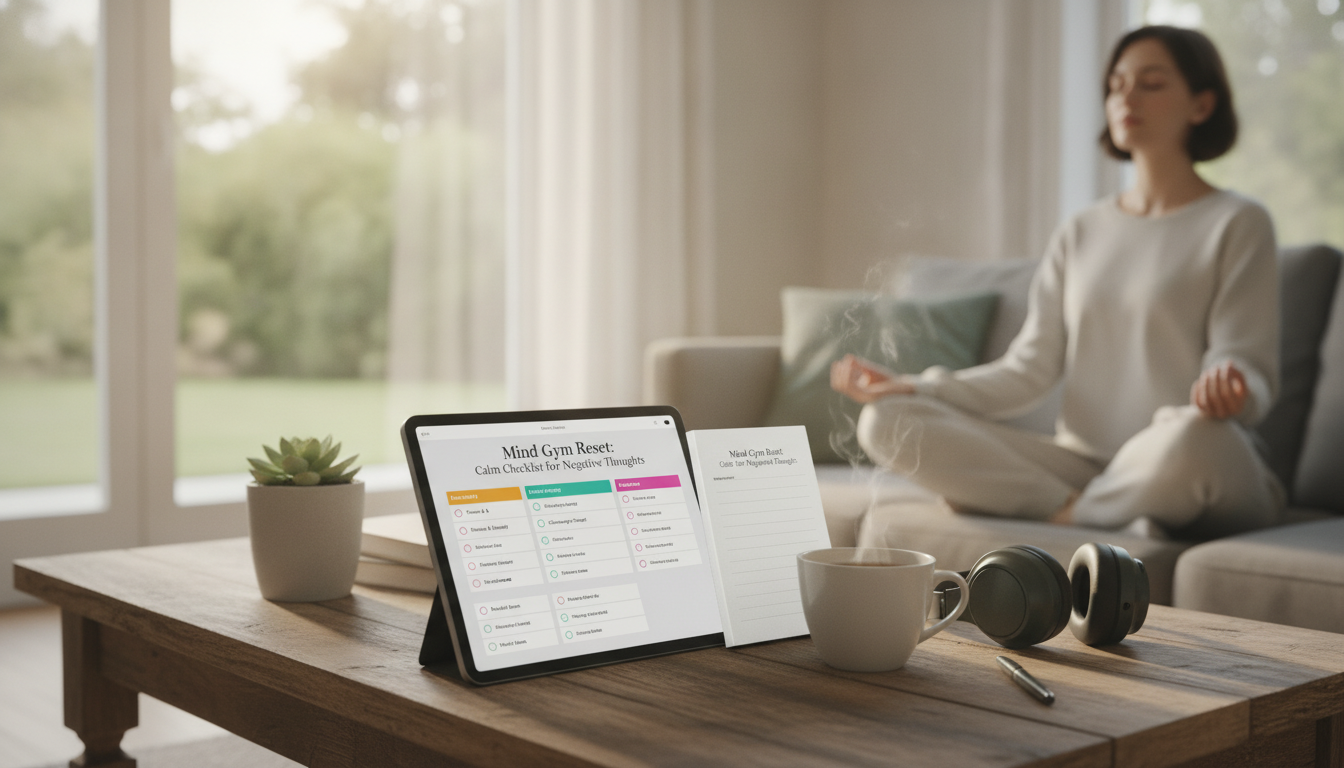
Mind Gym: A Calm Checklist for Handling Negative Thoughts
Negative thoughts can feel urgent, convincing, and loud—especially when stress is high. A simple, repeatable process helps slow the spiral, reduce emotional intensity, and choose a response that matches personal values. This guide breaks down a practical “mind gym” routine and shows how a digital checklist can turn coping skills into a quick daily practice.
What Negative Thoughts Usually Do (and Why They Feel So Real)
Negative thoughts rarely show up as neutral observations. More often, they arrive as predictions (“This will go badly”), mind-reading (“They must be upset with me”), or harsh labels (“I’m a failure”). In stressful moments, the brain treats perceived threats as urgent, and anxious thinking can masquerade as productive problem-solving—when it’s actually looping.
That’s why thoughts can feel like facts and feelings can feel like proof. When the body is activated, the mind tends to scan for danger and build a story to match. Learning to handle negative thoughts calmly is less about “getting rid of” mental noise and more about changing your relationship with it—so the thought doesn’t drive the steering wheel.
If stress has been running high, it can help to understand how strongly it affects the body and brain; the American Psychological Association explains common physical effects of stress and why regulation tools work.
The Mind Gym Routine: A 5-Minute Reset You Can Repeat
Think of this as a short circuit breaker you can run anywhere: desk chair, car, kitchen, hallway. The goal is not perfect calm; it’s enough space to choose a next step.
- Name it: Identify the thought in one sentence (“I’m going to mess this up”). Naming reduces overwhelm and increases clarity.
- Ground the body: Use one quick regulation tool (slow exhale breathing, unclench jaw, relax shoulders, feel feet on the floor).
- Rate intensity: Score emotion from 0–10; it creates distance and a measurable “before/after.”
- Check the story: Ask what the mind is predicting, what it’s assuming, and what it’s leaving out.
- Choose a next step: One small action aligned with priorities (send one email, take a 5-minute walk, drink water, ask for clarification).
Quick “Mind Gym” checklist steps and prompts
| Step | What to do | One sentence prompt |
|---|---|---|
| Label | Write the thought exactly as it appears | “The thought is: ____.” |
| Regulate | Slow the body response for 60–90 seconds | “Long exhale; soften shoulders.” |
| Rate | Score emotion intensity 0–10 | “Right now this feels like a __/10.” |
| Reframe | Swap certainty for curiosity | “What else could be true?” |
| Act | Pick one small, doable next move | “The next helpful step is ____.” |
How to Handle Negative Thoughts Calmly in the Moment
When a spiral hits, the most helpful move is often the simplest: interrupt momentum. A short “pause phrase” can create a beat of space—something like, “This is a tough moment; I can slow down.”
- Soften the language: Replace “always/never” with “sometimes/right now.” That shift alone reduces intensity.
- Separate trigger from interpretation: Write (or mentally list) what happened that a camera could record vs. what your mind concluded it meant.
- Try a compassionate reframe: Use the tone you’d use with someone you care about. Compassion doesn’t erase accountability; it makes change more possible.
- Use a “worry window”: If the thought won’t let go, schedule 10 minutes later to think it through. Until then, return to the next small task.
For many people, skills from cognitive behavioral therapy (CBT) fit naturally here; the NHS overview of CBT explains how noticing thought patterns can change emotions and behavior.
Common Thought Traps and Simple Replacements
Negative thoughts often repeat in familiar formats. Spotting the “shape” of the thought is powerful because you can respond with a practiced replacement rather than debating every detail.
- Catastrophizing: “If this goes wrong, everything is ruined” → “If it goes wrong, I can handle one step at a time.”
- All-or-nothing thinking: “If it’s not perfect, it’s worthless” → “Good enough is still progress.”
- Personalization: “This is all my fault” → “What part is mine, and what isn’t?”
- Mind-reading: “They think I’m incompetent” → “I don’t know; I can ask or wait for evidence.”
- Should statements: “I should be over this” → “It makes sense this is hard; what would help today?”
Turning Coping Skills Into a Daily Practice (So It’s Easier When You’re Stressed)
If symptoms align with depression—like persistent low mood, loss of interest, or changes in sleep and appetite—reviewing signs and treatment options from the National Institute of Mental Health can help clarify next steps.
Digital Checklist: What It Is and How to Use It Without Overthinking
In-stock tools you can use to support the routine
- Mind Gym: Train Yourself to Handle Negative Thoughts | Digital Checklist | How to Handle Negative Thoughts Calmly (quick prompts you can open when emotions rise).
- Alviero Martini Prima Classe Women’s Beige Bag with Zip (a practical “grab-and-go” item for keeping essentials together when you’re building new routines).
When to Get Extra Help
FAQ
How long does it take to calm negative thoughts using a checklist?
Many people feel an initial drop in intensity within 1–5 minutes, especially after the body-regulation step. Deeper processing can take longer, but rating your intensity before and after helps you see progress over time.
What if the same negative thought keeps coming back?
Treat it like a recurring mental pattern: label it, reduce engagement, note what tends to trigger it, and schedule a brief “worry window” if needed. If it stays persistent or disruptive, getting support from a qualified professional can help.
Is a digital checklist useful if emotions feel too intense to think clearly?
Yes—start with only the body steps (breathing, grounding, unclenching) until intensity drops. Once you’re even slightly calmer, return to labeling and reframing with simpler prompts.











Leave a comment