Pro Comb Types Hair Stylists Use (and Why)
What combs do hair stylists use?
Hair stylists rely on a small set of professional combs that each solve a specific job: controlled parting, clean sectioning, precise tension, smooth finishing, and safe detangling. Rather than using one “all-purpose” comb, most kits mix materials and tooth spacing so the comb can match the hair type, the product being used, and the technique.
Common professional combs in a stylist’s kit
Rat-tail (pin-tail) comb
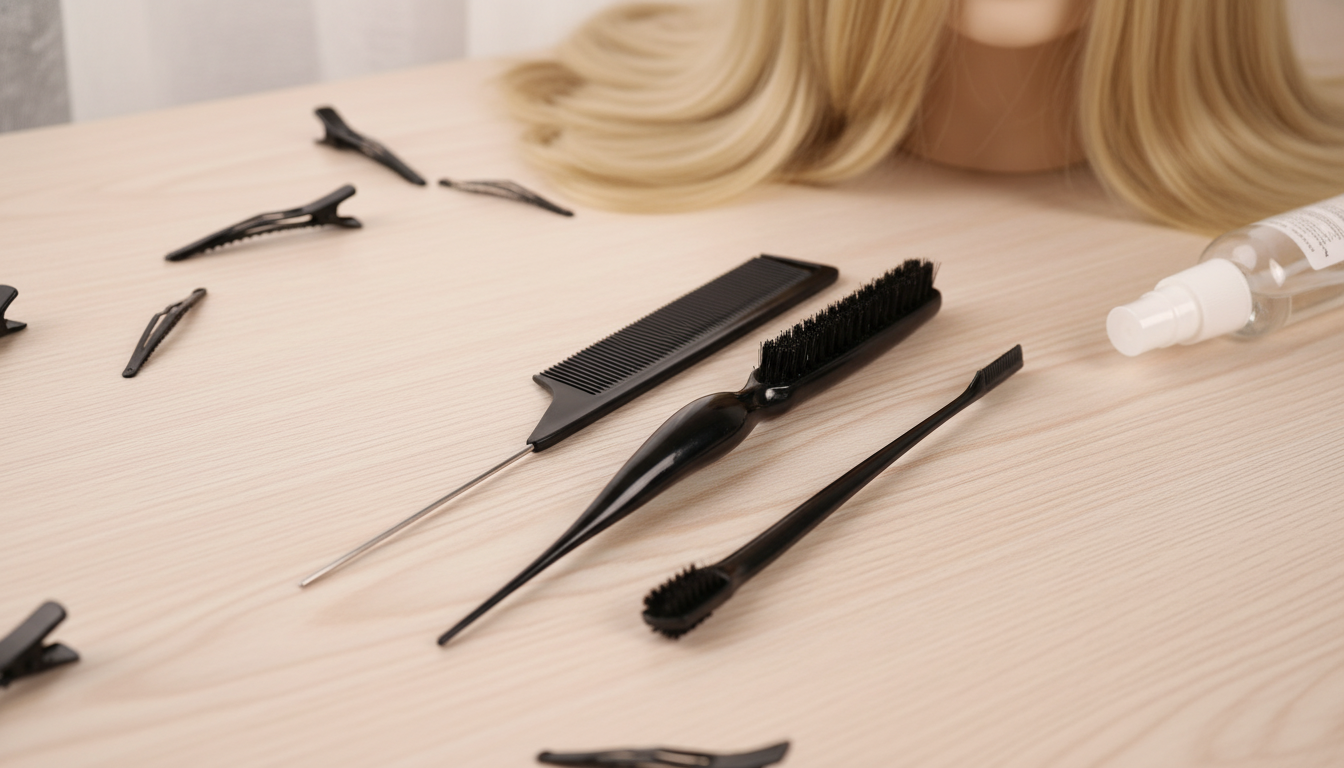
This is the go-to comb for sharp parts, weaving highlights, and creating crisp sections. The long tail gives accuracy without disrupting the rest of the style, while the fine teeth help smooth short flyaways along a part line.
Wide-tooth comb
Stylists use wide-tooth combs for gentle detangling, especially on curly, coily, or fragile hair and on wet hair where breakage risk is higher. The wider spacing helps preserve curl pattern and reduces snagging.
Fine-tooth comb
For sleek finishes, precision blending, and detailed work near the hairline, a fine-tooth comb offers tighter control. It’s also commonly used when setting hair, smoothing product through, or refining updos.
Cutting comb
A cutting comb typically has both wide and fine teeth, letting stylists switch between quick detangling and controlled tension while cutting. Many are heat- and chemical-resistant to hold up to blow-drying and salon products.
Teasing (backcombing) comb
To build volume that lasts, teasing combs feature dense teeth designed to pack hair neatly at the base without excessive pulling. They’re often used for formal styles, ponytail lift, and structured updos.
Barber comb
Barber combs are sturdy, often longer, and built for clipper-over-comb and scissor work on shorter styles. The shape helps maintain consistent tension and clean blending.
For a deeper look at comb types, materials, and what to keep in a pro-level set (including options used for wigs and extensions), see the full guide: https://magdella.com/guide-professional-wig-hair-styling-comb-set-guide/.
FAQ
What is the best comb for detangling wet hair?
A wide-tooth comb is typically best because it reduces snagging and helps minimize breakage while hair is most fragile.








Leave a comment