Negotiate Home Price: Checklist to Avoid Overpaying
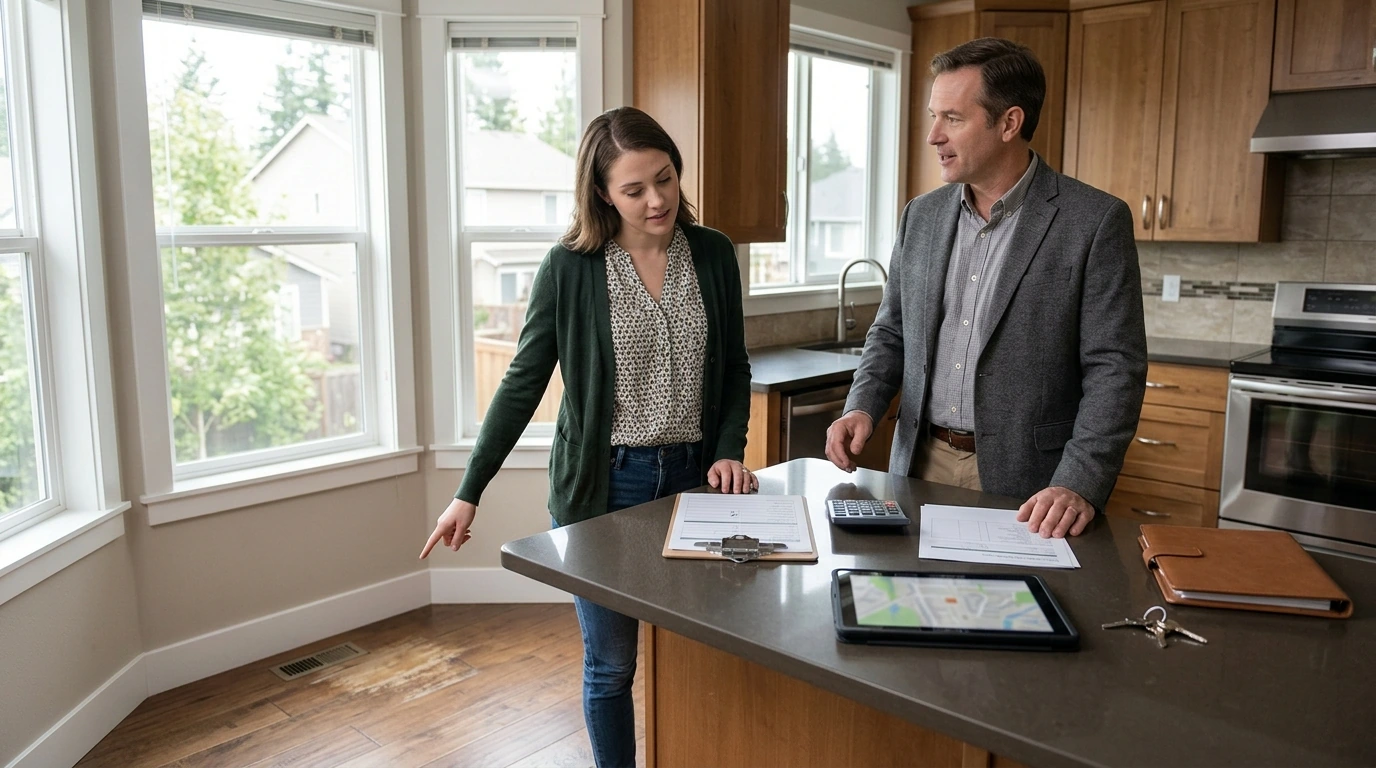
How to Negotiate Home Price Without Overpaying
A strong negotiation starts before the offer is written. When you know your budget limits, understand local market evidence, and have a plan for repairs, timing, and terms, you can submit an offer that’s compelling to a seller and still protective for you. Use the sections below like a buyer’s checklist—especially if it’s your first purchase or you’re returning to the market after a long break.
Set the non‑negotiables before touring
- Define two numbers: a maximum monthly payment and a firm walk-away price. Keep the walk-away price separate from the emotional pull of a “favorite house.”
- Confirm pre-approval details: ask your lender what rate, points, down payment, and required cash reserves the letter assumes. Your offer terms should match what underwriting can support.
- Rank what matters most: price vs. closing date, inspection period length, repair requests, seller credits, and what stays (appliances, window treatments, patio furniture).
- Prepare proof of funds: showing you can cover earnest money and down payment can strengthen credibility without increasing the offer price.
If you want a printable, streamlined version to keep on your phone while touring, see Smart Buyer Checklist: How to Negotiate Home Price.
Read the market like a negotiator
- Identify the market type: use recent comparable sales and days on market to decide whether it’s a buyer’s market, balanced market, or seller’s market.
- Track list-to-sale price ratios: in some neighborhoods, homes close at 98% of list; in others, 103% is normal. That ratio is your “reality check” on discounts (or over-ask).
- Look for leverage clues: price reductions, relist history, and “back on market” notes can indicate negotiation room or prior deal issues.
- Use true comps: same school area, similar size and condition, and closed within the last 3–6 months (or adjust for seasonality and rate shifts).
Quick leverage signals and what they usually mean
| Signal | What it can indicate | Negotiation move to consider |
|---|---|---|
| Home has been listed 30+ days with little activity | Seller may be more flexible or price is high vs. comps | Offer closer to comp value; ask for seller credits or a rate buydown |
| Multiple price cuts | Seller is chasing the market | Use latest reduced price as baseline; request inspection/repair concessions |
| Back on market after pending | Prior deal may have failed on inspection/financing | Ask questions; shorten inspection window but keep protections; request documentation |
| Very low days on market, high showing volume | Competition likely | Use clean terms, strong earnest money, and tight timelines rather than stretching price |
Build an offer that wins without overpaying
- Start with evidence: anchor your offer to the strongest comparable sale. Note adjustments clearly (condition, lot differences, upgrades, or deferred maintenance).
- Make it easy to accept: match the closing date to the seller’s timeline when possible, avoid extra contingencies that don’t protect you, and use a reputable lender with solid communication.
- Use escalation clauses carefully: cap the escalation at your walk-away price, require proof of a competing offer, and keep the increment reasonable so you don’t leapfrog too far.
- Offer alternatives to a higher price: seller-paid closing costs, credits for a rate buydown, or including specific items can preserve your cash flow without inflating the headline number.
For a clean “offer package” feel, keep documents together (pre-approval letter, proof of funds, inspection scheduling notes). A simple zip organizer can help prevent last-minute scrambles; the Alviero Martini Prima Classe Women’s Beige Bag with Zip works well as a dedicated closing-documents carryall.
Negotiate terms that protect the buyer
- Inspection contingency: keep it, but run it efficiently. Schedule inspections immediately, and define a clear response window so the deal doesn’t stall.
- Appraisal strategy: avoid open-ended appraisal gaps. If you choose to cover a gap, cap the amount and confirm you truly have the cash beyond your down payment and reserves.
- Financing contingency: keep timelines realistic. Deadlines that are too aggressive can pressure you to waive protections prematurely just to stay on schedule.
- Earnest money: offer enough to show seriousness, but only after verifying all contingency dates and the exact refund conditions in writing.
If you’re unsure how appraisal and value work, Fannie Mae’s overview of appraisal and property value basics is a helpful reference point.
Use the inspection report to renegotiate fairly
Counteroffers, deadlines, and communication tactics
For national context on market tempo and pricing trends, check the National Association of Realtors existing-home sales data.
Smart Buyer Checklist (printable-style)
For additional buyer protections and process guidance, the Consumer Financial Protection Bureau homebuying resources are worth bookmarking.
A simple script for tough negotiation moments
FAQ
What is a reasonable amount to offer below asking price?
Base your number on nearby comparable sales and the neighborhood’s list-to-sale price ratio. In hot markets, “reasonable” may be at or above asking, while in slower markets the discount depends heavily on days on market and condition.
Should a first-time buyer waive the inspection contingency to compete?
Generally, no—waiving inspection removes a major protection. A safer approach is a shorter inspection window, a pre-inspection if allowed, or limiting requests to major defects instead of giving up the contingency entirely.
Is it better to ask for a price reduction or seller credit after inspection?
Credits are often faster and more predictable, especially when repair timing or quality is uncertain. Price reductions can be better for issues that impact long-term value or appraisal/financing sensitivity; choose based on the repair type and your loan rules.











Leave a comment