Cactus Cat Tree Tower: Scratch Post, Condo & Perch
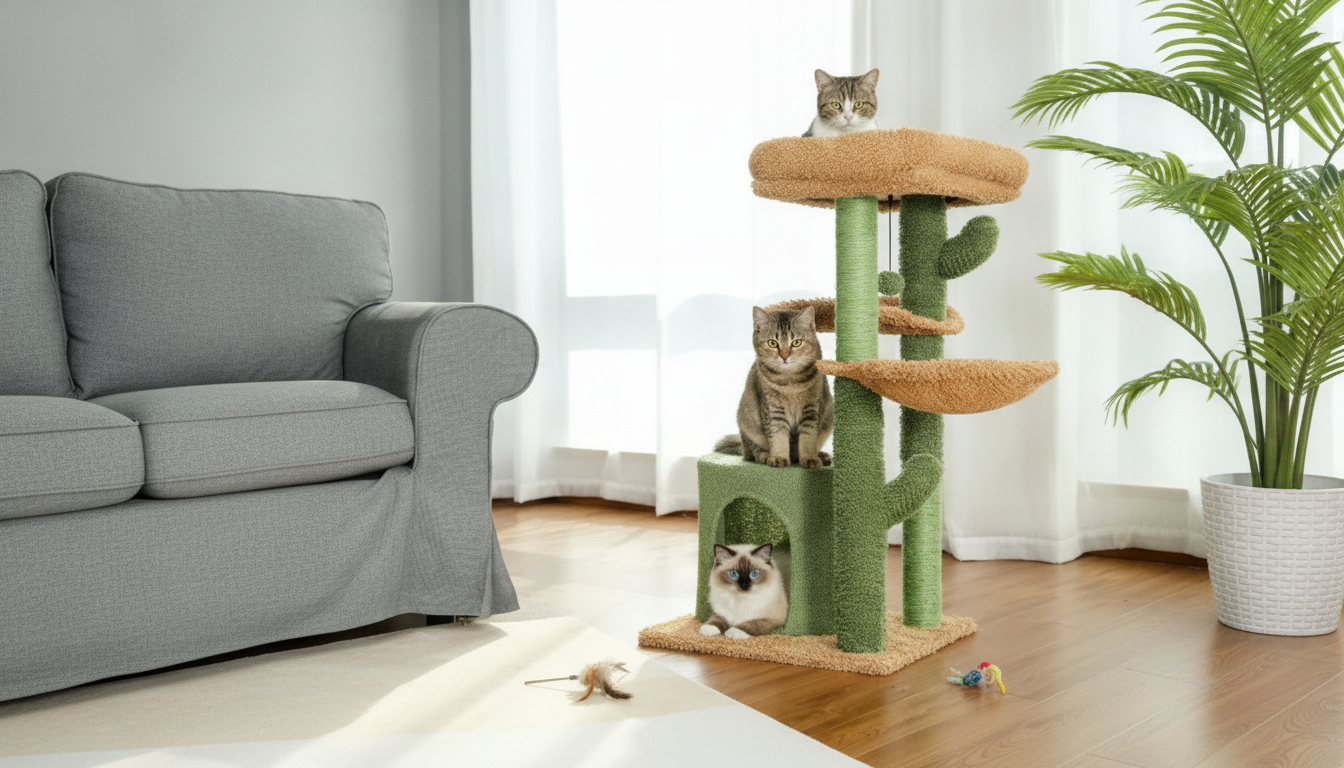
Cactus Cat Tree Tower with Scratching Post & Condo Nest
A playful cactus-shaped cat tower can do more than look cute: it can give cats a dedicated place to scratch, climb, perch, and nap while helping protect furniture and creating a predictable “cat zone” in the home. For many indoor cats, a single vertical activity center becomes a daily loop—stretch, scratch, observe, retreat, repeat—especially when it’s placed where the household naturally gathers.
What This Tower Adds to a Cat’s Daily Routine
- Scratching space that supports natural claw maintenance and full-body stretching.
- Vertical territory for climbing and observing, which can reduce boredom in indoor cats.
- A covered condo-style hideout for downtime and stress reduction.
- A nest/perch area for resting in an elevated spot away from household traffic.
- One footprint that combines multiple activities, useful for small apartments or multi-use rooms.
Scratching is a normal, necessary behavior—not a “bad habit.” The goal is to provide a better option than the sofa. Resources like International Cat Care’s guidance on scratching behavior help explain why cats scratch and how environment changes can make the biggest difference.
Design Highlights: Scratching Post, Condo, and Nest
- Cactus-themed silhouette that blends into playful or modern decor while still functioning as a cat activity center.
- Scratching post area intended for daily use; placing it near existing scratch targets can speed adoption.
- Condo nest provides a semi-enclosed retreat; ideal for cats that prefer hiding, napping, or quiet breaks.
- Top or mid-level perch supports lounging and monitoring surroundings.
- Encourages alternating behaviors—scratch, climb, rest—without needing multiple separate items.
Many households find that providing a satisfying scratching surface is part of protecting cat welfare while avoiding drastic measures. The American Veterinary Medical Association (AVMA) policy on declawing outlines why declawing is a significant procedure; enrichment and appropriate scratch targets are practical, everyday alternatives to reduce destructive scratching.
Sizing and Placement Tips for Better Use
- Choose a location where the cat already spends time (near a window, favorite chair, or living room corner).
- Keep it a short distance from walls or shelves if the cat likes to jump off the top perch.
- For timid cats, place the tower in a quieter area first, then move it to the preferred spot after it becomes familiar.
- Avoid placing near loud appliances; cats may ignore the condo if the area feels unsafe.
- If scratching is the main goal, position it close to the furniture the cat currently scratches to redirect the habit.
A simple placement trick: if your cat scratches the couch arm, set the tower so the scratching area is the “first thing” the cat meets when approaching that spot. Cats often scratch as a greeting ritual or after waking—so putting the tower along those traffic lines can boost use quickly.
Quick Spec Check Before Buying
- Stability: base should feel secure and resist wobbling during climbing and scratching.
- Materials: look for scratch-friendly wrapping and soft lounging surfaces that are easy to spot-clean.
- Sleep areas: covered condo for privacy plus an open nest/perch for cats that like elevated naps.
- Household fit: consider the tower’s footprint and where it will live long-term.
- Cat fit: kittens, average adult cats, and larger cats can have different needs for perch size and spacing.
Feature Checklist for a Cactus-Style Cat Tower
| Feature | Why it matters | What to look for at home |
|---|---|---|
| Scratching post | Supports healthy scratching and can reduce furniture damage | Cat uses it daily; place near existing scratch spots |
| Condo hideout | Creates a secure retreat for naps and decompression | Cat spends time inside during quiet hours |
| Nest/perch | Provides an elevated resting area and a sense of territory | Cat lounges and watches activity from above |
| Stable base | Helps prevent tipping and improves confidence while climbing | Minimal wobble during scratch sessions |
| Easy-care surfaces | Helps manage shedding and odor over time | Vacuum-friendly fabrics; spot-cleanable areas |
How to Help a Cat Start Using It
- Rub a small amount of catnip (if the cat responds to it) on the scratching area or perch to encourage exploration.
- Use treats to reward stepping onto the base, then the lower platform, then the condo entrance.
- Play with a wand toy around the tower so the cat naturally climbs and engages.
- If the cat scratches elsewhere, gently guide to the post and reward immediately after a successful scratch.
- Keep nails trimmed to reduce snagging and to make scratching sessions safer and more comfortable.
Cleaning, Maintenance, and Longevity
Who It’s Best For
Product Options (In Stock)
- Cactus Cat Tree Tower with Scratching Post & Condo Nest ($73.51) — a themed vertical activity center combining scratch, hide, and perch zones in one compact setup.
- Geometric Ceramic Vase – Black & White Porcelain Flower Arrangement with Stone Pattern ($122.01) — a decor-friendly option for styling a corner near your cat zone while keeping the room cohesive.
FAQ
How tall should a cat tower be for an indoor cat?
The best height depends on your cat’s age, mobility, and confidence. Even a moderate-height tower can provide valuable vertical territory, and placing it near a window often increases use because cats like to watch outdoor activity.
How can a cat be trained to use a scratching post instead of furniture?
Place the scratching area near what your cat currently scratches, reward immediately after your cat uses it, and use play to lead them onto the tower. Avoid punishment; instead, make the post the easiest, most rewarding option (catnip can help if your cat responds to it).
Do cats actually use the condo part of a cat tree?
Many cats enjoy enclosed spaces because they feel secure. Condo use improves when the tower is in a quiet spot, the inside feels soft and inviting, and the cat is allowed to discover it at their own pace.








Leave a comment