Genuine Leather Pillow Bag: Large Capacity Crossbody
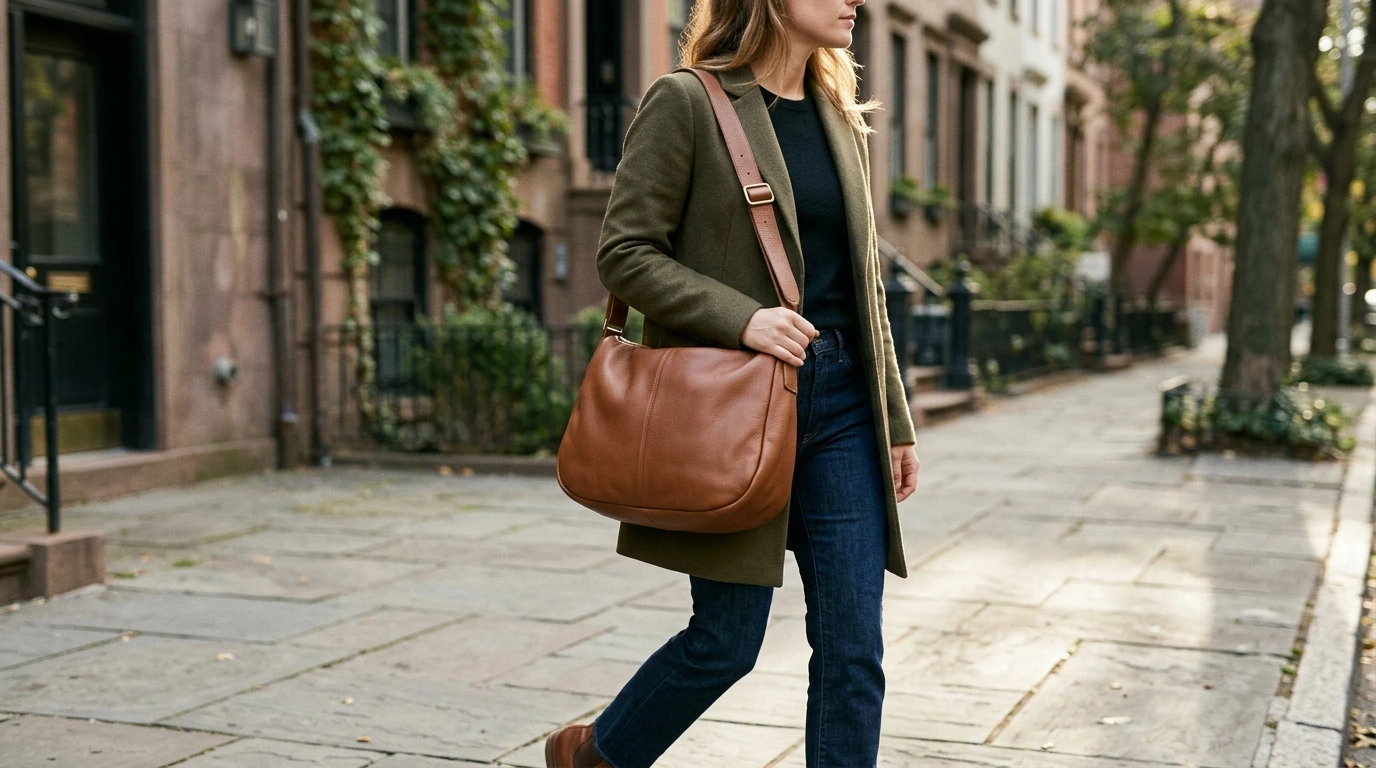
Genuine Leather Large Capacity Shoulder & Crossbody Pillow Bag for Women
A pillow bag brings softness to a structured wardrobe: rounded, comfortable against the body, and polished enough to carry from weekday errands to dinner plans. Our team designed this genuine leather option around the two things that make a bag easy to live with—room to carry what matters and a strap setup that adapts to how your day actually moves (hands-free crossbody, relaxed shoulder carry, or tucked close when you need it).
What makes a pillow bag feel effortless
The appeal is simple: it looks refined without feeling stiff. The softly rounded silhouette sits comfortably against your torso instead of jutting out at the hip, which makes it easier to wear for longer stretches. Clean, minimal lines also make styling straightforward—this shape pairs naturally with denim and knits, but it doesn’t compete with tailored coats or dressier outfits either.
- Cushioned silhouette: A rounded profile that stays comfortable on-body.
- Clean, minimal lines: Easy to pair with casual and polished looks.
- Day-to-night versatility: Relaxed for daytime, elevated with sharper pieces.
- Genuine leather presence: A material that can develop richer character over time when cared for well.
If you like learning about leather as a material and why it ages the way it does, Encyclopaedia Britannica offers a helpful overview: https://www.britannica.com/topic/leather.
Large capacity, organized for real routines
A “large capacity” bag only feels like a win if it stays comfortable and you can actually find what you need. This pillow bag shape is especially practical because it carries a fuller lineup—phone, wallet, keys, sunglasses, a small cosmetics pouch—without looking overly rigid or bulky. On-body comfort comes down to balance: placing heavier items closer to the center helps the bag sit closer and reduces shoulder strain.
- Room for daily essentials: Carry more than the basics without forcing the bag into an overstuffed look.
- Better balance on-body: A larger bag can still feel light when it rides close to you.
- Pack with intention: Keep heavier items (power bank, compact umbrella) toward the middle.
- Quick-grab strategy: Put your most-used items where you can reach them without unpacking everything.
Carry modes and when they work best
| Carry mode | Best for | What to keep in mind |
|---|---|---|
| Crossbody | Commuting, travel days, shopping, hands-free errands | Keep the bag close to the body; avoid overloading for long walks |
| Shoulder | Short outings, dinner plans, office-to-evening transitions | Adjust strap so it doesn’t slip; distribute weight evenly |
| Tucked under arm | Crowded spaces, quick stops, event settings | Keep essentials near the top for faster access |
Genuine leather care that keeps the bag looking elevated
Genuine leather is resilient, but it responds best to consistent, low-effort care. Occasional conditioning helps maintain suppleness and reduces dryness; always spot-test any product first. If you’re caught in rain, blot gently and let the bag air-dry away from direct heat—quick heat can stiffen leather and distort shape.
- Condition occasionally: Maintain softness; spot-test first.
- Protect from saturation: Blot and air-dry; avoid radiators or hair dryers.
- Store with shape support: Lightly fill with clean tissue or soft cloth to keep the pillow silhouette.
- Avoid surface transfer: Be mindful of denim dye, heavy perfume, and oily hand creams—especially on lighter finishes.
- Clean with restraint: Start with a soft, dry cloth; use leather-appropriate cleaner only when needed.
For broader, conservation-minded storage and handling guidance, the Smithsonian Museum Conservation Institute is a solid reference point: https://www.si.edu/mci. If you’re curious about responsible leather industry standards, you can also explore the Leather Working Group: https://www.leatherworkinggroup.com/.
Styling notes: from off-duty to polished
One of the most useful qualities of a pillow bag is the way it softens sharper outfits and refines casual ones. The rounded shape adds ease to tailored layers, while genuine leather texture keeps everyday looks from feeling too plain.
- Off-duty uniform: Jeans, tee, trench—soft bag shape balances structured outerwear.
- Work-ready: Tailored trousers and a knit top; shoulder carry reads more refined.
- Evening simplification: Go monochrome and let leather texture add depth without piling on accessories.
- Seasonal ease: Works with puffers and wool coats; the rounded silhouette keeps winter layers from looking rigid.
Daily-use habits that help any leather bag last longer
In-stock picks from our team
- Genuine Leather Large Capacity Shoulder & Crossbody Pillow Bag for Women
- Alviero Martini Prima Classe Women’s Beige Bag with Zip
- Dolce & Gabbana Gold Charm Necklace with Carretto Pendants and Crystals
The bag to reach for when you want comfort without sacrificing polish
FAQ
How much can a large capacity pillow bag hold for a typical day out?
For a normal day, you can comfortably fit your phone, wallet, keys, sunglasses, a small cosmetics pouch, and a charger or power bank. To preserve the pillow shape, keep bulky or heavy items to a minimum and avoid routinely packing it to the brim.
Is a pillow bag better worn as a shoulder bag or crossbody?
Crossbody is best when you want hands-free security—commuting, shopping, or travel days—because the bag stays close to your body. Shoulder carry works well for quick access and a dressier look; adjusting strap length so the bag sits comfortably prevents slipping and helps balance weight.
How should genuine leather be stored between uses?
Store leather in a cool, dry place away from direct sun or heat, and lightly stuff the bag with clean tissue or soft cloth to maintain its silhouette. Use a dust bag for protection, avoid plastic bags that trap moisture, and condition occasionally to keep the leather supple.









Leave a comment