Grow at Your Own Pace: A Calm Weekly Rhythm Guide

Growth That Feels Right: a calmer way to move forward
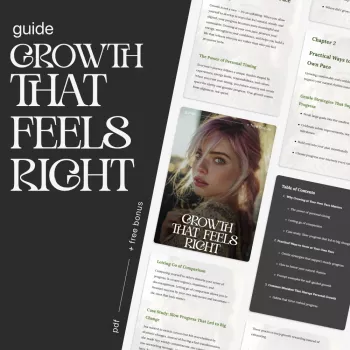
Growth can be exciting—until it starts to feel like a race. When “doing more” stops feeling motivating and starts feeling heavy, the answer usually isn’t pushing harder; it’s getting more accurate about what you actually have capacity for. Our team created Growth That Feels Right | Guide on How to Grow at Your Own Pace with Self-Awareness and Confidence for real life: changing energy levels, responsibilities, values, and boundaries. The goal is progress that matches you—so confidence comes from alignment, not comparison.
If you want a practical rhythm you can repeat (even on average days), this guide gives you structure without the pressure to “optimize” your whole life at once.
When growth feels wrong (and why that matters)
When growth is out of sync, the biggest cost is usually internal: you lose clarity and self-trust. Rushing creates noise—goals get louder than needs. It’s also common to over-correct: going from “stuck” to extreme routines that don’t last, then blaming yourself when they collapse.
Another quiet trap is comparison disguised as ambition. If progress is measured by someone else’s timeline, it’s easy to treat your own limits like failures. The goal isn’t slower growth; it’s sustainable growth that fits. A “right pace” is the pace you can repeat without self-betrayal.
When stress is running high, capacity shrinks—sleep, attention, patience, and decision-making all take a hit. If you want a quick science-grounded refresher on how stress affects functioning, the NIH overview is a useful reference: National Institutes of Health (NIMH): Stress.
What “growth that feels right” actually looks like
Aligned growth is less dramatic and more durable. It’s values-led, body-aware, and identity-safe—meaning your changes build self-trust instead of constant self-criticism. It also leaves room for seasons: some months are for building; others are for maintaining and recovering.
Fast pressure vs. steady alignment
| If growth feels pressured… | If growth feels right… |
|---|---|
| Motivation spikes, then crashes | Motivation stays quieter but steadier |
| Plans depend on perfect days | Plans work on average days |
| Progress is measured by speed | Progress is measured by follow-through |
| Rest feels like falling behind | Rest is part of the plan |
| Confidence depends on outcomes | Confidence grows from self-trust |
A helpful anchor here is self-awareness: noticing your internal state and adjusting your choices accordingly. If you like clear definitions, the APA dictionary entry is a solid baseline: American Psychological Association (APA): Self-awareness.
How to use the guide: a simple weekly rhythm
“Do more” isn’t a plan. A rhythm is. The structure below is intentionally light so you can keep showing up even when the week gets messy.
Step 1: Notice (5–10 minutes)
Name what’s true right now: energy, mood, stressors, and needs. This prevents building a plan on denial.
Step 2: Choose a focus (10 minutes)
Pick one growth area that supports your current season—health, work, relationships, confidence, boundaries, or creativity. One focus keeps your nervous system out of “too much” mode.
Step 3: Set one anchor habit
Choose a small action that makes the week feel “on track” even when life is busy. Think: short walk, 15 minutes of writing, one drawer cleaned, one outreach message—small, repeatable, and real.
Step 4: Add one self-awareness check-in
Pick a single question to revisit midweek to keep your actions aligned. Examples: “What do I need today?” or “Is this choice supporting my values?”
Step 5: Reflect without scoring
Swap “How did I perform?” for “What did I learn about what works for me?” Reflection should create information, not shame.
Weekly check-in template (copy/paste friendly)
| Prompt | Example fill-in |
|---|---|
| What feels heavy this week? | Too many commitments; sleep has been short |
| What matters most right now? | Stability and finishing one key task |
| What’s one realistic win? | 15 minutes daily on the priority project |
| What boundary supports that win? | No late-night scrolling after 10:30 |
| What will I adjust if life happens? | Reduce to 5 minutes rather than skipping |
Confidence that comes from self-awareness (not constant proving)
If you want extra context around how beliefs about learning and change affect behavior, Stanford’s mindset resources are a strong, practical reference: Stanford University: Mindset.
Common sticking points—and the gentler way through
Quick swaps to keep momentum
| Instead of… | Try… |
|---|---|
| “I need to fix everything.” | “What’s the next kind step?” |
| “I blew it.” | “What’s the smallest repair?” |
| “I have no discipline.” | “My plan didn’t match my capacity.” |
| “I must do it perfectly.” | “I’ll do a test version.” |
| “I’ll start when life calms down.” | “I’ll start with what fits today.” |
Make it yours: small rituals that keep growth personal
Shop tools our team recommends (in stock)
- Cactus Cat Tree Tower with Scratching Post & Condo Nest
- Alviero Martini Prima Classe Women’s Beige Bag with Zip
FAQ
How is this different from a typical goal-setting workbook?
Instead of pushing bigger goals, it centers pacing, self-awareness, and values alignment so your plan fits your actual capacity. You’re building sustainable consistency and self-trust, not a high-pressure checklist.
What if motivation comes and goes—can this still work?
Yes. The system relies on anchor habits and “minimum versions” that still count on low-energy days, so you’re not depending on mood to make progress.
Is this guide better for big life changes or small everyday improvements?
Both. You can use it for small routines that stabilize your week and for reflective prompts that help you navigate bigger transitions with less self-abandonment.










Leave a comment