10 Best U.S. National Parks: Quick Facts & Easy Planning
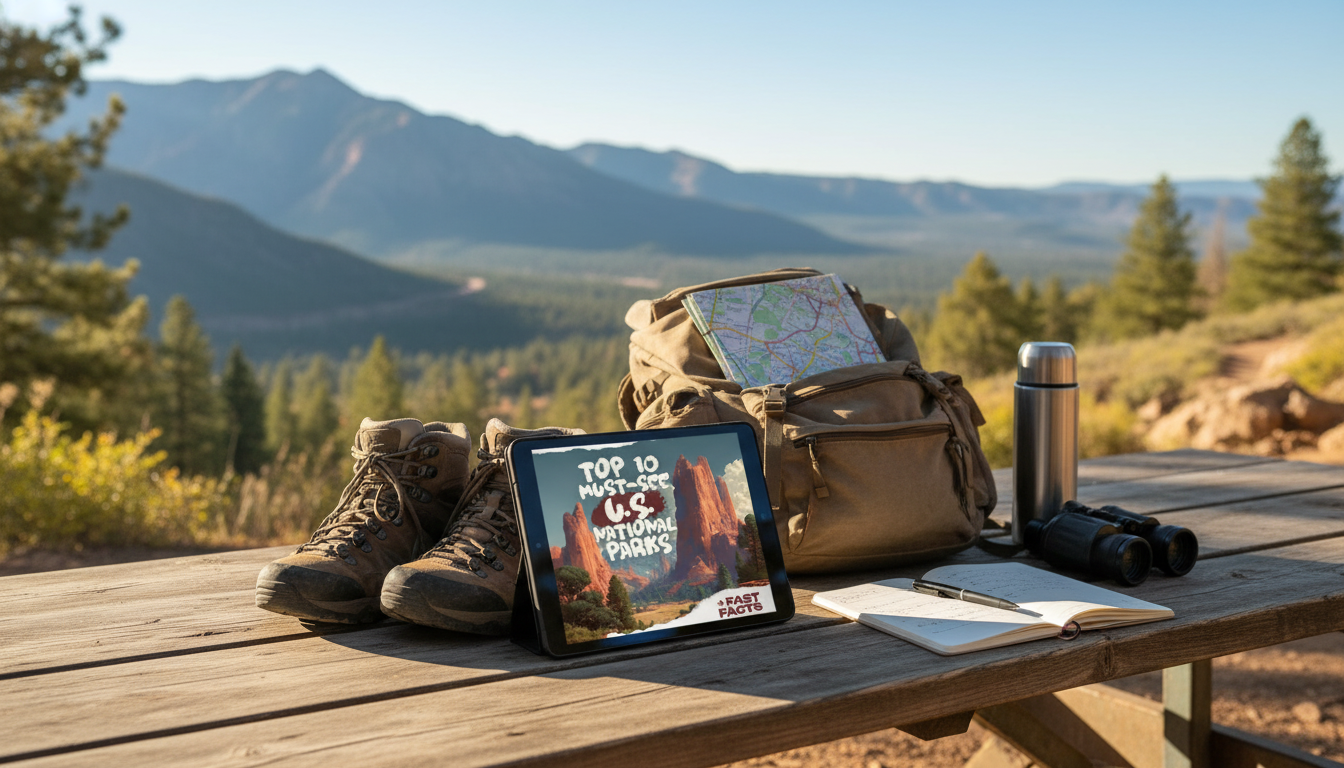
Top 10 Must-See U.S. National Parks: Fast Facts and Trip-Planning Shortcuts
National parks can feel overwhelming to plan—distances are huge, seasons shift quickly, and the best viewpoints often require timed entry, shuttles, or early starts. Below is a practical, fast-facts-first guide to ten standout parks, plus simple planning steps for hikers and adventure planners who want less guesswork and more time outside.
Quick snapshot: 10 parks worth building a trip around
Use this list to match the trip to your priorities: scenery (mountains, desert, coast), activity level (scenic drives vs. big hikes), and season. It also helps with smart pairings for road trips—Utah’s parks cluster well, California’s Sierra parks can combine, and Arizona + Utah is a classic loop.
- Start with the landscape you want most: alpine lakes, red rock canyons, coastal trails, or geothermal basins.
- Pair nearby parks to reduce drive time and increase trail time.
- Plan around access constraints: timed entry, shuttle-only corridors, and high-altitude roads that close seasonally.
Fast facts for trip planning
| Park | Best for | Typical best season | Planning note |
|---|---|---|---|
| Yellowstone | Geysers, wildlife, big loops | Late spring–early fall | Roads and lodging book early; wildlife viewing needs distance and patience |
| Yosemite | Granite icons, waterfalls, day hikes | Spring (falls) / Fall (fewer crowds) | Valley traffic and parking are major factors; check entry rules |
| Grand Canyon | Rim views, classic hikes, geology | Spring / Fall | South Rim is most accessible; inner-canyon hikes require heat planning |
| Zion | Canyon hikes, narrows, big views | Spring / Fall | Shuttle system affects trail access; popular hikes may require permits |
| Bryce Canyon | Hoodoos, sunrise/sunset, short hikes | Late spring–fall | High elevation means cooler temps; snow can linger |
| Arches | Natural arches, photography, easy-to-moderate trails | Spring / Fall | Heat is intense in summer; check timed entry requirements |
| Glacier | Alpine lakes, big hikes, wildlife | Summer–early fall | Going-to-the-Sun Road access can be limited; verify vehicle reservations |
| Rocky Mountain | Alpine tundra, scenic drives, wildlife | Summer / Fall | High altitude impacts pacing; afternoon storms are common |
| Acadia | Coastal hikes, carriage roads, sunrises | Late spring–fall | Parking fills early; consider shuttles and early trail starts |
| Great Smoky Mountains | Waterfalls, wildflowers, ridgelines | Spring (blooms) / Fall (color) | Crowds concentrate near main hubs; explore quieter trailheads |
Choose the right park by landscape and energy level
Picking the “best” park is really about matching your days to your energy level and the scenery you’ll actually enjoy. A high-mileage glacier hike is incredible—unless everyone in the car is secretly hoping for scenic pullouts and short loops.
- Iconic views with minimal hiking: Grand Canyon rim overlooks, Bryce overlooks, Yosemite Valley viewpoints (big payoff without big mileage).
- Water-forward experiences: Yosemite in spring for waterfalls, Acadia’s rocky coastline, Great Smoky waterfalls after rain (expect muddy, slippery sections).
- High-mileage hiking: Glacier and Rocky Mountain deliver long alpine routes—start early and keep a weather buffer for wind, storms, or wildfire smoke.
- Desert adventure: Zion and Arches bring huge scenery with limited shade; plan earlier starts and longer water carries.
If you’re still undecided, browse landscapes and current alerts on the National Park Service “Find a Park” page to see what’s open, what’s seasonal, and what’s under construction.
Permits, timed entry, and shuttles: the three planning traps
Most “trip chaos” comes from access rules, not from the trails themselves. A little checking up front prevents showing up at a gate only to learn you needed a reservation weeks ago.
For permits, campsites, and many federal reservations, check Recreation.gov early—then set reminders for release dates.
Build a simple 3-step itinerary that holds up in real conditions
Packing and safety essentials for hikers and road-trippers
- Water + sun protection: Desert parks often require more water than expected. Carry extra, add electrolytes if you’re sweating heavily, and schedule shade breaks.
- Layers: Alpine parks can swing from warm sun to cold wind fast. Bring a wind layer and insulation even in summer.
- Navigation and battery: Download offline maps and keep devices powered during long driving days and trail use.
- Wildlife and food storage: Follow posted rules (especially in bear country) and never approach animals for photos.
- Leave No Trace basics: Stay on durable surfaces, pack out trash, and respect closures. Review the NPS Leave No Trace principles before you go.
A ready-made, fast-facts travel guide to keep planning friction low
- Top 10 Must-See U.S. National Parks + Fast Facts | Digital Travel Guide eBook for Nature Lovers, Hikers & Adventure Planners
- 10W Dual USB Fast Charger Adapter for Smartphones & Travel Use (handy for long drive days and charging at trailhead stops)
- High-Brightness Rechargeable Waterproof Bike Headlight (useful for pre-dawn starts at camp or roadside gear checks in low light)
FAQ
Which national parks are best for a first-time trip?
Yosemite, the Grand Canyon (South Rim), Great Smoky Mountains, and Acadia are strong first-timers thanks to iconic views and straightforward logistics. Go in shoulder seasons when possible, and plan early starts to reduce parking and traffic stress.
When should reservations be booked for popular parks?
Peak-season lodging and campsites often book months in advance, and timed-entry or hike permits can have specific release windows. Check official park pages and Recreation.gov as soon as your dates are even tentatively chosen.
How many days are enough for one national park?
One day covers highlights, 2–3 days works well for a mix of scenic drives and day hikes, and 4–7 days fits deeper hiking or backcountry plans. Factor in travel time, altitude acclimation, and heat management—those can reduce what’s realistic in a single day.










Leave a comment