Build a 3D Wooden Hand-Crank Film Projector (183 pcs)
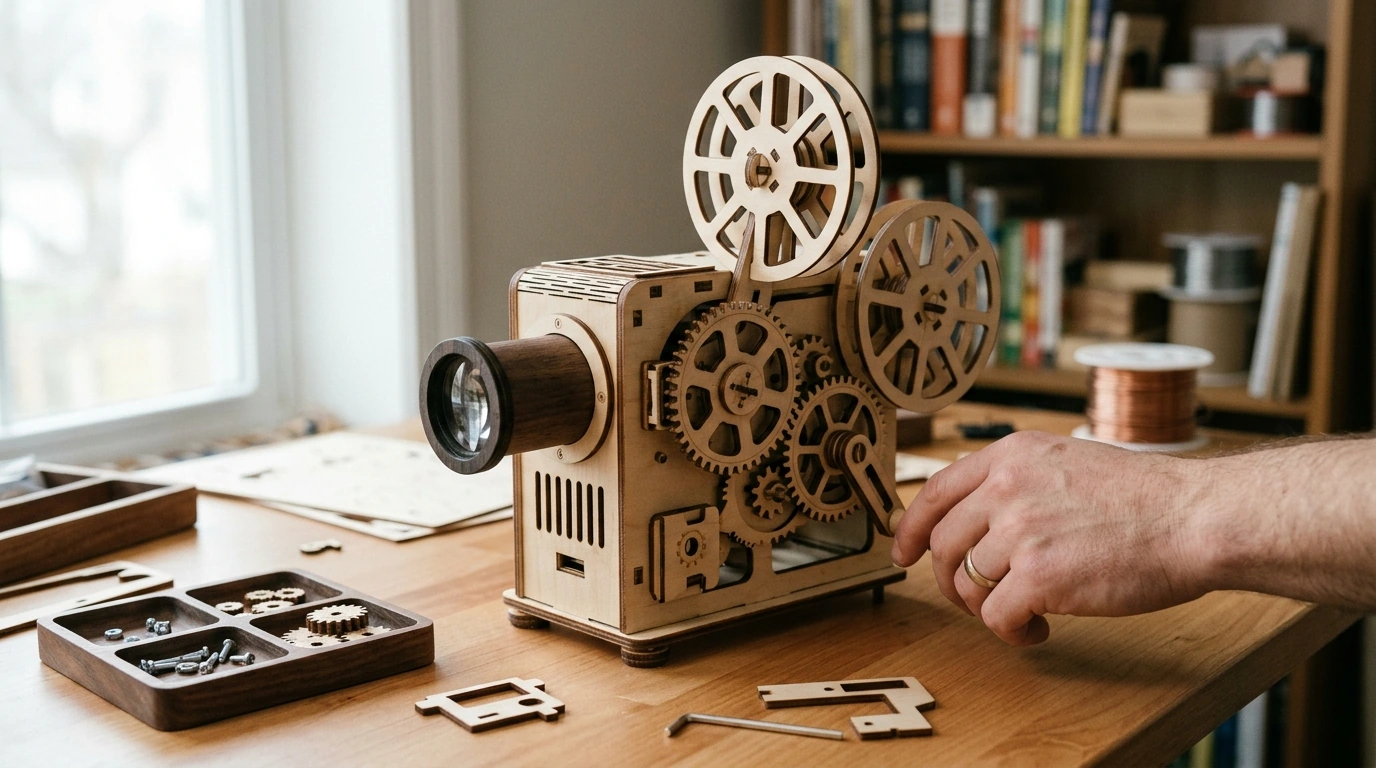
183-Piece DIY 3D Wooden Hand-Crank Film Projector Kit: Build, Display, and Bring Motion to Life
Some projects do more than fill an afternoon—they earn a permanent spot on the shelf. Our 183-Piece DIY 3D Wooden Hand-Crank Film Projector Kit blends hands-on building with old-school cinema charm, turning precision-cut wooden parts into a working, hand-powered centerpiece that looks as satisfying as it feels to assemble. If you love the calm focus of assembling something intricate—and you want the finished result to feel “real,” not disposable—this is the kind of build that pays you back every time you turn the crank. For more guidance, see ROKR Movie Projector: Reproduce Classic Scenes In ….
What This Kit Is Made For
- A build that rewards patience: this is a multi-step assembly with a true “finished object” payoff.
- A display piece with purpose: the final build is meant to be shown off, not tucked away.
- A screen-free kind of fun: hand-crank operation adds a tactile, mechanical rhythm to the experience.
- A gift that feels personal: great for makers, movie lovers, and anyone who likes intricate wooden models.
What’s Inside the 183-Piece Build
This kit is all about precision and sequencing. The parts are designed to come together as a 3D mechanical model, and the enjoyment comes from seeing structure, alignment, and motion come online step by step—similar to the way early projection technology relied on careful timing and mechanical consistency.
- 183 precisely cut wooden components designed to fit together into a 3D mechanical model.
- A hand-crank drive concept that highlights classic projector mechanics (motion, alignment, and smooth turning).
- A build flow that rewards careful sorting: laying out parts before starting helps keep momentum.
- A project style that suits a clean workspace: a flat surface, good lighting, and time set aside makes the experience better.
Quick Build Planning Guide
| Build Stage | What to Do | Helpful Tip |
|---|---|---|
| Prep | Sort pieces and review the assembly sequence | Group parts by size/shape to avoid mixing similar pieces |
| Core assembly | Complete the main body structure and moving sections | Dry-fit first, then finalize connections for smoother motion |
| Mechanism check | Test the hand-crank movement before finishing steps | Turn slowly and confirm nothing rubs or binds |
| Final touches | Square up the build for a clean display finish | Keep it dust-free; a soft brush works well for crevices |
Why Hand-Crank Projects Feel So Satisfying
Hand-powered mechanisms are rewarding because you can feel every improvement you make. If something turns smoother after a small alignment fix, you’ll know immediately—no batteries, no apps, no waiting.
- Hands-on control: turning the crank creates an immediate cause-and-effect experience.
- Mechanical confidence: assembling moving parts teaches alignment, tension awareness, and gentle troubleshooting.
- Conversation-starting décor: a cinema-inspired wooden build fits home offices, shelves, and hobby corners.
- A mindful pace: the kit encourages focus and calm progression rather than rushing to a finish line.
If you enjoy the story behind classic projection—how motion is created through consistent mechanical movement—these overviews add helpful context: Encyclopaedia Britannica: Motion-picture technology and Smithsonian Magazine.
Best Occasions for This Kit
- Meaningful gifting: birthdays, holidays, graduations, and “new desk/new hobby” moments.
- Family build sessions: a shared project works best when parts are sorted and tasks are split (sorting, assembly, checking movement).
- Collectors of cinematic objects: pairs naturally with posters, vintage-style décor, and maker displays.
- A creative break: ideal for anyone who wants a project that ends as a functional, display-worthy object.
Care, Display, and Long-Term Enjoyment
Wooden mechanical builds stay looking sharp when you treat them like working décor: stable placement, light cleaning, and gentle operation.
- Keep it dry: wooden models stay happiest away from humidity and direct splashes.
- Dust gently: use a soft brush or microfiber cloth to keep details crisp.
- Crank with care: slow, steady turning helps the mechanism stay smooth over time.
- Display smart: a stable shelf helps preserve alignment and prevents accidental bumps.
Pair It With Other “Home Personality” Picks
If you’re building a corner that feels intentional—or putting together a gift with more than one “wow” moment—our team likes combinations that mix a hands-on object with something expressive.
- For a playful corner of the room: the Cactus Cat Tree Tower with Scratching Post & Condo Nest adds visual character and keeps pets entertained.
- For a polished finishing touch: the Alviero Martini Prima Classe Women’s Beige Bag with Zip can anchor a “maker + style” gift theme without feeling random.
- For curated gifting: combine one “build and display” item (like the projector kit) with one “wear and carry” item for variety.
FAQ
Is this kit better for beginners or experienced builders?
It’s approachable for beginners who have patience and enjoy step-by-step assembly, but it’s especially satisfying for anyone comfortable taking their time with moving parts. Sorting pieces first and working in stages makes the build feel much more manageable.
Does it need batteries or electricity?
No—this is designed for manual, hand-crank operation. The point is the tactile, mechanical experience of creating motion by turning the mechanism yourself.
What’s the best way to keep the finished model looking great?
Place it on a stable shelf, keep it away from moisture and heavy humidity, and dust it gently with a soft brush or microfiber cloth. When you crank it, slow and steady turning helps reduce wear and keeps movement smooth.











Leave a comment