4-Layer Fabric Wardrobe Cabinet: Steel Frame Storage
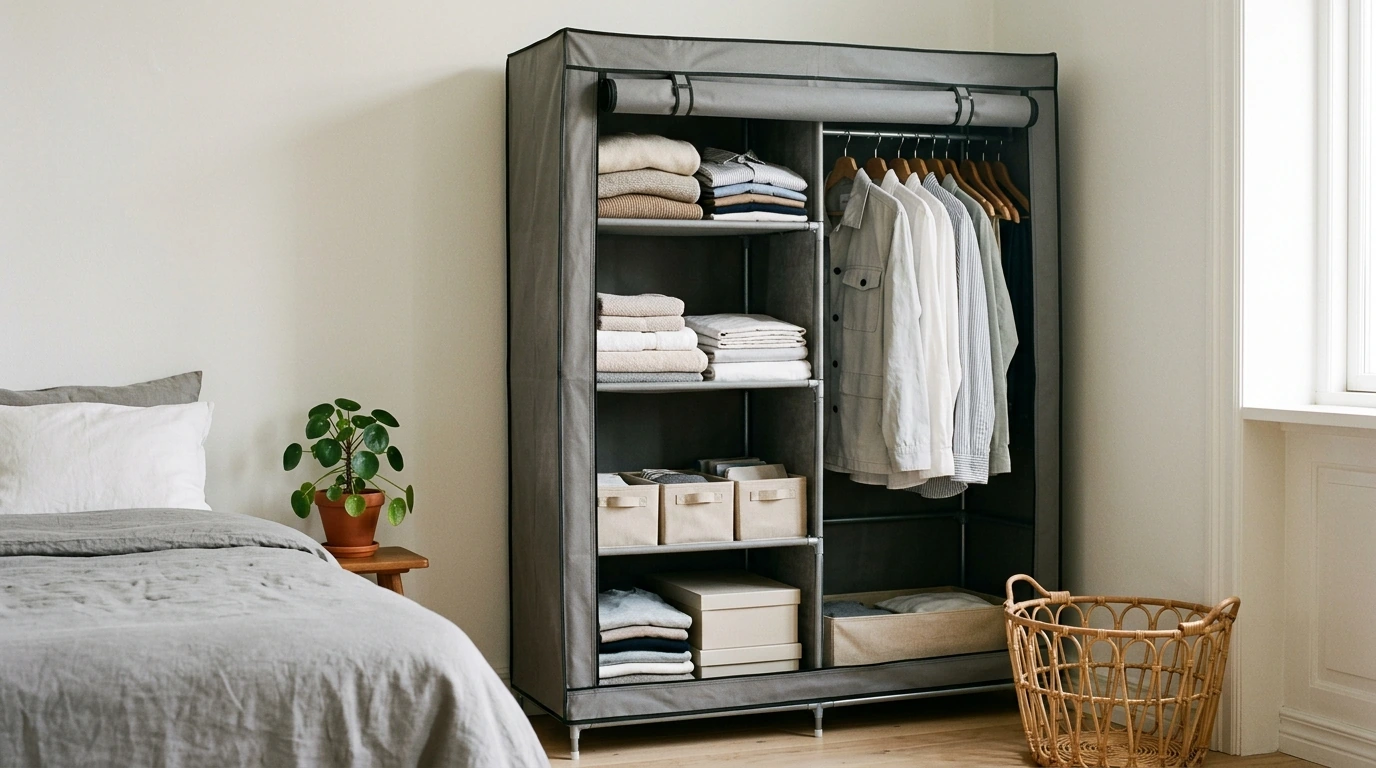
4-Layer Fabric Living Room Cabinet with Wardrobe & Steel Frame for Clothes Storage
A compact, flexible storage cabinet can make a noticeable difference in apartments, guest rooms, and multipurpose living spaces. This 4-layer fabric cabinet combines shelf storage with a hanging-wardrobe section, supported by a steel frame to help keep everyday clothing, linens, and accessories organized without committing to bulky furniture. If you’re trying to turn an unused corner into a calm, functional “storage zone,” this style of cabinet offers a simple way to reduce visual clutter while keeping daily essentials easy to reach.
What This Cabinet Is Designed to Store
This cabinet is built for the kind of items that tend to pile up on chairs, open shelving, or the end of the bed. The mixed layout (shelves plus a hanging area) makes it practical for a range of household categories.
- Everyday clothes: folded tees, sweaters, pants, and lounge sets across the layered shelves
- Hanging items: shirts, dresses, and light jackets in the wardrobe section to reduce wrinkles
- Linens: towels, spare bedding, pillowcases, and seasonal blankets (when folded/rolled)
- Accessories: hats, scarves, bags, and small storage bins for sorting
For the cleanest look, assign each shelf a single “type” (for example: workout gear, sleepwear, or guest linens) so you aren’t mixing stacks that topple when you grab one item.
Key Features That Matter in Daily Use
Small-space storage only works when it’s easy to maintain. The features below are the ones that typically make the difference between a cabinet that stays organized and one that becomes another messy pile.
- Four-layer shelf layout for quick sorting by category (daily wear, workwear, loungewear, seasonal)
- Wardrobe area to keep frequently used outfits accessible and off chairs or sofas
- Steel frame structure intended to provide stability compared with all-fabric organizers
- Fabric enclosure helps reduce dust settling on stored items between uses
- Lightweight design can be easier to reposition when rearranging a living room or bedroom corner
Because fabric exteriors can help limit dust, many households use cabinets like this for “rotation” clothing—items that aren’t worn daily but still need to stay fresh between uses. For broader guidance on keeping a home cleaner and reducing buildup, see the CDC’s recommendations on cleaning and disinfecting your home. If you’re sensitive to dusty closets or closed-off corners, the EPA’s overview of indoor air quality is also helpful for small spaces.
Where It Fits Best at Home
One of the biggest benefits of a fabric cabinet is flexibility: it can act like a mini-closet, a linen station, or a concealed shelf unit depending on where you place it.
- Living room: tidy overflow storage for throws, guest bedding, and out-of-season clothing
- Bedroom: supplemental wardrobe space when a closet is limited or shared
- Entryway: quick-grab layer for hoodies, scarves, and indoor essentials (if space allows)
- Laundry area: staging zone for folded items and hang-dry pieces before putting them away
- Dorms and rentals: temporary organization that can be moved or stored when not needed
In a living room, this cabinet works especially well when you treat it like a “closed console” for soft goods—store extra blankets, pillow covers, or guest towels inside, and keep the top surface free so the whole corner looks intentional rather than improvised.
Setup and Placement Tips for Better Stability
Lightweight storage performs best with a few simple habits: square assembly, smart placement, and balanced loading. These steps help the cabinet stay steady and the shelves stay usable.
- Assemble on a flat surface to keep the frame square and shelves level
- Place against a wall when possible to reduce side-to-side movement in high-traffic areas
- Distribute weight: heavier folded items on lower shelves, lighter items up top
- Use matching bins on shelves to prevent small items from slumping and to keep stacks neat
- Leave breathing room: avoid pressing fabric panels tightly against heaters or vents
Quick Placement Checklist
| Placement detail | Why it helps |
|---|---|
| Flat, level floor | Improves alignment and reduces wobble |
| Heavier items on lower layers | Lowers the center of gravity for steadier use |
| Wall-side positioning | Helps limit shifting when opening/closing panels |
| Use shelf bins | Keeps categories separated and makes retrieval faster |
| Avoid direct heat sources | Helps maintain fabric condition over time |
Care and Cleaning
A few minutes of upkeep keeps fabric storage looking sharper and helps clothes stay fresher between wears.
Who This Storage Style Suits
Product Snapshot
- Name: 4-Layer Fabric Living Room Cabinet with Wardrobe & Steel Frame for Clothes Storage
- Typical use: compact clothing and linen organization for living rooms, bedrooms, and rentals
- Availability: in stock
- Price: $34.51 (USD)
At-a-Glance
| Detail | Value |
|---|---|
| Product | 4-Layer Fabric Living Room Cabinet with Wardrobe & Steel Frame for Clothes Storage |
| Price | 34.51 USD |
| Availability | In stock |
| Best for | Folded clothing + hanging items in compact spaces |
Complementary Finds for a Tidy Home Setup
- Cactus Cat Tree Tower with Scratching Post & Condo Nest for giving your cat a dedicated vertical space and keeping pet activity away from folded stacks.
- Alviero Martini Prima Classe Women’s Beige Bag with Zip if you want a structured, zip-closed accessory that’s easy to store on a shelf without snagging clothing.
FAQ
Can heavier clothing be stored on the shelves?
Yes, but keep heavier folded items on the bottom layers, avoid overloading any single shelf, and balance weight left-to-right to help maintain stability.
Is the wardrobe section suitable for long dresses or coats?
It works best for shirts, lighter jackets, and shorter dresses; longer garments may bunch at the bottom depending on garment length and cabinet height.
How can the cabinet be kept looking neat in a living room?
Use matching bins for each shelf category, limit each layer to one clothing type, and store rarely used items higher while keeping daily pieces at eye level.









Leave a comment