5-Level Cat Tree: Hammock, Condo & Scratch Posts
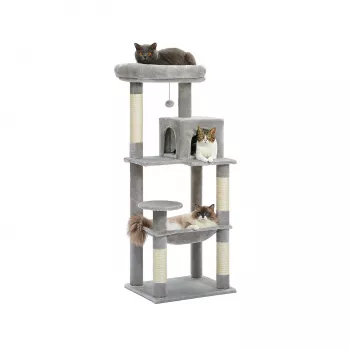
5-Level Cat Tree with Large Hammock, Scratching Posts, and Cozy Condo for Indoor Cats
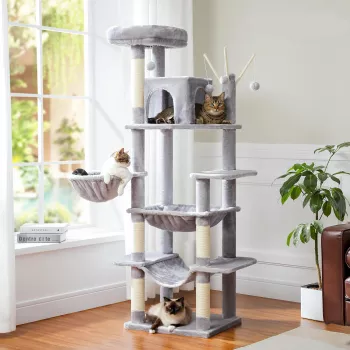
A multi-level cat tree can turn a small corner into a complete play, scratch, and nap zone—especially for indoor cats that need climbing variety and dedicated scratch surfaces. This 5-level design combines a roomy hammock, multiple scratching posts, and an enclosed condo so cats can alternate between active perching and quiet hiding. For more guidance, see Cat Tree Cat Condo with Scratching Posts Multi-Level 57 ….
What this cat tree adds to an indoor routine
Indoor cats often thrive when their space includes vertical territory, multiple rest areas, and acceptable scratching surfaces. A thoughtfully designed cat tree helps meet those needs in a single, predictable “cat zone,” which can make daily life calmer for both cats and people. For further reading, see The Very Best Cat Trees, According to Cat People.
- Vertical territory for climbing, surveying, and safe “up high” lounging—helpful in multi-pet homes or small apartments.
- Multiple nap options: an open hammock for relaxed sprawl and a covered condo for retreat and decompression.
- Dedicated scratch zones to redirect clawing away from sofas and doorframes.
- A single footprint that bundles play, sleep, and scratch needs into one station.
For broader guidance on building a cat-friendly environment, the American Association of Feline Practitioners (AAFP) environmental needs guidelines emphasize enrichment, choice, and safe spaces—exactly what multi-level furniture is meant to support.
Key features to notice before buying
Not all cat trees “feel” the same to a cat. Before choosing a model, it helps to picture how your cat actually moves, rests, and scratches throughout the day.
- Five levels: encourages stepping up and down rather than constant jumping, which can be gentler for some cats.
- Large hammock: best for cats that prefer open lounging; check that the hammock is well-supported and easy to clean.
- Cozy condo: gives a darker, sheltered space for nervous cats or daytime nappers.
- Scratching posts: more than one post helps prevent bottlenecks when multiple cats share the tree.
- Perches and platforms: look for enough landing space so cats can turn around comfortably without slipping.
If scratching is a top priority in your home, the ASPCA overview of scratching behavior explains why cats scratch and how providing appropriate scratchers can reduce damage to household items.
Placement and sizing tips for real homes
Where the cat tree goes often matters as much as the features on it. A great tree placed in an ignored area may sit unused, while a solid tree placed “where the action is” becomes a daily favorite.
- Place near a window for bird-watching and enrichment; ensure cords/blinds are safely secured.
- Choose a corner location if possible—two walls can make the setup feel more stable and inviting.
- Leave clearance around the base so cats can approach from multiple angles without feeling trapped.
- If introducing to a cautious cat, position the tree near an existing favorite sleeping spot and move it gradually if needed.
- For households with energetic jumpers, keep the top level away from shelves or fragile décor to reduce “launch pad” accidents.
Small apartments can still accommodate vertical enrichment when the footprint is compact and the path upward is intuitive. In larger rooms, a tree near a commonly used seating area can double as a “together-but-separate” hangout spot.
Materials, scratching performance, and durability checks
A cat tree takes repeated impacts: sprinting launches, sudden stops, deep scratches, and full-body flops into a hammock. A quick durability checklist can help you choose a model that stays stable and satisfying over time.
- Post wrap: sisal rope is commonly preferred for scratch traction; tight wrapping and minimal gaps reduce unraveling.
- Upholstery: soft plush can be cozy but may hold fur—consider a lint roller routine or a handheld vacuum.
- Platform rigidity: thicker boards and reinforced joints reduce wobble over time.
- Hammock stitching and attachment points: inspect seams and anchors periodically, especially if cats “flop” into it.
- Replaceable parts: if posts or hammock are replaceable, the tree can last longer than a single wear cycle.
As a practical habit, give the structure a gentle shake test after assembly and during routine cleaning. If anything shifts, tightening hardware early can prevent long-term loosening and squeaks.
Quick comparison: this 5-level tree vs another in-stock option
| Option | Highlights | Best for | Price (USD) |
|---|---|---|---|
| 5-Level Cat Tree with Large Hammock, Scratching Posts, and Cozy Condo for Indoor Cats | Multi-level climb, roomy hammock, enclosed condo, multiple scratch zones | Indoor cats needing varied nap spots and vertical territory | $48.97 |
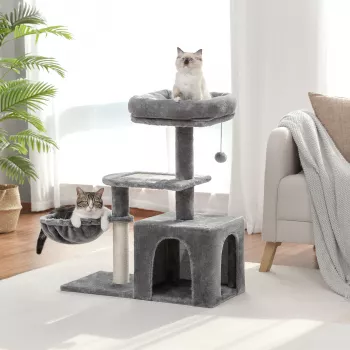
| Cactus Cat Tree Tower with Scratching Post & Condo Nest | Themed tower design, scratching post, condo-style nest | Rooms where a decorative tower fits better than a wide multi-level tree | $73.51 |
Assembly, upkeep, and safety habits
FAQ
How do you get a cat to use a new cat tree with a hammock and condo?
Place it near a favorite window or resting spot, sprinkle a little catnip (if your cat likes it), and reward any investigation with treats or praise. Feed nearby for a few days to build positive association, and let your cat explore on their own—avoid placing them into the condo or hammock.
Is a five-level cat tree safe for kittens or older cats?
It can be safe when the base is stable and the spacing between levels supports easy “step” movement rather than big leaps. Supervise early exploration, ensure kittens can access lower levels confidently, and consider adding pet steps or positioning the tree near a low surface for seniors that need gentler access.
How often should scratching posts be replaced on a cat tree?
Replace or repair posts when the sisal is loose enough to snag claws, the inner core is exposed, or the post starts to feel unstable. Heavy daily scratchers may wear posts faster, while lighter use can keep them functional for much longer.








Leave a comment