5-Piece Cylinder Polishing Pads for Flexible Shaft Tools
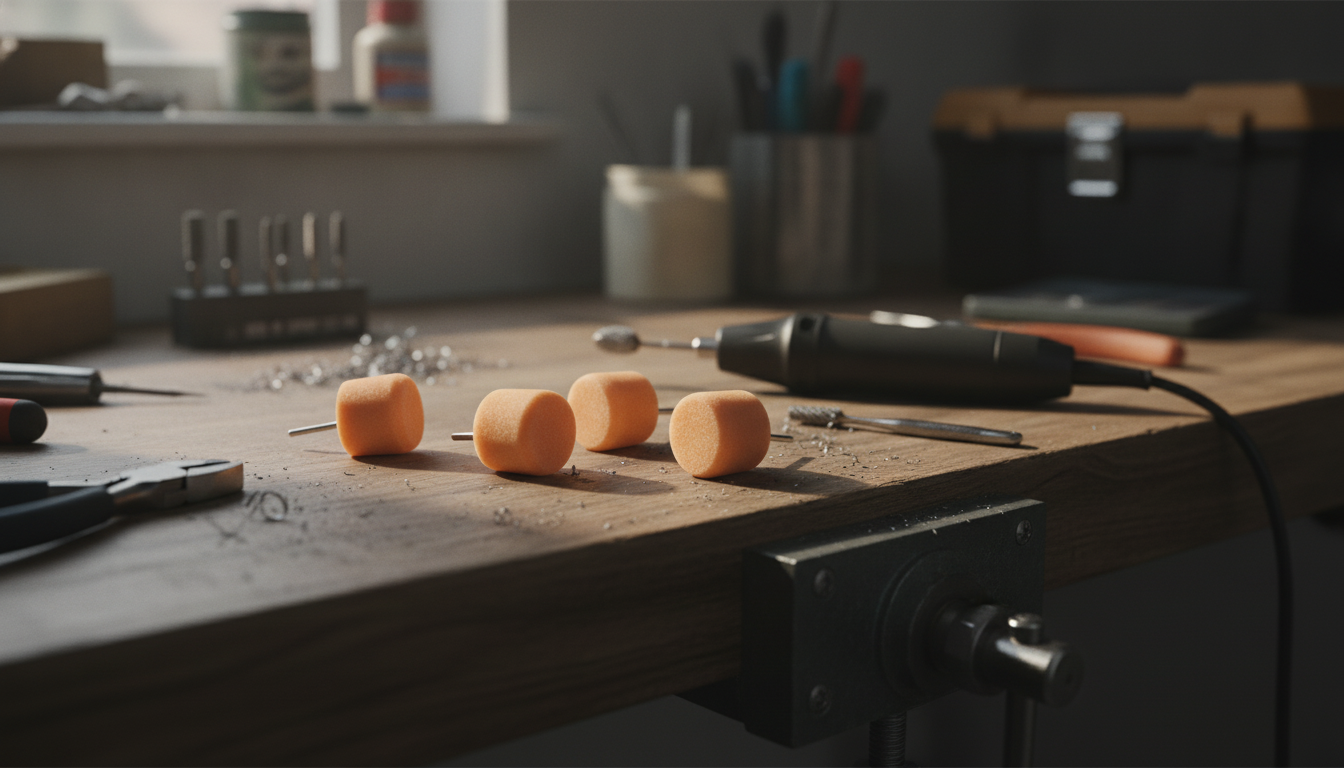
Orange Flexible Shaft Cylinder Polishing Pad Set – 5Pcs
A compact polishing kit can make a big difference when refining metal, plastic, wood, or painted surfaces—especially in tight curves and small cavities. This 5-piece cylinder pad set is designed for use with a flexible shaft or rotary tool, helping deliver smoother finishes with better control on detailed work.
What this polishing pad set is designed to do
Cylindrical polishing pads are made for the kind of finishing work where a full-size wheel is simply too bulky. With the right compound and a steady hand, this set helps streamline the “last 10%” of surface refinement that makes parts look clean, consistent, and professionally finished.
- Refine surfaces after sanding by blending fine scratches into a more uniform finish
- Improve shine on small parts where larger wheels and pads can’t reach easily
- Work along inside edges, grooves, and curved profiles using a cylindrical pad shape
- Pair with appropriate polishing compounds to move from dull to glossy finishes
What’s included and how the pad shape helps
This set includes five cylindrical pads intended for detail polishing. The cylinder profile is useful when you need stable, predictable contact—especially on rounded surfaces, inside contours, and narrow recesses where flat pads tend to skip or roll an edge.
- Set includes 5 cylindrical polishing pads suited to detail work
- Cylinder shape supports consistent contact on rounded surfaces and inside contours
- Compact form factor helps reduce accidental over-polishing on adjacent areas
- Useful for hobby, workshop, and small repair tasks where precision matters
Quick use guide by task
| Task | Suggested approach | Notes |
|---|---|---|
| Removing light haze after sanding | Use gentle pressure and keep the pad moving | Start with the least aggressive compound suitable for the material |
| Polishing small metal parts | Short passes with cooling pauses | Heat buildup can discolor metal or soften some plastics |
| Inside curves and recesses | Use the cylinder’s edge to follow contours | Avoid snagging edges; reduce speed when working near corners |
| Final brightening | Light pressure with a finishing compound | Wipe residue often to check progress |
Material compatibility and best-use scenarios
Good results come from matching speed, pressure, and compound to the material. A cylinder pad excels when you’re polishing small geometry—think knobs, brackets, trim pieces, tool parts, hobby components, or any surface with grooves and transitions.
- Metals: suitable for brightening and finishing once major scratches are removed
- Plastics/acrylics: use lower speed and lighter pressure to reduce melting or smearing risk
- Wood: helpful for smoothing small turned pieces and detailed profiles after sanding
- Painted/coated surfaces: test on a hidden area first to avoid cutting through the coating
If you’re transitioning from sanding to polishing, it helps to wipe the surface clean first so leftover grit doesn’t get dragged around by the pad. Small contaminants can undo your previous steps by adding new micro-scratches.
Getting better results with a flexible shaft
A flexible shaft setup shifts the tool’s weight away from your hand, which can make controlled polishing easier on fine work. When the pad is small and the target area is tight, subtle hand positioning matters as much as speed selection.
- Hold the handpiece like a pen to improve control and reduce fatigue
- Use steady movement rather than staying in one spot to prevent heat marks
- Match speed to material: lower for plastics and delicate finishes, moderate for metals
- Clean residue between steps; trapped grit can re-scratch the surface
For inside corners and recesses, let the cylinder’s sidewall do the work rather than forcing the tip into the surface. Light, consistent contact typically produces a clearer finish than heavy pressure that compresses the pad and builds heat.
Care, cleaning, and lifespan tips
Polishing pads work best when their surface stays relatively clean and evenly loaded with compound. Over time, residue hardens, and embedded debris can create a “dirty pad” effect that reduces clarity and can mark the workpiece.
- Brush off compound buildup after use to maintain polishing performance
- Store pads dry and away from abrasive debris that could embed in the surface
- Replace pads that become hardened, uneven, or contaminated with coarse particles
- Dedicate separate pads to different compounds to prevent cross-contamination
A simple workflow is to keep one pad for cutting or pre-polish and another for finishing. That separation helps maintain consistency and reduces the chance of dragging aggressive residue into your final brightening step.
Safety and setup checklist
- Wear eye protection; rotary polishing can throw debris and compound (see OSHA guidance on eye and face protection)
- Consider a dust mask or respirator when polishing materials that create fine particulates (see NIOSH respiratory protection guidance)
- Secure small parts with clamps or a vise to avoid slips
- Keep loose clothing and hair away from rotating tools; maintain a tidy work area
Product options available
If you want a simple add-on for detailed finishing, the Orange Flexible Shaft Cylinder Polishing Pad Set – 5Pcs is available for quick polishing passes on tight shapes, grooves, and small profiles.
FAQ
Can these cylinder pads be used with a rotary tool that has a flexible shaft?
Yes. They’re intended for detail polishing with a flexible shaft/rotary setup—just confirm the pad’s shank size matches the collet or chuck on your tool before use.
What speed should be used for polishing metal vs plastic?
Use a moderate speed for metals and a lower speed for plastics. In both cases, apply light pressure and keep the pad moving to minimize heat buildup and surface distortion.
How can polish residue be cleaned off the pad and the workpiece?
Wipe the workpiece with a clean microfiber cloth between steps to remove residue and check progress. After use, brush compound off the pad and keep separate pads for different compounds to avoid cross-contamination.











Leave a comment