Brighten Your Home Naturally: Daylight, Bulbs & Glare
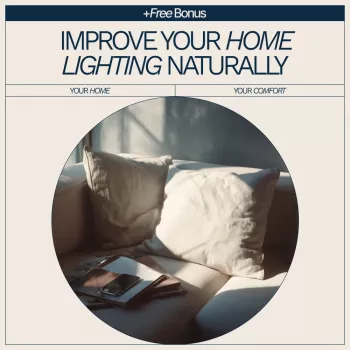
Improve Your Home Lighting Naturally for Brighter, Healthier Spaces
Natural-feeling light changes how a room looks and how the day feels—supporting comfort, focus, and better wind-down at night. With a few practical adjustments to daylight flow, surface reflectance, and bulb choices, most homes can look brighter without harsh glare or constant overhead lighting.
Better lighting isn’t only about aesthetics. Research on daylight exposure connects light patterns to health and building design considerations, which is one reason small changes to how light enters and spreads through your home can have an outsized impact on how spaces feel day to day.
Start With Daylight: Find What’s Blocking It
Before buying anything, do a quick “light audit.” Daylight is the cleanest, most flattering source you have—so the first goal is getting more of it where you want it, without creating glare.
- Walk each room at three times: morning, midday, evening; note where light drops off and where glare appears.
- Check for common daylight blockers: heavy curtains, dark screens, furniture in front of windows, dusty glass, and exterior plants shading the pane.
- Clean windows (inside and out) and wipe blinds; even a thin film can noticeably reduce brightness.
- Open the top portion of window coverings first to keep privacy while letting in higher-angle light.
If a room still feels dim at midday, treat it like a “light distribution” problem: the light is entering, but it’s not bouncing far enough into the space.
Window Treatments That Brighten Without Giving Up Privacy
Window coverings can either amplify daylight or quietly absorb it. The best approach is usually layering: a light-filtering layer you can live with all day, plus blackout only where sleep truly requires it.
- Swap opaque curtains for sheer or light-filtering panels and pair with blackout layers only where needed for sleep.
- Choose lighter colors (white, cream, pale gray) to bounce daylight deeper into the room.
- Mount curtain rods wider and higher than the window frame to expose more glass when open.
- For street-facing rooms, consider top-down/bottom-up shades or privacy film that diffuses light while obscuring views.
Quick swaps for more daylight
| Current setup | Brighter alternative | Why it helps |
|---|---|---|
| Dark, heavy drapes | Sheer curtains + optional blackout liner | Keeps softness and privacy while reducing daylight loss |
| Blinds always angled down | Angle slats upward during the day | Redirects sunlight toward the ceiling to reduce glare |
| Rod mounted at window frame | Rod mounted higher and wider | Exposes more glass and visually raises the room |
| Cluttered window ledge | Clear sill and keep decor low | Prevents shadows and improves spread of light |
Use Reflective Surfaces on Purpose (Without Turning the Room Cold)
Reflection is what makes daylight feel like it “reaches” deeper. The trick is to boost reflectance without making the room feel stark or glossy.
- Place a mirror adjacent to (not directly opposite) a window to spread light while avoiding hot spots.
- Choose satin or eggshell paint finishes where possible; they reflect more light than matte while hiding imperfections better than gloss.
- Lighten large “light-eating” surfaces first: ceiling, area rug, and the wall opposite the window.
- Add reflective accents in small doses: metallic frames, glass lamps, light-toned wood, and pale textiles.
If you’re updating only one surface, the ceiling is often the highest-return change—especially in rooms with limited windows—because it acts like a big reflector when you use uplighting or daylight bounces.
Layer Light Like Daylight: Ambient, Task, and Accent
One overhead fixture tends to create bright centers and dim corners. Layered lighting spreads illumination more evenly, which makes rooms read as brighter even at similar total wattage.
Choose Bulbs That Feel Natural Indoors
Simple bulb guide by room
| Room | Suggested color temperature | What it supports |
|---|---|---|
| Living room / bedroom | 2700K–3000K | Comfort, relaxation, evening wind-down |
| Kitchen / bathroom | 3000K–4000K | Clarity for grooming and food prep |
| Home office / study | 3500K–5000K | Alertness and visual precision |
| Hallways / entry | 2700K–3500K | Welcoming feel with safe visibility |
Reduce Glare and Harsh Contrast
Room-by-Room Mini Plan
A Practical Guide for Step-by-Step Upgrades
For a structured, room-by-room approach with checklists and practical exercises, see: Improve Your Home Lighting Naturally | A Practical eBook Guide on How to Improve Home Lighting Naturally for Brighter, Healthier Spaces. Use the guide to map daylight, choose fixtures and bulb settings, and build a simple lighting routine that supports daytime energy and calmer evenings.
Also in stock: Cactus Cat Tree Tower with Scratching Post & Condo Nest—a simple way to create a “sun spot” near a window without sacrificing your sill space for pet lounging.
Helpful, credible resources
- Daylight and Health: A Review of the Evidence and Consequences for Building Design
- Lighting for Older Adults (U.S. Department of Energy guidance)
- CIE: Colour Rendering (general information)
FAQ
How can a room look brighter without adding more fixtures?
Improve daylight access (clean glass, lighter coverings) and increase reflectance with lighter walls/ceilings or a well-placed mirror. Reducing glare also helps, because your eyes won’t “clamp down” from harsh bright spots.
What color temperature feels most natural at home?
Many homes feel best with 2700K–3000K in relaxing rooms and 3000K–4000K in kitchens and bathrooms. Keep color temperature consistent across connected spaces and use dimming at night to avoid a jarring shift.
Where should mirrors go to boost natural light?
Place mirrors near a window at an angle or on a wall perpendicular to the window to push light deeper into the room. Avoid positioning them directly opposite intense sun if it reflects into seating areas or your eyes.










Leave a comment