Dual-Fuel Portable Grill: Charcoal or Propane Anytime
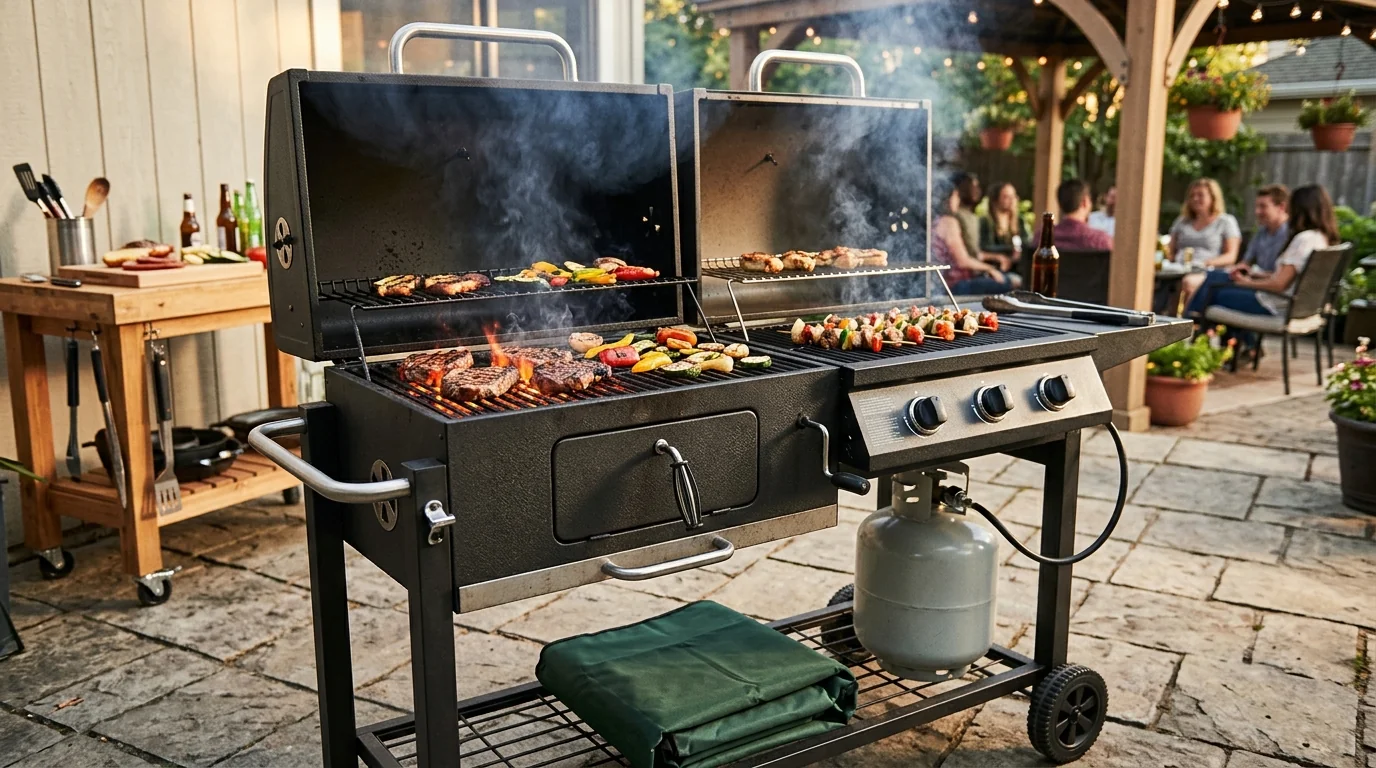
Portable dual-fuel grilling that keeps up with real-life cookouts
Outdoor cooking plans change fast—wind picks up, guests arrive early, or the menu shifts from low-and-slow to quick searing. With a portable grill that can run on charcoal or propane, you can adapt without giving up that classic grilled finish. Our team put together this heavy-duty BBQ grill with a rolling cart and a protective cover for patios, driveways, tailgates, and campsite setups where convenience matters as much as flavor.
What this grill is built to do
- Give you two grilling styles in one setup: charcoal for smoky depth and propane for quicker heat when you want a more predictable pace.
- Stay mobile: the cart-based design helps you roll the grill where it works best—near prep, out of the wind, or into storage after the meal.
- Hold up to frequent use: a heavy-duty approach makes sense when you grill often and want one dependable station instead of juggling multiple small cookers.
- Stay protected between sessions: the included cover helps cut down on dust, pollen, and light weather exposure when you store the grill outdoors.
Charcoal mode: when flavor and fire management are the point
Charcoal shines when you want that deeper grilled character and you’re willing to spend a little time building a fire. If your cookout is as much about tending the heat as it is about eating, charcoal mode is where this dual-fuel setup earns its keep.
- Budget extra time: charcoal needs time to light, ash over, and preheat the cook chamber.
- Lean into smoke-forward menus: burgers, steaks, wings, ribs, and vegetable trays all pick up more depth over charcoal.
- Use two-zone heat: bank coals to one side for searing and keep a cooler zone for finishing thicker cuts without scorching.
- Make cleanup safer: let ash cool completely, then move it into a dedicated non-combustible container for disposal.
Propane mode: fast heat for quick dinners and crowd pacing
When timing is tight or you’re feeding people in waves, propane helps you get to a steady cooking temperature faster and keep it there with less babysitting. That can be the difference between serving hot food on schedule and falling behind the crowd.
- Start fast: propane preheats quicker, which helps when guests arrive hungry or you’re cooking multiple rounds.
- Stay consistent: it’s a strong match for skewers, sausages, chicken pieces, sliced veggies, and seafood that benefit from steady heat.
- Handle wind better: propane is often less swingy than charcoal in gusty weather, and you can also reposition the cart to find calmer air.
- Run a simple batch workflow: preheat, cook in batches, then hold finished food off-heat while the next round goes on.
A practical decision guide: charcoal or propane for today’s cook
If you’re deciding which mode to use, start with the clock, then work backward to flavor and conditions. When you plan around timing and weather, you’ll waste less fuel and turn out more consistent results.
| Cooking goal | Charcoal | Propane |
|---|---|---|
| Fast start and short cook window | Slower startup; better when time is flexible | Quick preheat; good for last-minute grilling |
| Classic smoky grilled flavor | Strong; smoke and char are natural to the fire | Milder; boost flavor with marinades and browning |
| Two-zone grilling (sear + finish) | Easy with coal placement | Works by managing heat zones if supported by the setup |
| Batch cooking for a crowd | Great once established; refueling takes planning | Simple to keep steady heat across multiple rounds |
| Windy or variable weather | Can swing; requires more attention | Typically steadier; still benefits from wind protection |
- Timing first: propane for speed; charcoal for longer sessions where the fire can settle in.
- Mixed menus: cook steady-heat items first, then finish with higher-heat searing; or reserve charcoal for the final smoky round.
- Weather matters: wind and cold steal heat—use the cart to tuck the grill into a calmer spot and keep the lid closed as much as possible.
- Serving a group: propane’s predictability makes it easier to cook in consistent waves.
Portability and cart setup: making outdoor cooking easier
- Park it with purpose: set up where smoke won’t drift into open doors and where guests won’t walk through the hot zone.
- Create a safe perimeter: keep kids’ routes, pet paths, and high-traffic doorways away from the grill.
- Use a two-surface flow: one area for raw prep and a separate area for cooked food to reduce cross-contamination.
- Cover after cooldown: once fully cool, cover the grill so it’s ready without extra cleanup next time.
Care, storage, and staying ready for the next cookout
Safety essentials for charcoal and propane grilling
For additional safety guidance, you can review USDA FSIS outdoor grilling food safety and NFPA grill fire safety tips.
The right fit for patios, tailgates, and outdoor kitchens that need flexibility
In-stock picks from our store
- Portable Charcoal and Propane BBQ Grill with Cover and Cart – Heavy Duty Outdoor Cooking
- Cactus Cat Tree Tower with Scratching Post & Condo Nest
- Alviero Martini Prima Classe Women’s Beige Bag with Zip
FAQ
Can charcoal and propane be used on the same day?
Yes on many dual-fuel setups, as long as you follow the correct switching procedure. Plan for a full cooldown before changing fuel types and keep ash-handling tools separate from propane-use items.
How should the grill be stored with the cover?
Let the grill cool completely, then remove or secure grease and ash as directed and cover it. If possible, store it in a sheltered spot to reduce moisture and debris buildup.
What propane tank works with a portable propane grill?
It depends on the regulator and connection type—some grills use 1 lb cylinders while others connect to a standard 20 lb tank. Use the correct tank and connection for your grill to keep operation stable and safe.








Leave a comment