Gentle Kitten Training: Build Happy Habits Daily
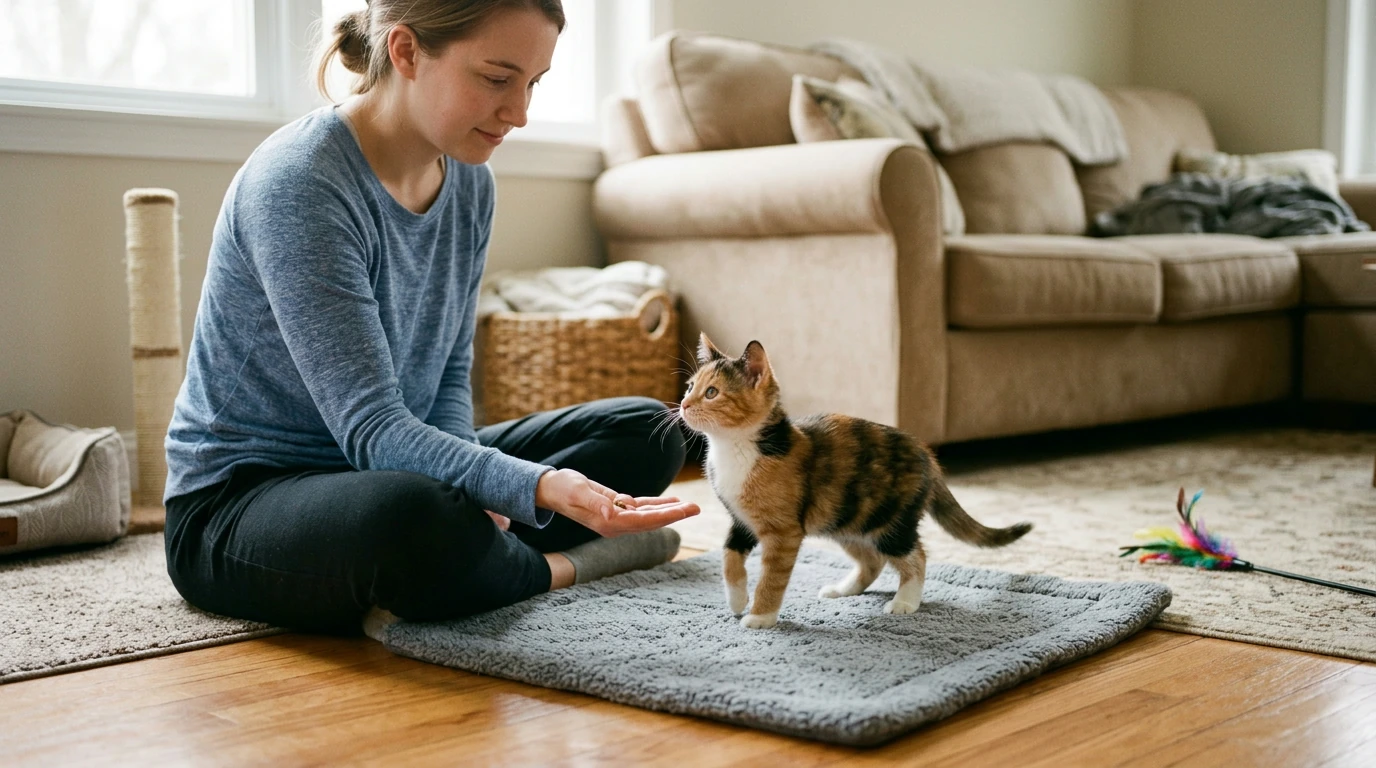
A new kitten learns from every play session, meal, and quiet moment. You do not need long lessons or perfect timing to help them settle in. Start with a comfortable environment, notice what your kitten chooses to do, and reward the behaviors you want to see again. Our Pawsitive Training: Gentle Ways to Raise Happy Kittens eBook can help you plan small, positive steps as you get to know your new companion.
Start with safety and trust
Before asking your kitten to learn a cue, give them a place where they can feel secure. Set up a quiet area with food, water, an easy-to-reach litter box, a resting spot, and an appropriate scratching surface. Keep the essentials accessible while your kitten learns the layout of your home. The AAFP and ISFM Feline Environmental Needs Guidelines describe the importance of resources, safe places, and opportunities for normal cat behavior.
Let your kitten approach people and explore new rooms at their own pace. You can sit nearby and offer a toy or treat without reaching for them. If they hide, retreat, or struggle to get away, pause and give them space. Forcing contact or punishing a fearful response will not show your kitten what to do instead. A calm retreat is useful information: the next step may need to be smaller.
Make the behavior you want worth repeating
Pick one simple goal, such as coming toward you when called or stepping onto a mat. When your kitten does it, reward them right away with a tiny treat, a moment of play, or attention they enjoy. Quick rewards make it easier for your kitten to connect the action with the outcome. The International Cat Care guide to training your cat offers more background on using rewards and keeping training positive.
Practice for a few successful repetitions, then stop while your kitten is still interested. If they wander off or do not respond, avoid repeating the cue louder. Instead, make the task easier: move closer, reduce distractions, or reward a smaller step toward the goal. Our team favors sessions that leave both you and your kitten ready to try again later.
A gentle response to everyday kitten moments
| Situation | Try this | Reward when |
|---|---|---|
| Claws reach for furniture | Put an appealing scratching surface nearby and guide play toward it. | Your kitten uses the scratching surface. |
| Teeth grab hands during play | Pause hand play and offer a suitable toy. | Your kitten engages with the toy. |
| Your kitten approaches a carrier | Leave it accessible and invite exploration without closing the door. | Your kitten calmly investigates or steps inside. |
These responses give your kitten an acceptable action to try. If furniture scratching keeps happening, look at where your kitten prefers to scratch and place an appropriate option close to that spot. If play becomes too rough, use a toy that puts some distance between your hands and their teeth. You are teaching an alternative, not waiting for a mistake so you can correct it.
Build good habits into the day
Short training moments fit naturally between meals, play, and rest. Offer regular interactive play with a suitable toy, then allow your kitten to settle. You can reward a calm approach to a new household item or a voluntary step toward the carrier without turning every moment into a formal lesson. Keep litter boxes clean and easy to reach so your kitten has a straightforward place to go.
Gentle handling also works best in tiny steps. Begin with a brief touch your kitten accepts, pair it with a reward, and stop before they become uncomfortable. Over time, you can work toward the kinds of handling they may need for routine care. If your kitten moves away, let them. Respecting that choice helps you learn what they can manage today.
Keep learning at your kitten’s pace
When you are ready for another goal, use our Pawsitive Training: Gentle Ways to Raise Happy Kittens eBook as a positive-reinforcement guide. Choose one idea you can practice consistently rather than changing several parts of your routine at once. Notice what your kitten enjoys as a reward; a favorite toy may work better than food in some moments.
A designated climbing and scratching area can give you another opportunity to reward good choices. Our Cactus Cat Tree Tower with Scratching Post & Condo Nest is one option if you want to add a place for those activities. Position it where your kitten can approach freely, invite interest with play, and reward voluntary exploration. Do not place your kitten on it or expect immediate use; the useful choice is the one they make comfortably.
Training is not a substitute for addressing a possible health or welfare concern. If litter-box problems, intense fear, or a sudden behavior change persists, consult a veterinarian before treating it as a training issue. For everyday learning, keep your plan simple: provide a safe option, reward the step you like, and give your kitten time to decide what comes next.
FAQ
When can I start training my kitten?
Start with simple, reward-based interactions once your kitten has had time to settle in. Keep sessions short and age-appropriate.
Should I punish my kitten for scratching furniture?
No. Provide an appropriate scratching option nearby and reward your kitten for using it. Punishment can cause fear without teaching an alternative.
What if my kitten does not respond to treats?
Try a reward your kitten values more, such as brief play or welcome attention. Practice when they are relaxed and receptive.









Leave a comment