How to Pick Dining Chairs: A Practical Fit Checklist
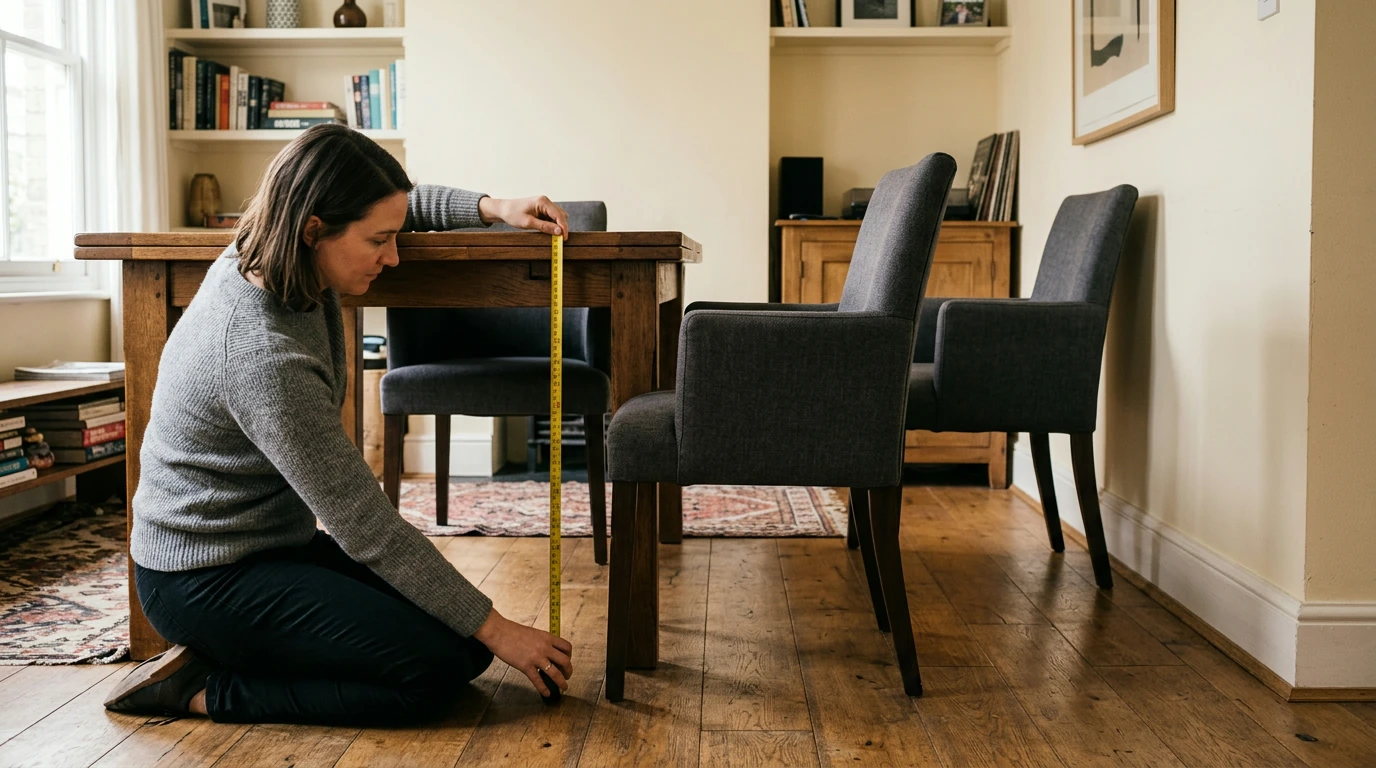
Dining chairs need to do more than look good beside your table. They should fit the space, feel comfortable through a meal, and stand up to the way you use your dining room. A little planning can help you avoid chairs that crowd table legs or leave too little room to move.
Our digital checklist gives you a simple place to organize measurements and preferences as you compare options. Start with the table you have, consider your household’s habits, and then narrow down the styles and materials that work for you.
Start With Your Table and Room
Before you shop, measure the height of your table from the floor to the top. Then measure the distance between its legs on each side where you plan to place chairs. If the table has an apron—the panel beneath the tabletop—measure from the floor to its lower edge, too.
Next, look beyond the table itself. Measure the space between the table and nearby walls, cabinets, or other furniture. You need enough room to pull a chair back, sit down, and move around it without feeling boxed in. If a door or cabinet opens nearby, allow for its swing as well.
Consider how your room works on a busy day, not just when every chair is pushed in. A chair with arms may offer welcome support, but its arms need enough clearance to tuck under the tabletop or apron. Recording these measurements on your checklist makes it easier to compare chairs without starting over each time.
Check the Fit Before Choosing a Style
Seat height affects how comfortably you can reach the table and fit your legs underneath. As a starting point, many people find roughly 10 to 12 inches between the top of the seat and the tabletop comfortable. The apron can reduce usable legroom, however, so measure its clearance separately and account for a compressed cushion if the chair is upholstered.
Chair width matters just as much. Compare the full width of each chair, including any arms, with the space between the table legs. Allow some space between neighboring chairs so people can sit and move without bumping elbows. For a round or pedestal table, pay attention to where the bases and chair legs meet as chairs are pulled in.
| Measurement | What to check |
|---|---|
| Seat height | Legroom between the seat and tabletop, with the apron considered separately |
| Chair width | Space between table legs and neighboring chairs |
| Arm height | Clearance beneath the tabletop or apron |
| Chair depth | Room to sit comfortably and move the chair back |
Use published dimensions as a comparison tool, then verify them against your actual table and room. If accessibility is a consideration, the ADA Standards for Accessible Design offer a useful reference for accessible spaces. Requirements for public spaces are not necessarily rules for your home, but they can help you identify clearances worth considering.
Choose Comfort and Materials for Everyday Life
Think about who uses your table and how long they tend to sit there. A deeper seat may feel roomy, while a shallower one may make it easier for some people to sit with their backs supported. Back shape and height also affect comfort. If possible, try a similar chair in person and notice whether your feet rest comfortably on the floor.
Upholstered seats can add softness for long dinners or work sessions at the table. Wood and other hard surfaces may be easier to wipe down after everyday meals, though a cushion can make a firm seat more comfortable. Consider spills, pets, and how much upkeep you are willing to do before choosing a fabric or finish.
Look at construction as well as appearance. Joints, legs, and seat supports should feel sturdy, and the care instructions should suit your routine. If pets share your living space, a dedicated spot such as our Cactus Cat Tree Tower with Scratching Post & Condo Nest can give them a place of their own away from the dining table.
Bring the Dining Room Together
Once you have a shortlist that fits, use your table as a visual reference. A substantial table may suit chairs with enough visual weight to balance it, while a lighter table can pair well with slimmer silhouettes. Curved chair backs can echo a round table or soften the straight lines of a rectangular one.
Matching finishes are not essential. You can mix wood tones, use upholstered end chairs with simpler side chairs, or pair different designs that share a color or shape. Repeating one element helps the arrangement feel intentional without making every piece identical.
Before ordering, return to your notes. Confirm the number of chairs that fit, the clearance around each side, and the features that matter most to you. The best-looking option is easier to enjoy when it also works for daily life.
Keep Your Chair Search Organized
Our How to Pick Dining Chairs Checklist is a digital download designed to guide your selection process. It is listed at $5.99 USD; the price is subject to change. Use it alongside your own measurements and seating preferences to keep the practical details together as you compare chairs.
FAQ
How do I know whether dining chairs will fit under my table?
Compare the seat and arm heights with the tabletop and any apron, then check each chair’s full width against the space between the table legs.
Should dining chairs match the table?
Matching is optional. A shared finish, color, material, or design element can help different pieces feel cohesive.
What should I measure before shopping for dining chairs?
Measure the table height, the space between its legs, any apron clearance, and the room available for pulling chairs out.











Leave a comment