Kids STEM Crane Toy: Build, Lift & Learn Mechanics
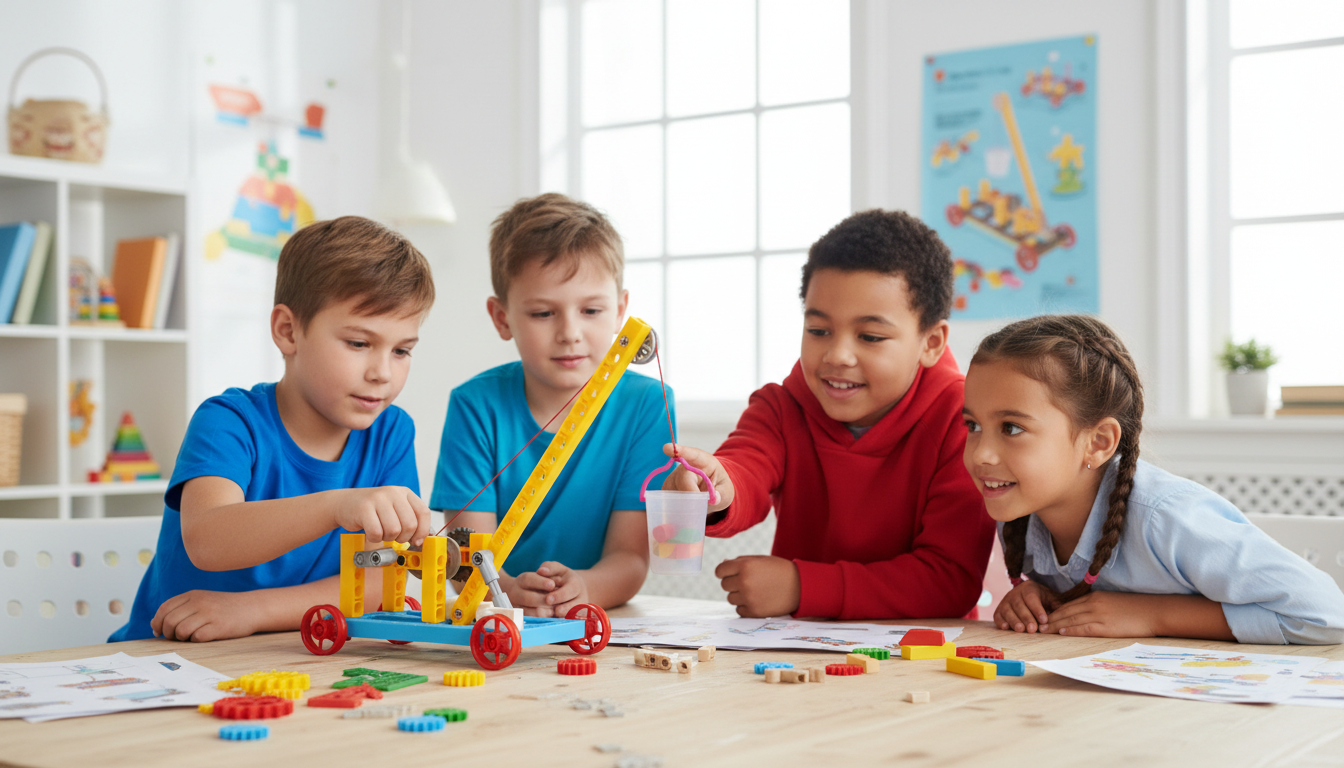
STEM Crane Engineering Toy for Kids: Hands-On Building That Feels Like Play
A crane-themed engineering vehicle toy turns building time into practical problem solving—kids get immediate feedback as they lift, rotate, and stabilize a working model. The best sets balance step-by-step construction with room to experiment, so children can follow directions first and then test their own ideas. Below are the core reasons crane builds stay engaging, the skills they naturally reinforce, and simple ways to increase learning value without turning playtime into a lecture.
What makes a crane engineering toy engaging
Cause-and-effect that’s easy to see
Crane builds are satisfying because the results are obvious: tighten a joint, and the boom holds steadier; change the angle, and the load moves differently. That immediate cause-and-effect keeps kids motivated to tweak and retry.
Construction role-play that invites storytelling
Once the crane is built, children tend to invent job-site scenarios—moving “materials,” setting up safety zones, or assigning roles. This kind of pretend play adds narrative, teamwork, and longer attention to the build.
Visible mechanics that make “how it works” feel intuitive
Booms, pivots, and load movement help kids notice basic mechanics they might otherwise miss. Even without formal terminology, they start recognizing patterns like “wider base equals less wobble” or “shorter reach lifts easier.”
Skills kids build while playing
A crane engineering vehicle supports multiple developmental skills at once, especially when kids are allowed to troubleshoot rather than being corrected immediately.
- Spatial reasoning: aligning parts, judging distances, and building for stability.
- Fine-motor control: positioning small components, tightening connections, and adjusting precisely.
- Early engineering thinking: testing ideas, spotting failure points, and iterating a design.
- Math foundations: counting pieces, comparing lengths, and following sequences in order.
- Collaboration: taking turns with shared components and coordinating a build plan.
| Activity | What to do | Skills reinforced |
|---|---|---|
| Lift-and-Place Challenge | Move small objects from one spot to another without dropping | Control, patience, precision |
| Balance Test | Try different placements to keep the crane stable under load | Stability, trial-and-error, reasoning |
| Build-Then-Explain | After building, have the child describe how it works | Vocabulary, communication, comprehension |
| Timed Repair | Remove one part and rebuild correctly | Memory, attention, resilience |
How to choose the right set for a child
Match the build to age and patience
Younger builders usually do best with fewer steps and sturdier components that can be handled repeatedly. Older kids often enjoy longer builds with more moving parts—and they’re more willing to troubleshoot when something binds or tilts.
Look for guided building plus room to vary
A clear build path reduces frustration, while alternate configurations (or small “what if” modifications) keep interest high after the first build is complete.
Prioritize durability for repeated lifting
Cranes get rebuilt often, and lifting play puts stress on connection points. Reinforced joints and solid fasteners matter, especially if the set will be used in a classroom or shared between siblings.
Keep safety and supervision realistic
Smooth edges, secure fasteners, and age-appropriate part sizes are key. If a set includes small parts, adult supervision is recommended—particularly for younger children who may explore by mouth or lose pieces easily.
Consider learning style
Some kids prefer open-ended building right away. Others gain confidence by following instructions first and then experimenting. A set that supports both approaches tends to last longer in a toy rotation.
Using a crane toy to introduce simple machines
Crane play is a natural doorway into basic mechanics. If kids ask “why,” short, concrete comparisons work better than long explanations. For broader STEM context, see ASME’s overview of STEM and hands-on inspiration from NASA STEM Engagement.
- Levers: Point out how the boom and pivot change force depending on how far the load is from the base.
- Pulleys and lifting: Compare lifting “straight up” versus guiding lift through a mechanism that changes effort and control.
- Counterweight and stability: Test how weight placement affects tipping—then improve stability by widening the base or shifting weight.
- Load limits: Encourage safe testing: add weight gradually and observe what fails first, then redesign.
For families and educators who want play to remain age-appropriate and child-led, NAEYC’s guidance on developmentally appropriate practice is a helpful reference.
Setup and play tips for families and classrooms
Product spotlight: STEM Crane Engineering Toy for Kids – Educational Science Vehicle
The STEM Crane Engineering Toy for Kids – Educational Science Vehicle is built around a crane vehicle theme that encourages building, rebuilding, and role-play. It works well for gifting, rainy-day projects, and hands-on enrichment time—especially when paired with small challenges like lifting tests, stability trials, and design modifications.
| Item | Details |
|---|---|
| Product | STEM Crane Engineering Toy for Kids – Educational Science Vehicle |
| Price | $21.97 USD |
| Availability | In stock |
| Product page | View details |
More in-stock picks to round out gifts and home setups
- Cactus Cat Tree Tower with Scratching Post & Condo Nest
- Alviero Martini Prima Classe Women’s Beige Bag with Zip
- Dolce & Gabbana Gold Charm Necklace with Carretto Pendants and Crystals
FAQ
What age is a crane engineering toy best for?
It depends on build complexity and whether the set includes small parts. Younger children tend to do best with fewer steps and larger, sturdier pieces, while older kids can handle longer builds, moving mechanisms, and troubleshooting; supervision is recommended when small parts are involved.
Is this kind of building toy more about play or learning?
Play drives the learning: as kids build and rebuild, they practice spatial reasoning, problem-solving, and basic mechanics without needing formal lessons. A simple example is a balance test—changing the load position and watching stability improve or fail.
How can parents encourage learning without taking over the build?
Ask guiding questions (“What do you think is making it wobble?”), let the child try a fix first, and keep help limited to short challenges like lift-and-place or stability trials. This preserves ownership while still nudging deeper thinking.










Leave a comment