
Leadership Traits Checklist: Build Clarity, Courage & Trust

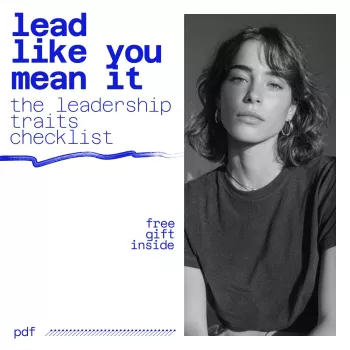
Lead Like You Mean It: A Practical Leadership Traits Checklist for Confident, Purpose-Driven Leaders
Confident leadership becomes repeatable when it’s translated into observable behaviors. A leadership traits checklist helps turn values like clarity, courage, and accountability into day-to-day actions—especially in fast-moving, digital-first workplaces. Use the structure below to assess strengths, spot gaps, and choose a small set of traits to practice consistently.
What a leadership traits checklist actually does
A checklist isn’t meant to flatten leadership into a personality test. It’s a practical way to make leadership visible—so it can be improved on purpose rather than by accident.
- Turns abstract qualities (confidence, integrity, vision) into specific behaviors that can be practiced and measured
- Creates a shared language for expectations across teams, projects, and communication channels
- Reduces “style-only” leadership by focusing on outcomes: trust, alignment, execution, and learning
- Helps identify 1–3 high-impact traits to strengthen rather than trying to improve everything at once
That last point matters most. Leadership momentum comes from repetition. Building one dependable habit (like writing clearer decisions) often improves multiple traits at once—clarity, accountability, and integrity—all through the same daily action.
Core traits for modern, purpose-driven leadership
Purpose-driven leadership isn’t just about caring. It’s about pairing care with standards and turning values into decisions teams can rely on—even under pressure.
- Clarity: sets priorities, defines success, and communicates decisions without ambiguity
- Accountability: owns outcomes, follows through, and makes commitments visible
- Empathy with standards: listens and supports while holding the line on performance and values
- Adaptability: iterates quickly, updates plans with new data, and models learning
- Courage: has hard conversations early and makes timely decisions under uncertainty
- Integrity: aligns actions with stated principles, especially when no one is watching
Confidence grows when leaders experience reliable cause-and-effect: “When I do X, my team gets Y.” That’s closely tied to self-efficacy—your belief in your ability to execute behaviors that produce results—defined by the APA Dictionary of Psychology.
Leadership traits mapped to observable behaviors
| Trait | What it looks like in practice | Quick self-check |
|---|---|---|
| Clarity | Defines the goal, constraints, and next steps in writing | Could a new team member explain the plan after reading one message? |
| Accountability | Sets owners and deadlines; follows up without blame | Are commitments tracked and reviewed weekly? |
| Empathy with standards | Asks questions, removes blockers, and addresses misses directly | Did feedback include both care and a clear expectation? |
| Adaptability | Runs small experiments; adjusts based on results | Was a plan updated when evidence changed? |
| Courage | Names risks and conflicts early; decides with incomplete information | Were tough topics delayed or handled promptly? |
| Integrity | Keeps promises; admits mistakes; uses fair criteria | Would decisions look the same if they were public? |
How to use the checklist in 15 minutes a week
Weekly leadership reflection works best when it’s brief, specific, and tied to recent evidence—not moods, intentions, or how busy the week felt.
- Choose a simple rating scale (e.g., 1–5) for each trait based on recent behaviors, not intentions
- Score using examples from the last 7–10 days: meetings, messages, decisions, and follow-through
- Pick one “keep doing” trait and one “improve” trait for the next week
- Write a single behavior commitment (one sentence) and schedule one moment to practice it
- Re-score weekly to track trend lines rather than chasing perfect scores
One simple format that stays doable: “Next week, I will [behavior] in [moment].” Example: “Before every project update, I will write the goal, owner, and deadline in the first three lines.”
Digital leadership traits that matter in remote and hybrid teams
Remote and hybrid work magnify leadership strengths—and gaps—because people rely more on written context, predictable routines, and visible decisions. Research-backed insights from outlets like Harvard Business Review and workplace engagement data from Gallup Workplace Insights consistently point to the same theme: clarity and trust drive performance when teams aren’t co-located.
- Asynchronous clarity: writes decisions, context, and action items so work can continue across time zones
- Signal-to-noise discipline: uses the right channel, keeps updates scannable, and avoids constant pings
- Visibility without micromanaging: tracks outcomes and milestones rather than monitoring activity
- Trust-building cadence: regular 1:1s, predictable feedback loops, and transparent decision logs
- Meeting leadership: uses agendas, timeboxes, and clear facilitation to protect focus time
Turn trait gaps into an action plan that sticks
Who benefits most from a leadership traits guide
Using “Lead Like You Mean It” as a repeatable weekly system
If a ready-to-use version helps you start faster, explore Lead Like You Mean It: The Leadership Traits Checklist. For leaders working across devices and travel days, a reliable power backup can support consistent communication habits—see the 10W Dual USB Fast Charger Adapter for Smartphones & Travel Use. And for commute-based routines that protect focus time before/after meetings, consider the High-Brightness Rechargeable Waterproof Bike Headlight.
FAQ
How many leadership traits should be worked on at once?
Work on 1–2 traits at a time so you can repeat the same behaviors long enough to make them automatic. A simple rhythm is a 4-week cycle with quick weekly check-ins, then rotate to the next trait.
How can leadership traits be measured without turning it into a performance scorecard?
Use observable behaviors and real examples from the last week, then track trend lines instead of “final grades.” Keep it developmental by adding one reflection prompt: what worked, what didn’t, and the next behavior to try.
What traits matter most for remote leadership?
Asynchronous clarity, trust-building cadence, outcome visibility, and meeting/channel discipline matter most because work depends on written context and predictable follow-through. For example, write decisions with owners and deadlines, keep 1:1s consistent, report milestones (not activity), and run meetings with agendas and timeboxes.















Leave a comment