Small-Space Modular L-Shape Sectional + Storage Ottoman
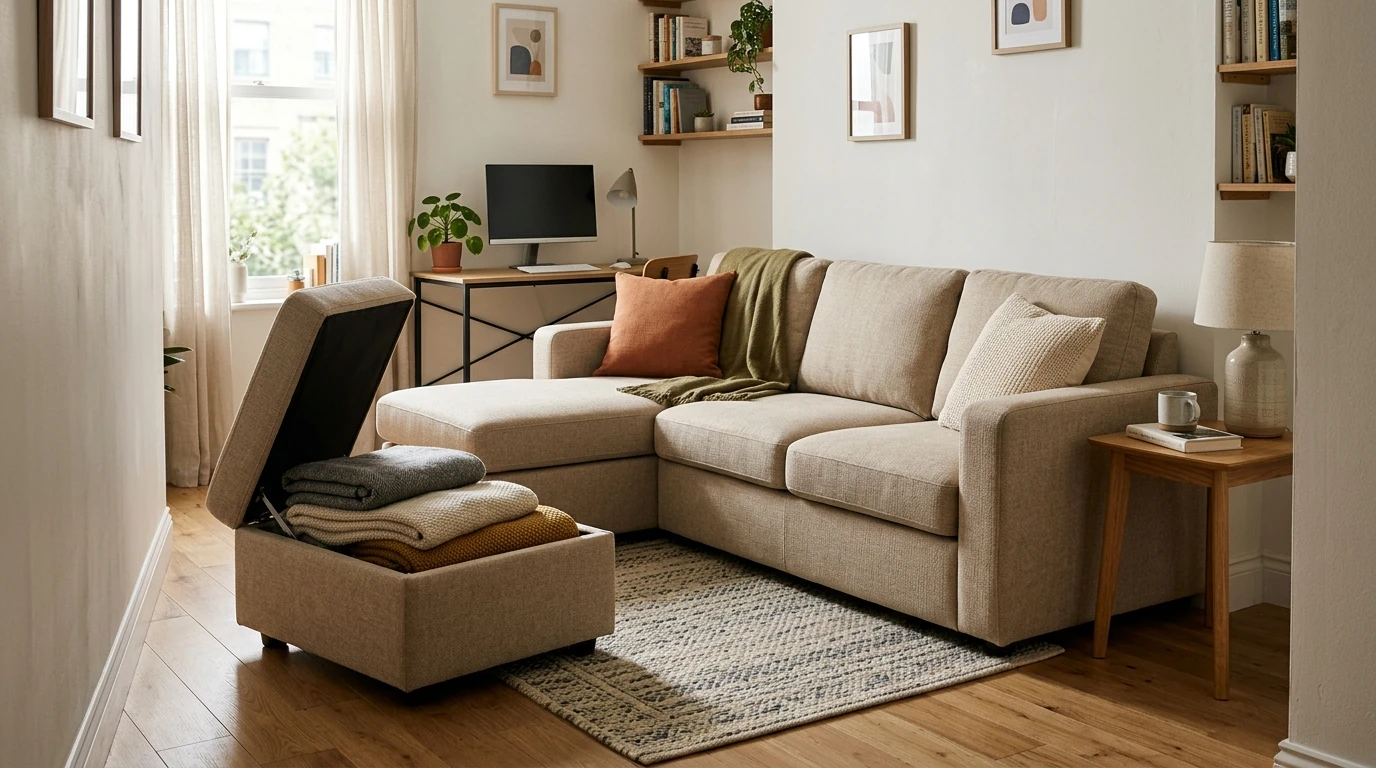
Modular L-Shaped Sectional Sofa with Storage Ottoman for Small Spaces That Still Need Real Comfort
Small rooms ask a lot from one piece of furniture: comfortable seating, a layout that makes sense, and storage that keeps the space calm. Our modular L-shaped sectional with a storage ottoman is built for that kind of everyday living—easy to place, easy to adapt, and ready to hold the extras that usually end up piled on a chair.
Why this modular L-shape works when space is limited
An L-shaped footprint can do what two or three separate pieces try (and often fail) to do in a tight room: create a true lounge zone while keeping the layout readable. Instead of scattering a loveseat, chair, and ottoman across the floor, the L-shape pulls seating into one clean boundary—helpful when your living area also shares space with a desk, a dining nook, or a hallway path.
- An L-shaped footprint helps define a lounge zone without needing multiple bulky pieces.
- Modular design supports flexible placement—ideal for apartments, studios, and multipurpose rooms.
- Pairs well with compact coffee tables or nesting tables to keep walkways open.
- Creates a natural “corner” for movie nights, reading, or hosting without pushing seating into traffic paths.
Quick room-fit checklist before placing a sectional
| Measure/Decision | What to check | Why it matters |
|---|---|---|
| Main walkway | Keep a clear path from entry to seating area | Prevents the room from feeling blocked |
| Door swing | Confirm doors won’t hit the chaise/ottoman | Avoids daily frustration in tight layouts |
| Window access | Leave room for curtains/blinds to open freely | Keeps light and airflow unobstructed |
| TV viewing angle | Seat faces the screen without twisting | Improves comfort in compact media setups |
| Storage zones | Plan where blankets, throws, and games will live | Reduces surface clutter fast |
Storage ottoman: the hidden helper that keeps the room tidy
In a small home, “comfort” isn’t only about cushions—it’s also about how fast you can reset the room after a long day. A storage ottoman turns the messiest category of living room items (soft goods and odd-shaped extras) into a one-step cleanup.
- A storage ottoman is a practical place for blankets, pillows, board games, or seasonal accessories.
- Helps maintain a clean-looking space when the living room is also the home office or guest area.
- Can double as a leg rest or an extra surface (use a tray if placing drinks).
- Makes quick resets easy—everything goes away in one step.
Our team’s favorite way to keep it useful every day: assign the ottoman a “soft-only” job. When it’s dedicated to throws, backup pillow covers, or a guest blanket, it stays easy to open and close—and you avoid turning it into a random overflow bin.
Layout ideas for apartments, studios, and multipurpose rooms
Once you treat the sectional as the anchor (not just another piece), the rest of the room gets simpler. The goal is to keep your pathways clear and your sightlines open, while still giving you a spot that feels like a real living room.
- Corner anchor: tuck the sectional into a corner and float a small rug to visually “finish” the area.
- Room divider: in open layouts, use the back of the sectional to separate living from dining or work zones.
- Flexible ottoman placement: keep the ottoman near the sectional for lounging, then move it to the side when guests arrive.
- Small-space pairing: choose slimmer side tables and wall-mounted lighting to free up floor space.
If you’re dividing a room, keep a comfortable passage behind or beside the sofa so the space doesn’t feel like an obstacle course. For more small-room layout inspiration, see ideas from Architectural Digest and The Spruce.
Everyday comfort, simplified
A sectional earns its footprint when it replaces multiple pieces and makes lounging feel natural. With an L-shape, you get the option to sit upright for conversation, then pivot into a more relaxed position without pulling out an extra chair or crowding the room.
- A sectional supports relaxed seating—more room to stretch out than a standard loveseat.
- Modular pieces make it easier to adapt if the room changes (new apartment, new desk setup, new baby gear).
- An ottoman can help turn “upright sitting” into lounge-friendly comfort without adding another chair.
- Works well for households that want one main seating area that does more than one job.
And because small rooms can feel stuffy fast, keeping airflow and comfort in mind matters—especially if your living room doubles as a workspace. The EPA’s indoor air quality guidance is a solid reference for basic ventilation and comfort considerations.
Care and styling tips that keep small spaces feeling open
In compact rooms, styling is less about adding more and more about choosing the right few pieces. When the sofa is doing the heavy lifting, the surrounding elements should stay light and functional.
In-stock picks from our store
- Modular L-Shaped Sectional Sofa with Storage Ottoman – Perfect for Small Spaces
- Cactus Cat Tree Tower with Scratching Post & Condo Nest
FAQ
Will an L-shaped sectional overwhelm a small living room?
It can actually reduce visual clutter by replacing multiple separate pieces with one defined seating zone. Measure your main walkway and door swings, then keep surrounding tables compact so you preserve open paths.
What should go inside a storage ottoman to keep it useful every day?
Stock it with grab-and-go items like throws, an extra pillow cover, and a small bin for remotes or games. Skip heavy, messy, or sharp items so it stays easy to access and doesn’t become a catch-all.
How can a sectional work in an open-plan apartment?
Use the sectional as a soft divider by lining it up with a rug and lighting to “claim” the living zone. Leave a clear pathway behind or beside it so moving between areas feels natural.









Leave a comment