Teen Study Success Checklist: Habits, Planning & Mindset
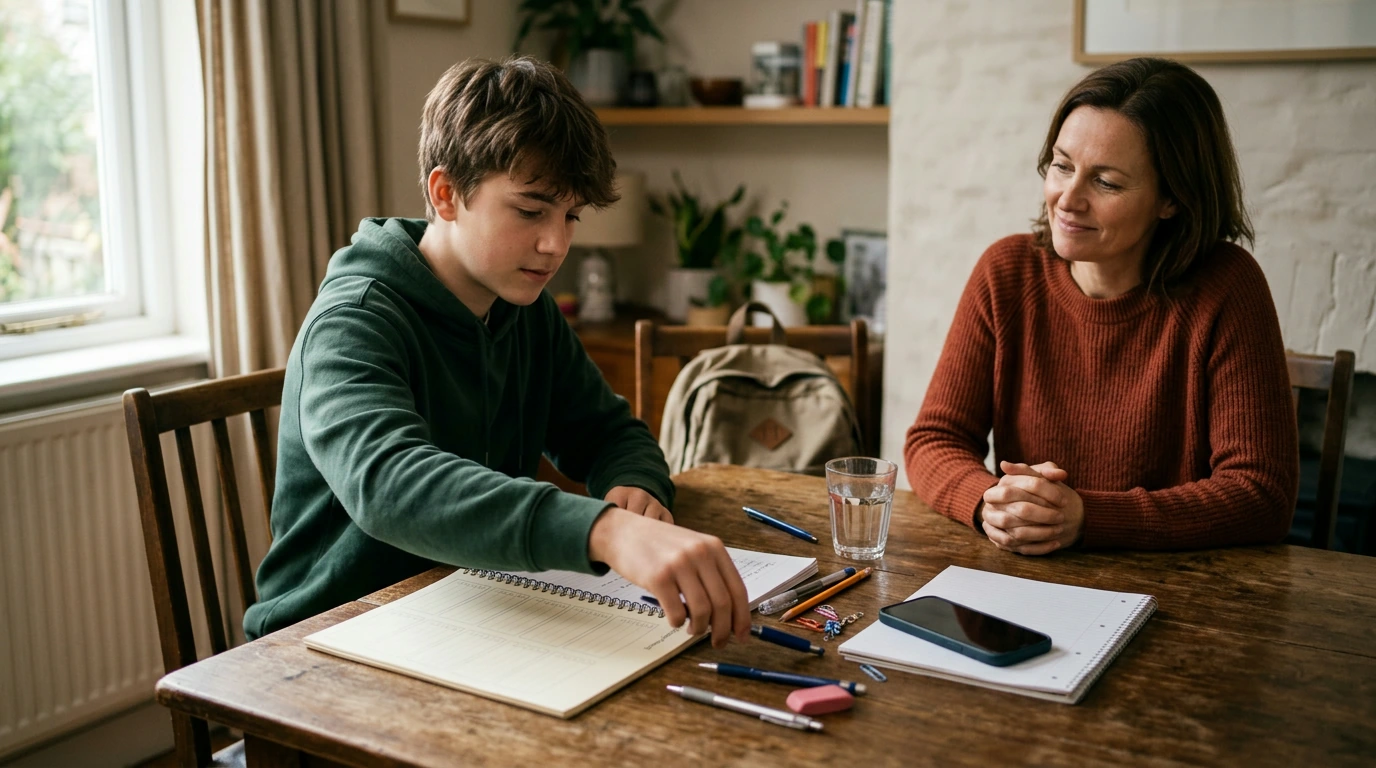
A Simple Checklist to Strengthen Your Teen’s Academic Success
School performance often improves fastest when the basics are consistent: a workable routine, clear priorities, and the right kind of support at home. A printable checklist can help parents and teens build steady study habits, strengthen motivation, and develop a growth-oriented mindset—without turning every evening into a battle.
What Gets in the Way (and What Helps Most)
Many teens don’t struggle because they “don’t care.” More often, they’re running into predictable roadblocks: inconsistent routines, unclear expectations, procrastination loops, digital distractions, and stress that looks like “laziness” from the outside.
The most helpful supports at home are usually simple and repeatable: predictable study windows, a calm work setup, weekly planning, and short check-ins that focus on the process rather than the grade. A useful rule is to reduce friction first (materials ready, workspace clear, schedule visible), then build skills (planning, focus, review). When the start feels easy, follow-through gets easier too.
The Core Checklist: Habits That Make Studying Easier
These “small” habits reduce decision fatigue and make it more likely your teen actually begins.
- Daily reset (5 minutes): quick backpack/locker tidy, devices charging, key supplies packed, and a glance at tomorrow’s schedule.
- Study environment: a consistent spot, good lighting, water nearby, notifications off, and only the tabs/resources needed for the next task.
- Time blocks that work: 25–45 minutes of focused work followed by a 5–10 minute break. Save longer sessions for when momentum is already there.
- Start-up script: write the first tiny step (example: “open math notes and do problem #1”), then begin immediately.
- End-of-session wrap: list what’s done, what’s next, and one question to ask a teacher or classmate.
For learning that sticks, prioritize methods that require active recall. Research on retrieval practice shows that self-testing improves long-term learning more than passive review (see APA: Practice Testing (Retrieval Practice) Improves Learning).
Planning and Priorities: Turning “I Have a Lot” into a Plan
When teens say, “I have so much,” they usually mean “I can’t see the path.” Planning creates a path.
- Weekly planning (10–15 minutes): list assignments, quizzes, and activities; estimate time; choose two “must-do” tasks per day.
- Daily triage: sort tasks into (1) due tomorrow, (2) needs multiple days, (3) quick wins under 15 minutes.
- Avoid the over-scheduling trap: plan for about 60–70% of available time to leave room for delays and mental fatigue.
- Use visible deadlines: keep one shared calendar for school due dates and extracurriculars to prevent surprises.
Weekly Routine Checklist (Sample)
| Routine Item | When | How Long | Done? |
|---|---|---|---|
| Weekly assignment scan + calendar update | Sunday | 15 min | □ |
| Choose top 2 priorities for tomorrow | Each evening | 5 min | □ |
| Focused study block (no notifications) | After school | 30–45 min | □ |
| Quick review: notes, flashcards, or summary | After study block | 10 min | □ |
| Pack materials + device charging | Before bed | 5 min | □ |
Motivation That Lasts: Building Momentum Instead of Pressure
Motivation is more reliable when it’s built on actions your teen can control, not outcomes they can’t fully control.
- Shift from pressure to actions: swap “get an A” for “study 30 minutes, then practice 5 problems.”
- Use the two-minute start: commit to two minutes only. Starting is the hardest part; continuing is easier once the task is moving.
- Small rewards tied to completion: a short walk, a favorite snack, or a few minutes of a preferred activity—earned by finishing the plan, not by “being perfect.”
- Look for hidden barriers: unclear instructions, gaps in understanding, or overwhelm. Motivation often returns when confusion is addressed quickly.
If focus consistently falls apart, check sleep first. Teen sleep needs are real, and chronic sleep debt can look like poor motivation (see CDC: Sleep and Sleep Disorders).
Mindset Tools for Stress, Setbacks, and Confidence
- Normalize setbacks: a low grade is information—what to adjust next—not a label.
- Swap self-talk: “I’m bad at this” becomes “I haven’t mastered this yet; what’s the next step?”
- Practice retrieval, not rereading: self-quizzing, practice problems, and explaining concepts out loud strengthen memory.
- Manage anxiety with structure: break work into small chunks, set a timer, and end with a clear next step.
Evidence-based learning techniques consistently support active strategies like practice testing and spaced practice over passive review (see Dunlosky et al., “Improving Students’ Learning With Effective Learning Techniques”).
Parent Support Without Micromanaging
Teens typically do better when support feels steady, not controlling.
Use the Printable Checklist to Make Consistency Easier
Recommended Tools (Digital Downloads & Helpful Organizers)
- A Checklist to Boost Your Teen’s Academic Success | Printable Digital Download for Parents | How to Support Your Teen’s Academic Success with Study Habits, Motivation & Mindset Tools (Printable)
- Alviero Martini Prima Classe Women’s Beige Bag with Zip (Useful for keeping chargers, flashcards, and small study supplies organized for school or tutoring sessions)
FAQ
How many hours should a teen study each day?
A practical range is about 30–90 minutes on typical nights, depending on grade level and workload, with more time during projects or exam weeks. Consistency matters more than marathon sessions, so start with one focused block plus a short review and adjust as needed.
What if my teen refuses to use a checklist?
Offer ownership: let them pick just three items to try for two weeks, tied to a goal they care about (less stress, more free time, staying eligible for sports). Keep parent check-ins brief and nonjudgmental so the checklist feels like support, not surveillance.
Which study methods work better than rereading notes?
Retrieval practice (self-quizzing), practice tests/problems, spaced repetition, mixing problem types, and explaining concepts out loud generally outperform rereading. They can feel harder in the moment, but that “effort” is often what improves retention.











Leave a comment