Baby Boy Summer Romper Fit: Loose vs Snug Guide
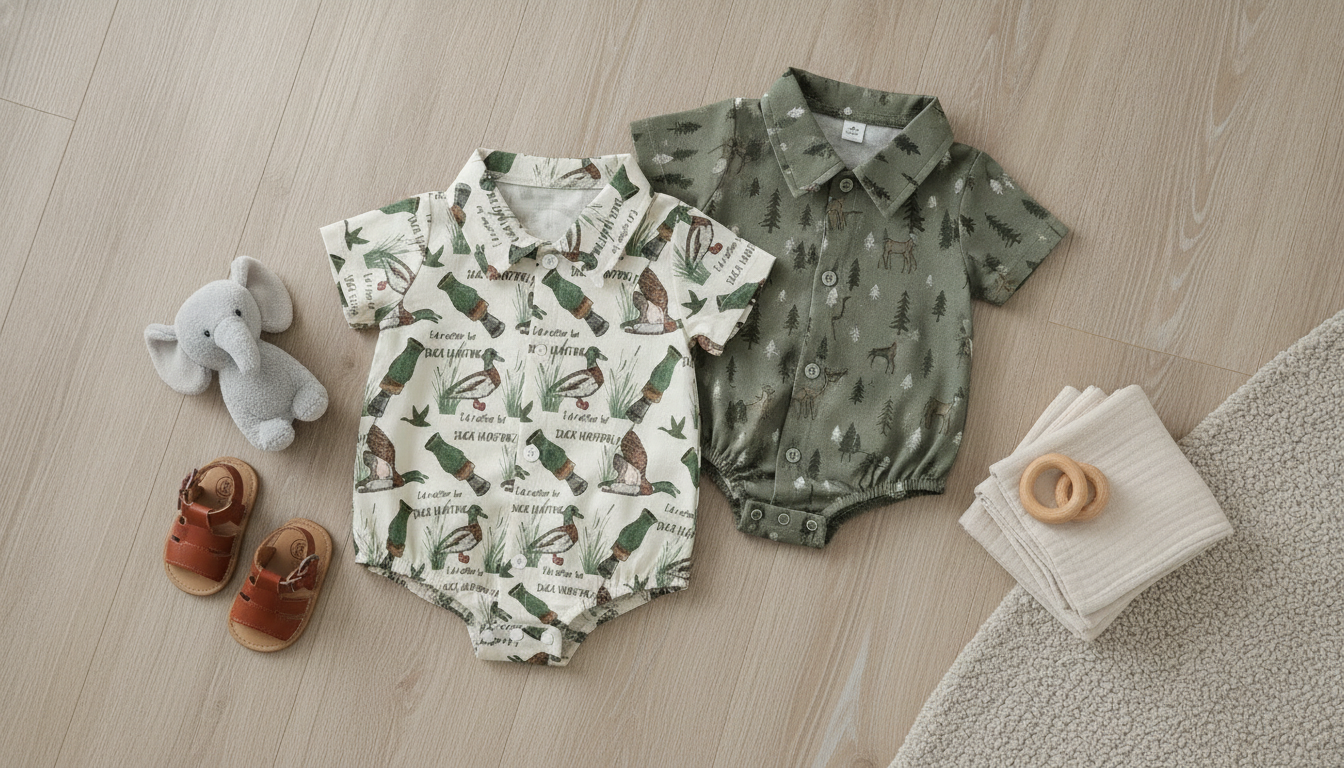
Should a baby boy summer romper fit loose or snug?
A baby boy summer romper should fit comfortably relaxed—roomy enough for airflow and easy movement, but not so loose that it bunches, rides up, or creates safety issues. Aim for a “soft snug” fit at the openings (neck, arms, and legs) with a little space through the torso and diaper area.
What “soft snug” looks like in warm weather
In summer, a slightly looser body helps heat escape and reduces sweaty fabric cling. You should be able to slip one to two fingers under the fabric at the chest and belly without the romper pulling tight. At the same time, the neckline and leg openings shouldn’t gape widely—excess fabric there can rub, shift during crawling, or expose skin to sun more than expected.
Diaper room matters more than a tight waist
The best fit leaves extra space in the seat for a diaper (including overnight or cloth diapers). If snaps strain, the crotch pulls downward, or you see red marks at the thighs, the romper is too snug. A good romper will allow squats, tummy time, and being carried on your hip without wedgies or tightness across the diaper.
When to size up vs. stick with a closer fit
Size up if the fabric is tight over the diaper, snaps pop open, or the romper shortens when your baby lifts his arms. Stick with the current size if shoulder seams sit close to the shoulder edge, leg openings stay in place without leaving marks, and the romper doesn’t twist around the body after a few minutes of play. If the romper has a very stretchy knit, it can look closer-fitting while still being comfortable—focus on movement and marks, not just how tailored it appears.
Quick fit check before keeping it
Fasten all snaps or buttons, then pick your baby up and let him kick. The romper should stay comfortable without pulling at the crotch or digging at the thighs. If it rides up noticeably, it’s too small or too short in the torso.
For more guidance on choosing breathable fabrics, closures, and warm-weather features, visit this baby boy summer romper guide.
FAQ
How do you know if a baby romper is too small?
It’s too small if snaps strain, the crotch pulls tight, or you see red marks at the thighs, waist, or shoulders after a short wear. Frequent ride-up during kicking or crawling is another common sign.








Leave a comment