
Slide, Climb & Playhouse Kitchen Set for Toddlers
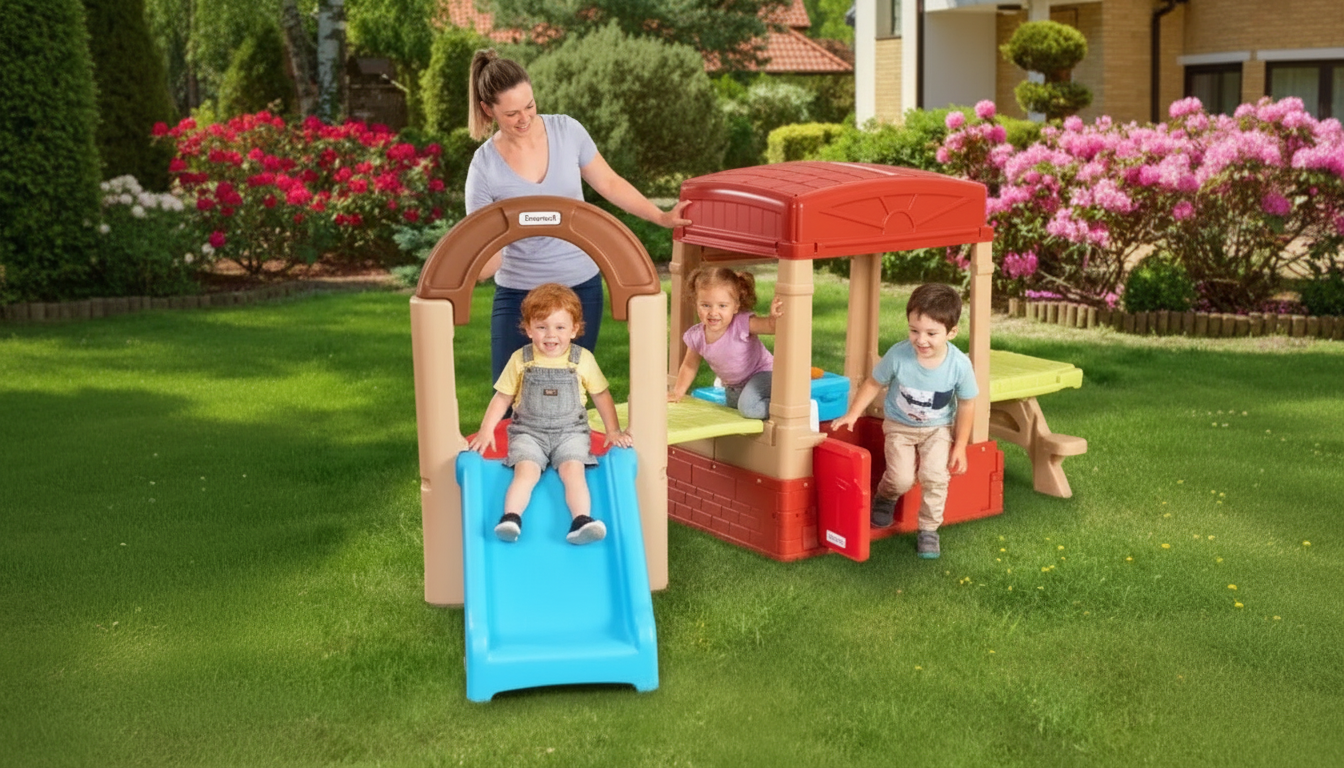
Sunny Slide and Climb Playhouse with Kitchen, Picnic Table & Toddler Activity Center
A backyard (or playroom) setup that blends active play with pretend play can keep toddlers engaged longer and support a wider range of skills. This playhouse combines a slide-and-climb zone with a kid-sized kitchen and picnic table, creating one spot for movement, role-play, snacks, and quiet breaks. Instead of bouncing between separate toys, kids can stay “in the same world” while shifting from big-body play to calmer, focused activities.
What’s Included and How the Play Zones Work Together
The best part of a combo playhouse is how each area supports the next. One minute your toddler is climbing; the next, they’re “cooking lunch” or settling at the table to reset.
- Slide and climb area for gross-motor movement and confidence building.
- Playhouse space that feels like a “home base” for imaginative games.
- Kitchen elements for pretend cooking, serving, and sharing routines.
- Picnic table area for crafts, pretend meals, and rest between active play.
- Activity center flow: kids can rotate between movement and calmer play without leaving the structure.
That “rotate and return” pattern matters for toddlers: it helps them burn energy, then regulate, then re-engage—without needing a grown-up to constantly set up the next activity.
Who It’s Best For
- Toddlers who like both climbing/sliding and role-play activities (kitchen play, hosting, serving).
- Families who want one structure that encourages independent play and smoother sibling turn-taking.
- Caregivers who prefer a defined play zone that reduces toy sprawl across the room or patio.
- Homes with limited space where a combined unit can replace separate toys (kitchen set + slide + table).
Key Benefits for Toddler Development
Gross motor skills (move with purpose)
Climbing and sliding help toddlers practice balance, coordination, and body awareness. Repeating the same climb-slide loop builds confidence because kids can predict what comes next and improve each time.
Fine motor skills (hands get smarter)
Kitchen play and table activities encourage grasping, scooping, turning, placing, and manipulating small accessories (with age-appropriate supervision). Even simple “stir, pour, serve” motions develop control and planning.
Social-emotional growth (practice being with others)
Pretend play is a gentle way to work on sharing, taking turns, and expressing feelings through roles. A toddler who struggles with waiting for the slide can become the “chef” for two minutes, then switch roles.
Language development (more words, longer sentences)
“Serving,” “ordering,” and “cooking” scenarios naturally prompt new vocabulary. Toddlers often narrate what they’re doing at the kitchen, then use short requests at the picnic table (“Here you go,” “More,” “Sit here”).
Routine-building (built-in breaks)
The picnic table creates a predictable place for snacks, water, and calm-down moments. Having a consistent “reset station” can reduce meltdowns during longer outdoor sessions.
Safety and Comfort Considerations
Any slide-and-climb toy works best when placement and supervision are planned from the start. For general home playground guidance, review CPSC home playground safety recommendations and AAP tips on outdoor play and safety.
- Placement: set on flat, stable ground; keep clear space around the slide exit and climbing side.
- Supervision: toddlers benefit from nearby adult monitoring, especially during climbing and transitions.
- Footwear and clothing: avoid drawstrings; use secure shoes for traction if playing outdoors.
- Weather and heat: check surface temperature in sun; provide shade or play during cooler hours.
- Age and size fit: confirm the structure matches your child’s developmental stage and any listed manufacturer guidelines.
Quick Spec and Setup Checklist
A smooth setup isn’t just about faster assembly—it’s about long-term stability. Plan the location first, then assemble with alignment in mind before fully tightening hardware.
| Item to Confirm | Why It Matters | Quick Tip |
|---|---|---|
| Level surface | Reduces wobble and uneven slide speed | Use a long level or straight board to check the ground |
| Clearance around slide | Prevents bumps during exits and running starts | Keep open space in front of the slide and on both sides |
| Shade or sun plan | Helps avoid overheated surfaces and discomfort | Add an umbrella/canopy nearby or schedule play time earlier |
| Adult sightline | Allows quick help on climbs and transitions | Position so the climbing side is visible from seating |
| Accessory storage | Keeps kitchen pieces from becoming trip hazards | Use a small bin under/near the picnic table |
Ideas for Play: Getting More Use Than a Standard Slide
Care, Cleaning, and Keeping It Looking New
Where to Buy
For current pricing, availability, and listing details, shop the Sunny Slide and Climb Playhouse with Kitchen, Picnic Table & Toddler Activity Center. Before ordering, double-check the listing photos and included components, then plan delivery timing so assembly can happen when an adult has uninterrupted time.
If you’re also setting up the rest of the home for calmer downtime while kids play, you may want a dedicated pet spot like the Cactus Cat Tree Tower with Scratching Post & Condo Nest.
FAQ
Is this better indoors or outdoors?
It can work in either setting as long as you have enough clearance and a stable, level surface. Indoors, choose non-slip flooring and keep the slide exit clear; outdoors, check for hot surfaces in direct sun and plan for shade when needed.
How much space should be left around the slide and climbing side?
Leave a clear buffer zone around the entire structure, with extra open space at the slide exit for safe landings and easy walk-back. Measuring the footprint plus additional clearance on all sides improves safety and keeps play moving without collisions.
How can toddlers share it without constant conflict?
Use simple rules like one climber at a time and one slider at a time, and make the picnic table the “waiting spot.” Timed turns or roles (chef/customer) also keep both kids engaged, so waiting feels like part of the game.














Leave a comment