Calm in Motion: Micro-Practices to Manage Daily Stress
Calm in Motion: A Daily System for Managing Stress with Mindfulness and AI Support
Stress rarely arrives as a single event; it shows up as a steady stream of emails, decisions, noise, and unmet needs. A practical approach works best: small, repeatable actions that calm the body, clear the mind, and protect attention—without requiring long sessions or perfect conditions. This guide lays out a simple daily rhythm that blends mindfulness skills with AI-friendly support for quick check-ins, better focus, and steadier inner balance.
Why stress feels constant (and why quick fixes fail)
Stress isn’t only “in your head.” It’s a whole-body shift into alert mode—heart rate changes, muscles tighten, breathing gets shallow—and that state can narrow attention and shorten patience. When the nervous system stays revved, even minor friction can feel urgent or personal.
Many quick fixes aim at symptoms rather than the stress cycle. Scrolling, snacking, or avoidance may numb discomfort for a moment, but they rarely change the sequence that keeps stress repeating: trigger → body response → story (interpretation) → behavior. Small interventions help because they interrupt the cycle early, before it compounds across the day.
Consistency beats intensity. A 60-second reset repeated daily can outperform occasional long sessions because it trains a reliable “off-ramp” from reactivity.
For a research-backed overview of how stress affects mind and body, the American Psychological Association’s stress resources are a helpful starting point.
A calm-in-motion daily framework: Notice, Regulate, Reframe, Restore
This framework is designed for real schedules. Each step is small on purpose—more like a rhythm than a retreat.
1) Notice
Name what’s happening (body signals, emotions, thoughts). Labeling reduces reactivity by creating a pause: “Tight chest, rushing thoughts, irritation.” You’re not trying to fix it yet—just seeing it clearly.
2) Regulate
Use breath, grounding, and muscle relaxation to shift the nervous system toward steadiness. Regulation is the bridge between “I’m overwhelmed” and “I can respond.”
3) Reframe
Test stressful thoughts for accuracy and usefulness. Replace “This is a disaster” with something workable: “This is uncomfortable, and I can take the next step.” A helpful reframe is not forced positivity; it’s a more usable lens.
4) Restore
Protect recovery with short breaks, movement, hydration, and sleep-friendly routines. Restoration prevents stress from becoming the default setting.
Daily micro-practices for steady calm
| Moment | Practice (1–3 min) | What it helps | AI prompt to personalize |
|---|---|---|---|
| Morning (before screens) | 3 cycles of box breathing (4-4-4-4) | Sets baseline calm and focus | “Create a 2-minute morning reset based on my schedule and top worry today.” |
| Before a stressful task | Grounding: 5-4-3-2-1 senses scan | Reduces overwhelm; improves task entry | “Give me a one-sentence task entry plan and a grounding script.” |
| Midday dip | Walk + shoulder release + long exhales | Lowers tension; restores energy | “Suggest a 5-minute movement break I can do where I am.” |
| After a difficult interaction | Label emotion + slow breathing (6 breaths) | Prevents rumination; lowers reactivity | “Help me process this conversation: what happened, what I felt, what I need next.” |
| Evening wind-down | Brain dump + ‘tomorrow’s first step’ | Stops looping thoughts; improves sleep | “Turn my notes into a simple plan for tomorrow with one clear first action.” |
Mindfulness that fits real life: three skills that compound
Attention training (60 seconds)
Pick one anchor—breath, sound, or the feeling of your feet. When the mind wanders, gently return. The “return” is the rep that builds stability.
Open monitoring
Notice thoughts as events rather than facts that must be solved immediately: “planning,” “judging,” “worrying.” This reduces the urge to chase every mental alarm.
Self-compassion micro-script
Try: “This is hard. Stress is human. One small step now.” This cuts shame, increases follow-through, and helps you restart quickly after a rough moment.
For a practical overview of mindfulness and safety considerations, the National Center for Complementary and Integrative Health offers clear guidance.
AI-powered stress relief: how to use support safely and effectively
A 7-day practice plan to build momentum
Common obstacles (and quick fixes that actually help)
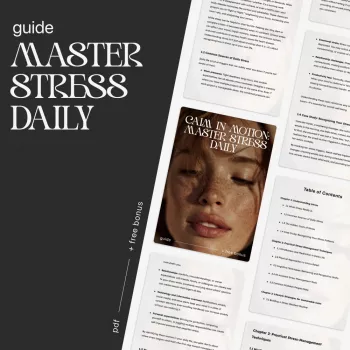
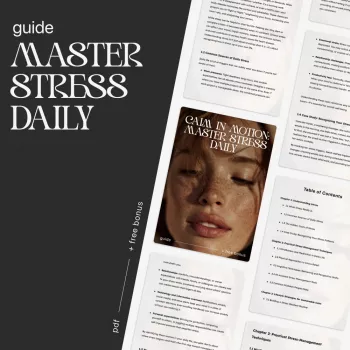
Digital download spotlight: Calm in Motion—Master Stress Daily
If a repeatable system would make consistency easier, Calm in Motion: Master Stress Daily (digital download) is designed for everyday stress rather than crisis-only moments. It pairs mindfulness-based exercises with AI-friendly guidance for journaling, reframing, focus support, and decision-light routines—ideal for busy schedules where 1–3 minutes at a time is realistic.
To reduce day-to-day friction that can amplify stress, practical organization can also help. A reliable carry-all like the Alviero Martini Prima Classe Women’s Beige Bag with Zip can make commutes and errand runs feel less scattered. For pet owners, supporting a calmer home environment can matter too; the Cactus Cat Tree Tower with Scratching Post & Condo Nest can offer cats an outlet for climbing and scratching, which may reduce household disruptions during work-from-home hours.
When to get extra support
FAQ
What is the fastest way to calm down during a stressful moment?
Try 60–90 seconds of long exhales (make the exhale slower than the inhale) or box breathing (4-4-4-4), then do a quick 5-4-3-2-1 senses scan to ground yourself. Calm the body first, then decide what to do next.
How can mindfulness help with stress if there is no time to meditate?
Mindfulness still works in micro-practices: 30–120 seconds of noticing and gently returning to an anchor trains steadier attention. Pair it with existing cues (coffee, handwashing, opening your laptop) so it happens even on busy days.
Can AI tools actually help manage daily stress?
Yes—when used for structure like check-ins, journaling starters, reframes, and simple planning. Keep privacy boundaries, and seek professional support if symptoms are severe or persistent.









Leave a comment