Do Smart Air Purifiers Work? What Matters Most
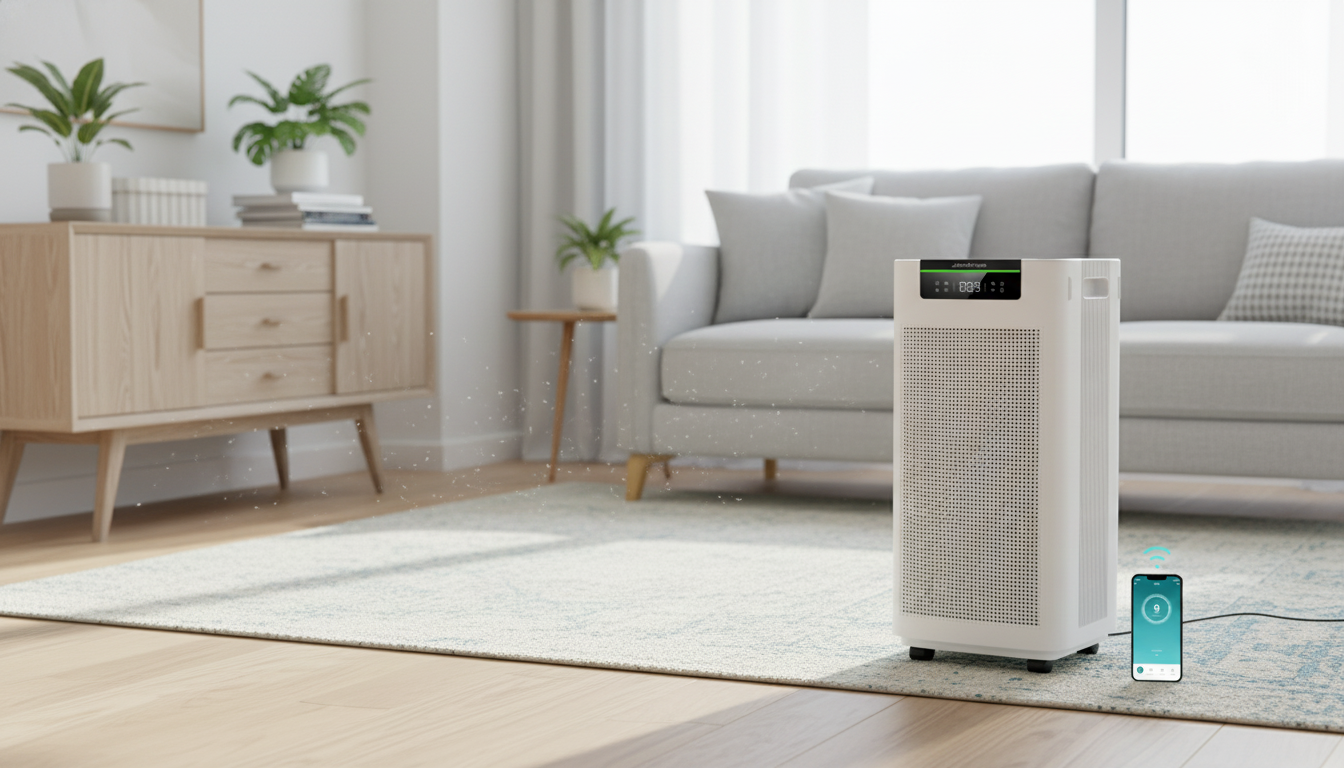
Do smart air purifiers really work?
Yes—smart air purifiers can really work, as long as the core hardware is solid. “Smart” features (apps, auto mode, voice control, air-quality sensors) don’t clean the air by themselves, but they can help the purifier run at the right speed at the right times, which improves real-world results and makes it easier to stick with using it.
How they actually clean the air
The cleaning power comes from filtration and airflow. A quality purifier uses a high-efficiency particle filter (often HEPA or HEPA-like) to capture fine particles like dust, pollen, smoke, and pet dander, plus an activated carbon filter to reduce odors and some gases. To be effective, it also needs enough airflow (CADR) to cycle room air repeatedly.
What “smart” adds (and what it doesn’t)
Smart models typically add an air-quality sensor and an automatic fan mode that adjusts speed when pollution rises—like during cooking, wildfire smoke, or high-pollen days. App controls can show filter life, let you schedule runtimes, and send alerts if air quality changes while you’re away. Voice control can make it easier to boost the fan quickly without hunting for a remote.
What smart features can’t do: they won’t compensate for an undersized unit, a clogged filter, or leaving doors/windows open during heavy smoke events.
How to tell if one will work for your space
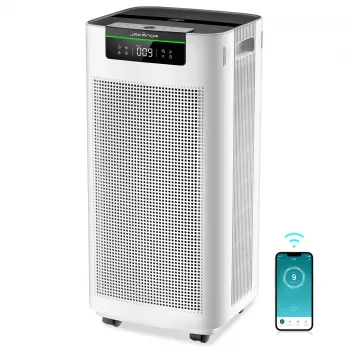
Match the purifier to your room size, then verify it has the right filters for your concerns (particles vs. odors). Place it where air can circulate freely, run it consistently, and replace filters on schedule. For a deeper look at choosing a capable smart unit—especially for large rooms and app/Alexa control—see this smart air purifier guide.
FAQ
How often should you replace air purifier filters?
Most particle filters last about 6–12 months and carbon filters around 3–6 months, but it depends on pollution levels and runtime. Follow the unit’s filter indicator and replace sooner if airflow drops or odors linger.








Leave a comment