Tiny Kitchen Efficiency: Zones, Storage & 10-Min Reset
Making a Tiny Kitchen Work Smarter: A Practical Efficiency Guide
A small kitchen can feel cramped and chaotic, but the right setup turns it into a smooth, low-stress workspace. The most effective improvements come from arranging the kitchen around how cooking actually happens: unloading groceries, prepping, cooking, serving, and cleaning. Use the steps below to streamline storage, shorten steps, and make everyday meals easier without adding square footage.
Start With a “One-Week Reality Check”
Before buying organizers or moving everything around, take seven days to observe what’s actually happening. Small kitchens don’t fail because they’re small—they fail because high-use items don’t live where the work happens.
- Write down the meals and snacks you make most often, then list the tools and ingredients you touch every time.
- Track the top friction points for one week (no landing space near the stove, cluttered counter, overflowing utensil drawer, etc.).
- Identify the 10 items that “never leave” the counter and decide whether each one truly earns that space.
- Measure your true usable surfaces: the main prep zone, the sink surround, and the stove-side landing area.
- Set one target: fewer steps between fridge → sink → prep → stove, and fewer items stored outside the zones where they’re used.
Create Clear Zones That Match Your Workflow
Organizing by task (not by item type) cuts down on back-and-forth. In a tight layout, every extra trip feels like a traffic jam—especially if more than one person is in the room.
- Establish a prep zone close to the sink and trash/compost: cutting board, knives, mixing bowls, measuring tools.
- Build a cooking zone around the stove/oven: spatulas, tongs, oils, salt, spoon rest, sheet pans, pot holders.
- Create a beverage/breakfast zone if mornings are busy: mugs, coffee/tea, toaster, oats, sweeteners.
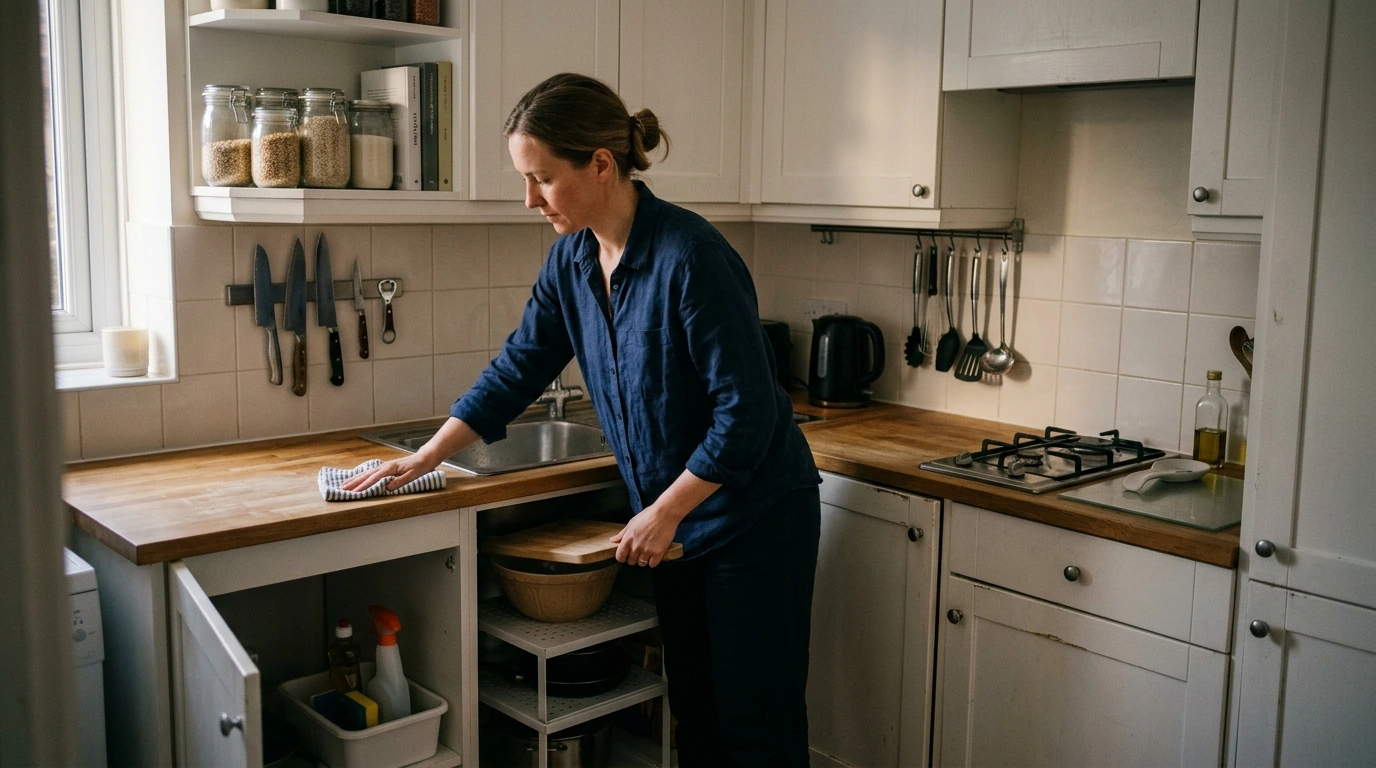
- Keep cleaning supplies together in one caddy or under-sink bin so wipe-downs happen immediately.
Tiny Kitchen Zone Planner
| Zone | What belongs there | Space-saving tip |
|---|---|---|
| Prep | Cutting board, knife, colander, mixing bowl, measuring set | Store the cutting board vertically; nest bowls with a non-slip liner |
| Cooking | Spatula, tongs, oil, salt, sheet pan, pot holders | Use a narrow tray for oils/spices; hang pot holders on a hook strip |
| Serving | Plates, bowls, everyday glasses, utensils | Keep only daily-use pieces in prime cabinets; store extras up high |
| Cleaning | Dish soap, sponge, towels, surface spray, trash bags | Use a sink caddy and one under-sink bin with dividers |
| Food storage | Containers, wraps, bags, labels | Match lids to bases by size; keep a small “leftover” bin in the fridge |
Free Your Counters Without Losing Convenience
Counter space is prime real estate. The goal isn’t an empty kitchen—it’s a kitchen that stays usable while you cook.
- Keep one “landing strip” clear: a 12–18 inch section near the stove or sink is often enough to stop pileups.
- Use vertical surfaces: adhesive hooks for hot pads, a magnetic strip for small metal tools, or a slim rail for utensils you reach for daily.
- Move seldom-used appliances to a top shelf, closet, or labeled bin; keep only one multitask appliance out at a time.
- Adopt a daily reset rule: nothing “sleeps” on the counter unless it was used today and will be used again tomorrow.
- If clutter is mostly paper, relocate it: a simple wall pocket system outside the cooking zone prevents grease-splatter paperwork stacks.
If you live with pets, keeping cats occupied away from food prep can also reduce counter congestion and clean-up. A dedicated perch elsewhere can help redirect curiosity, like the Cactus Cat Tree Tower with Scratching Post & Condo Nest.
Make Cabinets and Drawers Do More (Without a Full Remodel)
Tiny kitchens usually have enough storage on paper—it’s just hard to access. The fix is creating “pull-forward” visibility and stacking smartly.
Simplify the Tool Lineup: Fewer, Better, Easier to Store
Tighten the Pantry and Fridge for Faster Cooking
- Arrange pantry shelves by logic: quick proteins, carbs, sauces, and add-ins grouped together.
- Use FIFO (first in, first out): place newer items behind older ones to reduce waste.
- Create a “weeknight wins” bin: pasta, jarred sauce, canned beans, rice, a seasoning blend, and one shelf-stable protein.
- In the fridge, keep a dedicated leftovers area in clear containers so meals don’t vanish behind tall bottles.
- Store raw proteins safely contained to reduce mess and cross-contamination; follow current guidance from USDA FSIS and CDC food safety.
Set Up a 10-Minute Close-Down Routine
A Step-by-Step Plan That’s Easy to Follow
For a ready-to-use structure with prompts, checklists, and space-saving ideas, use Making Your Tiny Kitchen Work Smarter (digital download).
For additional planning principles (especially if you’re rethinking layout later), consult the National Kitchen & Bath Association (NKBA) kitchen planning resources.
FAQ
What is the most important step to make a small kitchen efficient?
Define clear zones (prep, cooking, cleaning, serving) and store items where they’re used so the main workflow needs fewer steps. This reduces clutter and keeps your limited surfaces usable while you cook.
How do you keep counters clear in a tiny kitchen?
Reserve a single landing strip, move appliances off the counter unless used daily, and use vertical storage (hooks or rails) for frequently reached items. A quick nightly reset keeps clutter from rebuilding.
How should a small kitchen be organized for meal prep?
Keep your cutting board, knife, bowls, and measuring tools near the sink with a trash/compost spot. Store oils/spices and cooking utensils near the stove, and keep containers and wraps together so leftovers are easy to pack and find.










Leave a comment