500mm f/6.3 Mirrorless Lens: Sharper Wildlife & Sports
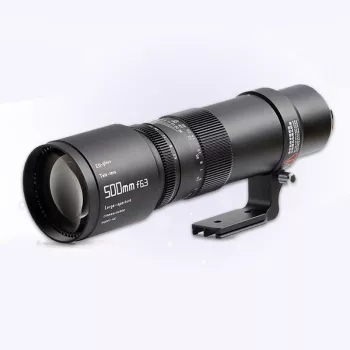
500mm f/6.3 Telephoto Full Frame Lens for Mirrorless Cameras: What to Expect and How to Shoot Sharper
A 500mm telephoto is built for reaching distant subjects—wildlife, birds, field sports, and compressed landscapes—while keeping detail and background separation strong. A 500mm f/6.3 full-frame mirrorless lens adds long reach in a package that’s often more manageable than brighter super-telephotos, but it also asks more from your technique: steadier support, smarter autofocus settings, and careful shutter-speed choices. For more guidance, see Find a Lens | Micro Four Thirds.
What a 500mm Telephoto Changes in Real-World Shooting
At 500mm, the lens doesn’t just “zoom in”—it changes how scenes look and how you work in the field. For further reading, see List of Sony E-mount lenses – Wikipedia.
- Less cropping, more detail: Pulls distant subjects close, preserving resolution and texture that heavy cropping can throw away.
- Stronger perspective compression: Backgrounds look larger and closer to the subject, creating a stacked, dramatic look that’s especially noticeable in landscapes and sideline sports.
- Tighter framing is harder: The narrow angle of view makes it easier to lose your subject, especially with birds in flight or fast plays.
- Shake is magnified: Small movements become big jumps in the viewfinder, so stance, grip, and stabilization matter more than they do at 200mm or 300mm.
Key Specs That Matter at 500mm f/6.3
- Aperture (f/6.3): Helps keep size and weight reasonable for a 500mm, but action photography typically needs good light (or higher ISO) to hold fast shutter speeds.
- Full-frame coverage: Designed for full-frame sensors; on APS-C bodies you’ll get a tighter field of view—similar framing to about 750mm on a 1.5× crop.
- Mirrorless fit and AF support: Confirm mount compatibility and whether features like subject detection and stabilization work fully on your specific camera body.
- Minimum focus distance and magnification: This affects close-range opportunities like birds at feeders, perched wildlife, or isolated landscape details.
- Tripod collar/foot: If included, it improves balance on monopods and gimbals and reduces strain on the camera mount during long sessions.
Depth of field at long focal lengths can still be surprisingly thin at moderate distances—especially on full frame. For a clear visual explanation of how aperture, distance, and focal length interact, see Cambridge in Colour’s depth of field guide.
Setup and Technique for Sharp Results
A 500mm lens rewards a “process.” Build a repeatable routine and you’ll see keeper rates rise quickly.
Shutter speed baselines
- Static subjects: Start around 1/500–1/1000s depending on your steadiness and stabilization.
- Birds in flight and field sports: 1/1600–1/3200s is often more reliable for wingbeats, sudden direction changes, and fast footwork.
Stabilization and support
- If your lens has optical stabilization, pair it with in-body stabilization when your system supports that combination.
- If it doesn’t, prioritize shutter speed and a stable stance over trying to “muscle through” slower exposures.
- Monopod: Great for sideline sports where you need mobility and quick repositioning.
- Tripod + gimbal: Ideal for long wildlife sessions and smoother tracking across the frame.
AF settings that usually help
- Continuous AF for anything that moves.
- Subject/animal detection if your camera offers it and performs well with your lens.
- Small/medium AF area can reduce the camera grabbing a branch, fence, or background instead of the subject.
Body mechanics
- Elbows tucked, feet staggered, left hand supporting the lens barrel.
- Gentle shutter press; exhale slightly during the exposure for steadiness.
- Use short bursts to increase odds of a perfectly steady frame.
Image Quality Expectations: Sharpness, Contrast, and Backgrounds
- Sharpness priorities: At 500mm, center sharpness is often the main goal for distant wildlife and sports. If light allows, stopping down slightly can improve contrast and edges.
- Atmospheric distortion is real: Heat shimmer and haze can soften images even with perfect focus. Cooler air and shorter subject distance often matter more than changing lenses.
- Background separation: Even at f/6.3, 500mm can blur backgrounds strongly when your subject isn’t too far away from it, producing clean isolation.
- Fringing and CA: High-contrast edges (like branches against bright sky) can show color fringing, usually correctable in most raw editors.
- Detail workflow: Shoot raw, protect highlights, and apply moderate sharpening paired with noise control for best fine detail.
Where This Lens Fits Best: Wildlife, Birds, Sports, and Landscapes
Quick Comparison Table: 500mm vs Other Common Telephoto Options
| Option | Best for | Main tradeoffs |
|---|---|---|
| 300mm–400mm telephoto | Larger subjects, closer wildlife, more general telephoto work | Less reach for small/distant subjects; more cropping needed |
| 500mm f/6.3 | Birds, wildlife, field sports in good light, compressed landscapes | Needs higher shutter speed discipline; low-light action can push ISO |
| 600mm+ super-telephoto | Small distant birds, professional wildlife work | More demanding handling, cost, and support requirements; atmospheric distortion more noticeable |
Care, Accessories, and Field Checklist
In-Stock Picks on Magdella
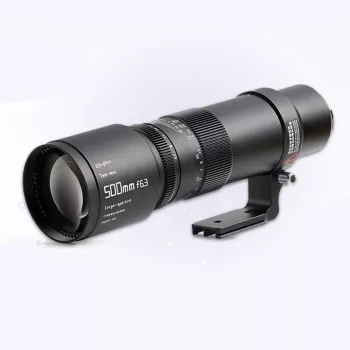
- 500mm f/6.3 Telephoto Full Frame Lens for Mirrorless Cameras — $724.47
- Alviero Martini Prima Classe Women’s Beige Bag with Zip — $135.85
FAQ
Is f/6.3 bright enough for wildlife and sports?
Yes in daylight and bright overcast, especially if you keep shutter speed high for action. For fast movement, expect to raise ISO to maintain 1/1600s or faster; in low light, static subjects are easier than motion.
Can a 500mm full-frame lens be used on APS-C mirrorless bodies?
Yes, as long as the mount is compatible. The field of view becomes tighter (about 750mm-equivalent framing on a 1.5× crop), and it’s worth confirming that autofocus and stabilization features are fully supported by the specific camera body.
Why do distant subjects sometimes look soft even when focus is correct?
At 500mm, atmospheric shimmer, haze, and heat waves can reduce clarity even with accurate focus. Shooting in cooler conditions, reducing subject distance, or choosing times with less shimmer often improves sharpness more than changing settings.









Leave a comment