Get to the Gym on Low-Energy Days: A Minimum Plan
Get Up, Gear Up: A Practical Motivation Plan for Getting to the Gym on Low-Energy Days
Motivation comes and goes, but gym consistency can be built with small triggers, fewer decisions, and a plan that still works when energy is low. The goal isn’t to “feel fired up” every day—it’s to make showing up the default, even when you’d rather skip it. With a few repeatable cues and a minimum plan, “not feeling like it” can turn into getting through the door—and leaving the gym feeling better than when the day started.
Why gym motivation disappears (and why it’s normal)
Low motivation often has nothing to do with discipline. Sleep debt, stress, hormones, workload, and decision fatigue all affect drive—and a flat day isn’t a character flaw. Your brain is also wired to avoid effort when the reward feels distant, so “benefits in three months” can lose to “couch right now.”
That’s why willpower-only plans tend to collapse on busy weeks. Systems beat mood-based decisions: if the steps are simple and automatic, you don’t need a pep talk. And when you’re drained, a “minimum viable workout” keeps your identity intact (“I’m someone who goes to the gym”) without demanding high intensity every time.
Set a “minimum” that still counts
Define the smallest gym win that you can do even on a rough day: 10 minutes on a bike, two exercises, or a short full-body circuit. Make it so doable that skipping feels almost silly.
A useful twist is an “arrival goal”: success equals walking through the gym door. Once you arrive, the workout can be optional. This removes the pressure that makes people avoid going at all. Keep your minimum consistent for 2–3 weeks, then increase volume only after the habit feels automatic. Also plan two versions of your session—one for low-energy days and one for normal days—so you don’t fall into all-or-nothing thinking.
Minimum workouts that protect consistency
| Energy level | What to do | Time | Why it works |
|---|---|---|---|
| Very low | Show up + 5–10 min easy cardio + stretch | 10–15 min | Preserves the habit and reduces guilt |
| Low | 2 compound moves (e.g., leg press + row) + light core | 15–25 min | Feels achievable; still trains the whole body |
| Normal | Full session from a simple plan (push/pull/legs or full-body) | 35–60 min | Builds strength and fitness steadily |
| High | Add intervals/finishers or extra sets (only if recovery allows) | 45–75 min | Uses high-energy days without forcing it daily |
Make getting to the gym easier than skipping it
Most missed workouts happen before you even start—when small frictions pile up. Remove them ahead of time.
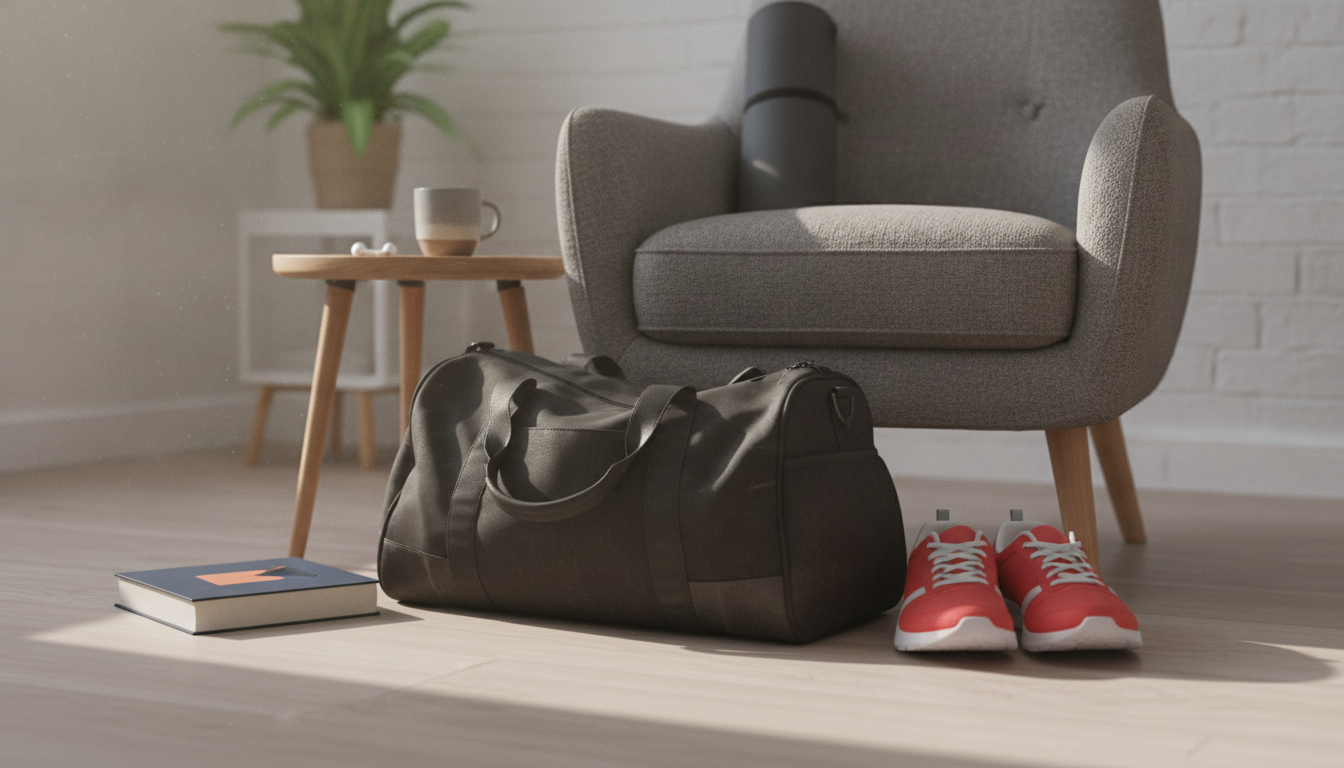
- Pack your gym bag the night before and place it by the door or in the car.
- Pre-select the workout using a short template (so you’re not deciding under stress).
- Choose a gym time that matches your real life: before work, lunch, or right after work—whatever removes the biggest barriers.
- Reduce “activation energy”: keep shoes, headphones, and water bottle together in one grab-and-go spot.
- Use a commute rule: drive to the gym first, decide later. Many sessions begin once you’re already there.
If you want a ready-to-run approach for low-motivation days, the short guide Get Up, Gear Up: How to Motivate Yourself for the Gym (Even When You Don’t Feel Like It) focuses on practical scripts, checklists, and simple workout templates that reduce decision-making when you’re tired.
Use cues, not pep talks: the 3-step start routine
Motivation boosters that work on rough days
For a simple “grab-and-go” carry option that can double as an everyday tote, consider the Alviero Martini Prima Classe Women’s Beige Bag with Zip—having a dedicated, easy-to-reach bag can remove one more excuse when you’re rushing out the door.
A simple weekly structure to avoid overthinking
If you’re building toward general health guidelines, the CDC’s physical activity basics and the ACSM recommendations can help you sanity-check whether your routine is in a helpful range without turning every week into a test.
When “no motivation” is actually fatigue or burnout
For behavior-change concepts that make habits feel lighter (not harder), the Stanford Behavior Design Lab offers useful frameworks around tiny steps and reliable cues.
A practical guide to build the habit faster
If you want a structured, no-drama blueprint that’s designed specifically for low-motivation moments, Get Up, Gear Up: How to Motivate Yourself for the Gym (Even When You Don’t Feel Like It) is built around friction reduction, consistency tracking, and realistic templates you can repeat until showing up feels automatic.
FAQ
What if motivation never shows up and the gym always feels like a chore?
Shift the goal from “feel motivated” to “follow a minimum plan,” and make workouts easier for two weeks so consistency can take root. Build a cue/routine/reward loop, then experiment with music, classes, or a new split to make training feel more engaging.
How do I motivate myself for the gym after work when I’m exhausted?
Pack gear in advance and go straight from work without sitting down, using a 10–20 minute minimum session as the default. On high-stress days, choose lighter training and prioritize sleep and nutrition so “exhausted” doesn’t become your normal baseline.
Is it okay to go to the gym even if I can only do a short workout?
Yes—short sessions reinforce the habit, protect momentum, and still deliver benefits for mood, energy, and health. A quick win can be 10 minutes of easy cardio plus stretching, or 15–25 minutes with two compound lifts and a little core.











Leave a comment