What Headphones Pro Studios Use (Tracking vs Mixing)
What headphones do professional studios use?
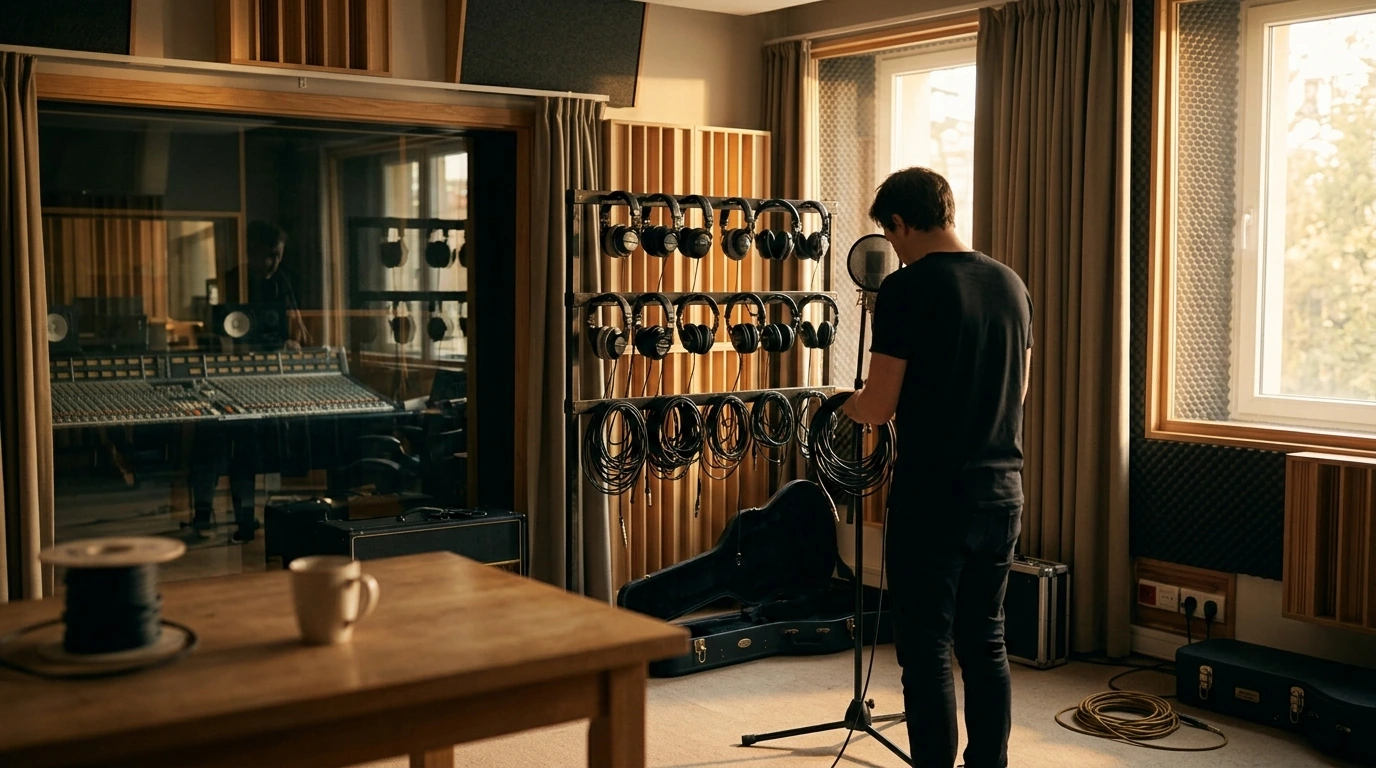
Professional studios rarely rely on one “magic” headphone. Our team sees pros rotate a small lineup based on the job: closed-back models for tracking and cue mixes, and open-back models for critical editing, mixing checks, and long sessions where comfort matters as much as sound.
For tracking and recording: rugged closed-backs
When microphones are live, studios commonly choose closed-back headphones that isolate well, play loud without distortion, and survive daily wear. Familiar workhorses include the Sony MDR-7506 and Audio-Technica ATH-M50x for general tracking, plus Beyerdynamic DT 770 Pro for stronger isolation and comfort during long takes. These are popular because they limit bleed into mics, clamp securely, and keep performers focused.
For mixing and detail work: open-backs with honest tuning
For mix decisions, many engineers switch to open-back headphones for a more natural sense of space and less “inside your head” pressure. Studio staples include the Sennheiser HD 600/HD 650 family and Beyerdynamic DT 880 Pro, often paired with a proper headphone amp when higher impedance demands it. Open-backs won’t replace monitors, but they’re excellent for spotting edits, noise, clicks, reverb tails, and balance issues.
For modern high-end sessions: planars and “reference” closed-backs
More studios now keep planar magnetic headphones on hand for fast transients and low-end control—especially when checking compression artifacts or sub-bass clarity. If you’re comparing larger-driver planars, our deep dive on 90mm planar magnetic options is a helpful next step: https://magdella.com/guide-90mm-planar-magnetic-headphones-studio-audiophile-guide/.
How to choose like a studio (without overbuying)
Start by matching the headphone to the task: closed-back for tracking and open-back for mixing checks. Prioritize comfort (pad shape, clamping force), replaceable pads/cables, and a sensitivity/impedance combo your interface can drive cleanly. If you record vocals often, isolation matters more than an extra dB of bass; if you edit and mix for hours, low fatigue and stable imaging matter most.
FAQ
Are open-back headphones better for mixing than closed-back?
Open-back headphones are often preferred for mixing because they sound more spacious and reduce the “boxed-in” feeling that can skew panning and reverb decisions. Closed-backs can still work, but they’re more likely to exaggerate bass and feel more isolating over long sessions.









Leave a comment