24-Inch Manual Tile Cutter: Clean, Repeatable Cuts
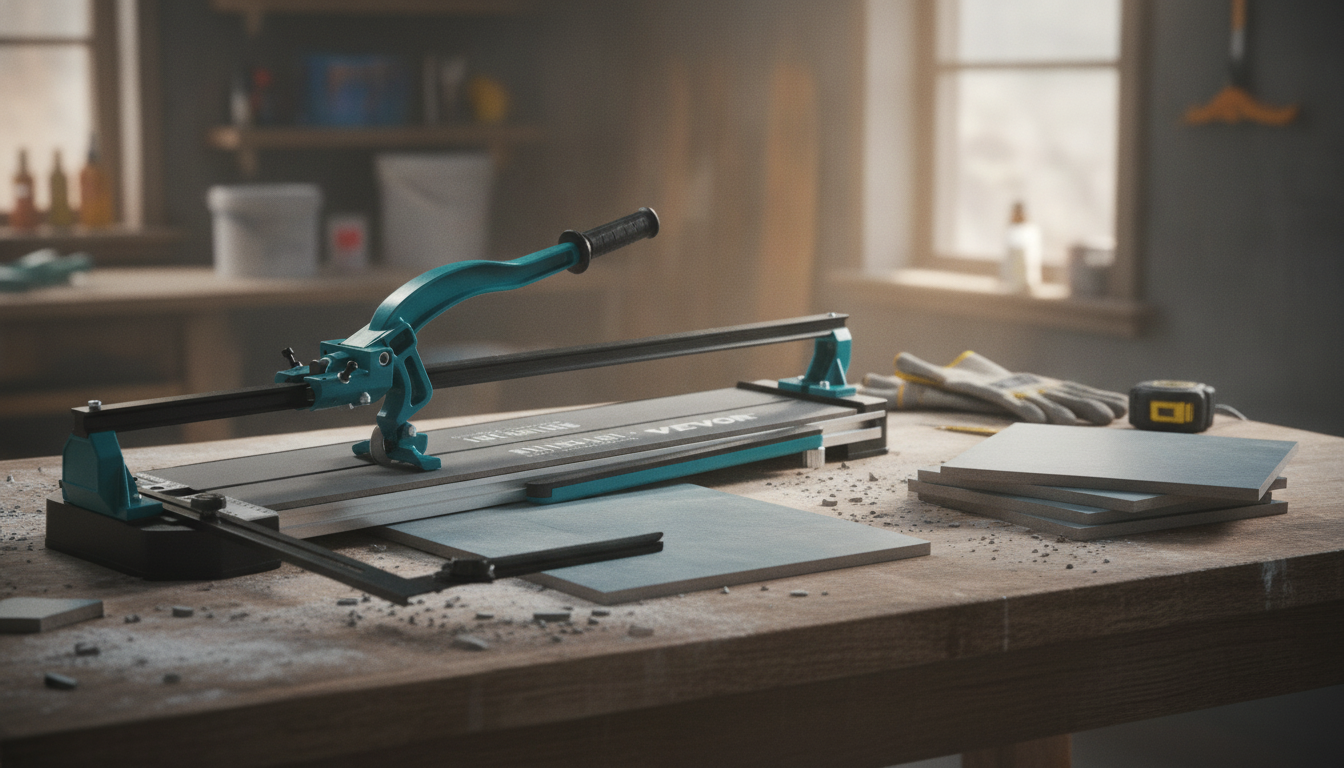
24-Inch Manual Tile Cutter for Clean, Accurate Ceramic and Porcelain Cuts
A 24-inch manual tile cutter is designed for straight, repeatable cuts without the spray, cords, and setup time that come with a wet saw. With a stable base, a sharp scoring wheel, and the right technique, it can deliver crisp edges on common ceramic and many porcelain tiles—while staying portable enough for home projects and jobsite touch-ups.
What a 24-inch manual cutter is best at
- Straight cuts on floor and wall tile up to a 24-inch cutting length (depending on tile orientation and the cutter’s design).
- Fast production work: measure, score once, snap cleanly—no water trays, no drying time, and no extension cords.
- Indoor-friendly cutting with minimal dust compared with many dry power tools.
- Best results on standard ceramic and many porcelain tiles with consistent thickness and good flatness.
- Not intended for curves, notches, L-cuts, holes, or very small slivers (those typically require other tools).
For installation best practices and standards, consult the Tile Council of North America (TCNA) resources. Even when you’re snapping tile rather than sawing it, sharp fragments can fly—follow eye protection guidance such as OSHA’s eye and face protection requirements.
Key features to look for in a precision manual tile cutter
- Rigid base and rails: Reduces flex that can cause the score line to drift and the snap to wander.
- Smooth scoring carriage travel: Helps maintain even pressure from the first inch to the last.
- Sharp scoring wheel: A clean score is the foundation of a clean snap; replace wheels when cuts begin to chip.
- Adjustable fence or angle guide: Speeds up repeat cuts and helps maintain consistent offsets.
- Stable breaker foot: Distributes snapping force evenly along the score to reduce edge blowout.
- Non-slip surface or support wings: Improves control on larger-format tiles and reduces tipping at the end of the cut.
Quick specs and fit for typical projects
A 24-inch format pairs well with common floor tile sizes and many rectangular wall tiles. It’s a practical “go-to” when the layout calls for lots of straight trimming—especially around perimeters, along cabinet runs, or at doorway transitions.
- For thicker porcelain, technique matters: one decisive score with steady pressure usually chips less than multiple light passes.
- Check tile type before committing: heavily textured surfaces, ultra-hard porcelain, or warped tiles may edge cleaner on a wet saw.
- Great for kitchens, bathrooms, laundry rooms, straight-cut backsplash work, and small-to-mid flooring areas.
At-a-glance: tool fit by task
| Task | Works well | Better with another tool |
|---|---|---|
| Straight cuts on ceramic wall tile | Yes | — |
| Straight cuts on many porcelain floor tiles | Often | Very hard/thick porcelain may prefer a wet saw |
| Diagonal cuts | Sometimes (with angle guide) | If frequent/complex, consider a wet saw |
| L-cuts, notches, curves, holes | No | Angle grinder, nippers, hole saw, wet saw |
| Tiny sliver cuts | Limited | Wet saw for control and safety |
Step-by-step: getting cleaner scores and snaps
- Mark clearly: Use a pencil or fine marker and extend the line to the tile edges so alignment is obvious at a glance.
- Set the fence once: Lock in your measurement for repeat cuts instead of re-measuring every tile.
- Align and stabilize: Keep the tile flat to the base and tight to the fence; support larger tiles so they don’t cantilever off the cutter.
- Score once with steady pressure: Start at the near edge and push/pull in one continuous pass. Avoid back-and-forth scoring.
- Listen for the score: A consistent sound typically indicates even pressure and stable tracking on the glaze.
- Snap decisively: Center the breaker on the score line and apply firm, even force. Hesitation can encourage uneven breaks.
For porcelain, aim for “confident, not aggressive.” Too much force can crush the glaze; too little can create a weak score that breaks unpredictably.
Common cutting problems and quick fixes
- Chipping along the edge: Replace (or rotate, if applicable) the scoring wheel, reduce excessive pressure, and stick to a single scoring pass.
- Tile breaks off the line: Confirm the tile is tight to the fence, clear debris under the tile, and make sure rails/carriage track straight.
- Ragged snap on porcelain: Score slightly more decisively (not multiple passes), and ensure the breaker foot is centered before snapping.
- Hairline cracks before snapping: Too much pressure at the start of the score or an uneven base. Begin gently, then maintain steady force.
- Score line is faint: The wheel may be dull or not contacting the glaze fully; check carriage alignment and wheel condition.
Care, storage, and safety essentials
Product option in stock
24-Inch Manual Tile Cutter – Precision Cutting for Ceramic & Porcelain Tiles is sized for common straight-cut needs and suits anyone who wants repeatable cuts without setting up a powered saw.
More in-stock picks
- Cactus Cat Tree Tower with Scratching Post & Condo Nest
- Alviero Martini Prima Classe Women’s Beige Bag with Zip
FAQ
Can a manual tile cutter cut porcelain tile cleanly?
Yes—many porcelain tiles snap cleanly when the cutter is rigid, the scoring wheel is sharp, and the tile is scored once with steady, consistent pressure. Very hard, thick, or heavily textured porcelain may produce a cleaner edge on a wet saw.
Why should the tile be scored only once?
Multiple passes can widen the score line and weaken the glaze unevenly, which often increases chipping and makes the snap drift off the mark. One firm, continuous score typically creates a more controlled break.
What should be done if tiles keep breaking off the line?
Make sure the tile is held tight to the fence, the base is clean and flat under the tile, and the rails/carriage track straight. Before snapping, confirm the breaker is centered directly over the score line.











Leave a comment